How to Clean Hats: A Practical Cleaning Guide
Learn how to clean hats safely with material-specific steps for cotton, wool, felt, denim, straw, and leather. Includes stain tips, drying methods, and storage to extend hat life.


Learn how to clean hats safely with material-aware steps. This guide covers cotton, wool, felt, denim, straw, and leather hats, plus stain removal tips and proper drying to prevent distortion. Follow the steps to refresh your headwear without compromising shape or color. From spot testing and brushing to gentle washing and air-drying, you’ll minimize risk of shrinkage, fading, or misshaping. This overview targets homeowners and casual wearers seeking practical tips.
Understanding Hat Materials and Care Basics
According to Cleaning Tips, hat care starts with knowing your hat's material. The most common fabrics—cotton, wool, felt, denim, straw, and leather—each respond to cleaning differently. Cotton and denim are generally forgiving but still benefit from gentle washing and spot cleaning. Wool and felt are more sensitive to moisture and heat, so they often require lighter cleaning and infrequent washing. Straw hats demand minimal moisture to avoid distortion, while leather hats need conditioning after cleaning to maintain suppleness. By identifying the fabric first, you tailor a cleaning plan that preserves color, shape, and texture. This knowledge also helps you choose the right cleaners and tools, reducing the risk of unintentional damage. The goal is a hat that looks fresh without sacrificing its structure or character.
Preparing Your Cleaning Kit
Before you touch a hat, assemble a small, dedicated kit to avoid cross-contamination. A soft-bristle brush helps remove surface dust without snagging fibers. Have a spray bottle with a mild, pH-neutral detergent diluted in water for fabrics, plus a clean microfiber cloth for blotting. For deodorizing or stubborn stains, a splash of white vinegar can be useful, but only on fabrics that tolerate it. Keep a shallow bowl of lukewarm water for gentle rinsing and a hat form or rolled towel to maintain shape during drying. Finally, use a cool hair dryer or fan if you need to speed up drying, but never use high heat.
General Cleaning Techniques That Work Across Most Hats
There are universal steps that apply to many hat types. Start by brushing away surface dust from crown and brim. Test any cleaner on an inconspicuous area to check for color fastness. Use a light touch—cotton and denim tolerate gentle soap, while wool and felt can felt or shrink if soaked. For damp cleaning, apply solution with a spray bottle and blot with a microfiber cloth rather than scrubbing. For delicate details, such as embroidery or logos, avoid soaking those areas. After cleaning, blot excess moisture with a dry cloth and reshape the crown while the hat is still slightly damp. Finally, let it air dry on a hat form or a clean, upright surface away from direct heat or sun.
Cleaning Cotton and Denim Hats
Cotton and denim hats are among the easiest to clean. Begin with dry brushing to remove lint and dust. Mix a small amount of mild detergent in lukewarm water and apply gently with a microfiber cloth. Focus on sweatbands, which accumulate oils and sweat. For stubborn stains, a soft brush can help loosen soil without rubbing aggressively. Rinse the cloth, then wipe away soap residue. Avoid fully soaking caps; instead, target the stained areas and let air dry. If color fading is a concern, test on a seam before proceeding and avoid hot water. Store hats in a ventilated area after drying to prevent mildew and odor buildup.
Cleaning Wool and Felt Hats
Wool and felt hats require more care due to their fibers' sensitivity to moisture. Start with dry cleaning to remove loose dirt. For surface soil, use a damp cloth with a tiny amount of mild detergent, then blot—never rub—so you don’t distort the nap. For stubborn marks on felt, a light steam from a kettle held at a distance can lift soil, but keep the hat away from direct steam or soaking. If you must wash, do so by hand in cool water and avoid agitation. After cleaning, reshape while damp and let it air dry away from heat sources. A hat form helps maintain the crown’s shape during drying.
Cleaning Straw and Panamas Hats
Straw hats require minimal moisture. Use a dry brush to remove dust, then wipe with a barely damp cloth if needed. Avoid soaking straw, which can cause the fibers to warp or split. For stubborn marks, apply a tiny amount of detergent to a cloth and gently dab instead of scrubbing. Drying is crucial: place the hat on a rounded form or rolled towel to preserve its shape, and air dry away from direct sun which can brittle the fibers. If you see creases, you can lightly steam from a distance and reshape with your hands.
Cleaning Leather and Suede Hats
Leather and suede demand specialized care. Never soak leather; instead, wipe with a damp cloth and use a leather-safe cleaner for spots. After cleaning, apply a conditioner designed for leather to restore moisture and prevent cracking. Suede requires careful brushing with a suede brush to lift nap after damp cleaning. Avoid water pooling on the surface, and dry slowly away from heat. When in doubt, test cleaner on an inconspicuous area first. Store leather and suede hats in a cool, dry place to prevent mold and stiffness.
Drying, Reshaping, and Storage
The final stage is drying and storage. Shape hats with a form or rolled towel to preserve crown shape and brim contour. Place the hat on a shelf or display stand to ensure air can circulate around it, avoiding tight spaces that trap moisture. Keep hats away from direct sunlight and heat sources, which can fade colors or warp fibers. For long-term storage, use breathable cloth bags rather than plastic to prevent moisture buildup. Regularly inspect stored hats for odors or mildew and refresh with light brushing before wearing again. Proper drying and storage significantly extend hat life.
Stain Removal Tips and Common Mistakes
Spot treat stains promptly with a gentle solvent or diluted detergent, testing first on a hidden area. Avoid bleach and harsh chemicals that can damage colors and materials. Do not rub vigorously on delicate fabrics; instead, dab and blot. Oil-based stains respond best to absorbent powders like cornstarch or talcum powder before brushing off. When in doubt, consult the label or seek professional cleaning for valuable hats. Common mistakes include using hot water, overdrenching, or using heat to speed drying, which can warp materials or shrink hats.
Tools & Materials
- Soft-bristle brush(Dust and soil removal without fiber damage)
- Mild liquid detergent (pH-neutral)(For fabrics; avoid strong chemicals)
- White vinegar (optional)(Deodorizing and slight stain pretreatment on fabrics tolerant of vinegar)
- Isopropyl alcohol (optional)(Light stain spot treatment on certain marks)
- Clean white cloths or microfiber towels(Blotting and wiping without dye transfer)
- Spray bottle(Dilute cleaners and apply evenly)
- Bowl of lukewarm water(Gentle rinsing and dilution base)
- Hat form or rolled towel(Reshape crown and brim during drying)
- Hair dryer on cool setting (optional)(Speeds up drying if used at a safe distance)
- Lint roller (optional)(Remove stray fibers after drying)
Steps
Estimated time: 45-60 minutes
- 1
Identify material and spot-test
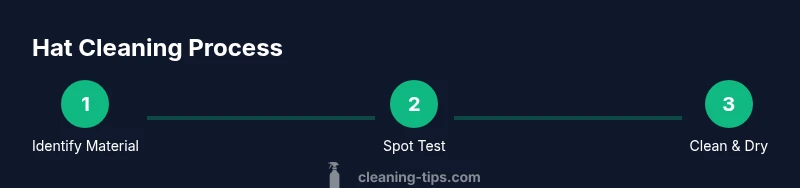
Check the hat’s tag or assess fabric type. Always perform a spot test on an inconspicuous area with your chosen cleaner to ensure there’s no color bleeding or damage.
Tip: A small corner seam is ideal for a test patch. - 2
Brush away surface dust
Use a soft-bristle brush to gently remove surface dirt from crown and brim. This reduces the amount of cleaning solution needed and prevents dirt from embedding in fibers.
Tip: Brush in a consistent direction to avoid fiber fatigue. - 3
Prepare a gentle cleaning solution
In a spray bottle, mix a small amount of mild detergent with lukewarm water. Lightly mist the cloth rather than soaking fabric, then test again if you’re unsure about colorfastness.
Tip: Keep the cloth barely damp to prevent oversaturation. - 4
Gently clean the hat surface
Wipe with the damp cloth, focusing on sweatbands and stained areas. For stubborn marks, use a soft brush with minimal pressure. Avoid scrubbing delicate embroidery or logos.
Tip: Work in small sections to maintain uniform appearance. - 5
Rinse or remove soap and blot
If you used a soap solution, wipe away soap residue with a clean, damp cloth. Do not rinse cap fully under running water; instead, blot and lift moisture gradually.
Tip: Pat, don’t rub, to preserve texture. - 6
Reshape and air-dry
Place the hat on a form or rolled towel to restore crown shape. Allow to air dry away from direct heat or sun. When dry, apply light brushing to restore nap if applicable.
Tip: Never use a clothes dryer; heat can warp shapes.
Questions & Answers
Can I machine wash hats?
Most hats should not be machine washed, as agitation and heat can deform them. When possible, hand wash or spot clean with a mild detergent, then air dry away from direct heat.
Most hats shouldn't be machine washed; hand washing is safer.
How often should I clean hats?
Clean hats after heavy use or staining. Light dusting weekly and deeper cleans every few months are typical, depending on wear and fabric.
Clean after heavy use; deep clean every few months as needed.
Can I use bleach on hats?
Bleach can damage fabrics and colors; avoid it. Stick to mild detergents or vinegar solutions for discoloration, following the fabric label.
Avoid bleach; use mild cleaners.
Will cleaning damage embroidery or logos?
Yes, harsh scrubbing can lift embroidery. Use gentle blotting, avoid soaking, and test colorfastness around logos.
Be gentle around logos; blot, don't rub.
How should I dry hats after cleaning?
Air dry on a hat form or rolled towel; keep away from direct heat or sunlight. Do not use a clothes dryer.
Air dry, avoid heat.
What about leather or suede hats?
Leather and suede require specialized cleaners and conditioners; avoid soaking. Wipe with a damp cloth, condition with appropriate product, and store away from moisture.
Use leather care products; avoid soaking.
Watch Video
The Essentials
- Identify hat material before cleaning
- Spot-test cleaners first
- Use gentle, material-specific cleaners
- Air-dry and reshape to prevent distortion
- Store hats properly to extend life