Laundry Soap and Oxi Clean: A Practical Guide for Laundry
Learn how to safely use laundry soap with Oxi Clean to boost stain removal, brighten fabrics, and simplify your laundry routine. Step-by-step guidance, dosages, pretreatment, and best practices for common stains.


You will learn how to use laundry soap with Oxi Clean to improve stain removal, brighten whites, and simplify loads. This guide covers product selection, dosage guidance, pretreatment steps, washing temperatures, and common mistakes to avoid. By the end, you’ll know when and how to combine these cleaners for reliable results.
What is laundry soap oxi clean and why it matters
For many homeowners, combining laundry soap with a peroxide-based stain remover (like Oxi Clean) can improve cleaning power. This approach leverages detergency from soap with the oxygen-releasing action of the stain-treatment product to lift set-in stains. According to Cleaning Tips, choosing a milder base detergent for everyday loads and reserving the Oxi-clean treatment for tougher stains can protect fabrics while still delivering bright whites and clean colors.
In this guide, we’ll cover how to use these products safely, how to dose properly, and how to tailor the approach to fabric type and water hardness. We’ll also discuss common mistakes and how to avoid them, so you can achieve reliable results without damaging clothes or washing machines. By the end, you’ll know when to reach for laundry soap and when to treat with oxygen-based cleaners for best results.
How OxiClean works with laundry soap
Oxi Clean is an oxygen-based cleaner that releases active oxygen to break down organic stains and lift dirt embedded in fibers. When paired with a regular laundry soap, the detergent helps loosen soils while the oxygen booster tackles difficult stains like coffee, grass, or tomato sauce. The synergy comes from two mechanisms: surface-level cleaning from the surfactants in soap and the deeper stain-oxidizing action from the oxygen-releasing compound.
This section will explore safe usage across fabrics, including cottons, synthetics, and blends. It also discusses potential interactions with chlorine bleach and the importance of avoiding overuse, which can lead to fiber damage or color fading. The goal is to optimize stain removal while preserving fabric integrity.
Choosing the right detergent and stain treatment combination
Detergents come in many formulas designed for different machines (traditional or high-efficiency) and soils. In most households, a standard detergent is sufficient for daily loads, while an oxygen-based booster is reserved for tougher stains. The right pairing means you keep the detergent’s cleansing power while adding an oxygen-based treatment for set-in stains. Cleaning Tips analysis shows that many loads benefit from this two-part approach, especially when stains are pretreated and treated promptly.
When selecting products, read labels for fabric compatibility and colorfastness. For delicate fabrics, test on an inconspicuous area before full-scale use and reduce cycle intensity if needed. This section also covers avoiding chlorine bleach when using oxygen-based cleaners and how to adjust for color fabrics. The key is to balance cleaning strength with fabric care.
Pretreatment strategies for common stains
Pretreating stains before a full wash dramatically improves outcomes. Start with a small amount of the oxi-based booster mixed with water to form a pre-treat solution. Apply to the stain and let dwell for 10–15 minutes for most organic stains; for tougher stains like red wine or barbecue sauce, you can extend to 20 minutes if the fabric tolerates it. Always test on a hidden seam if you’re unsure about colorfastness.
For oily or greasy stains, work a drop or two of laundry soap into the fabric, then layer with the oxygen booster. Use a soft brush or cloth to work the solution into fibers rather than rubbing aggressively, which can cause fiber damage. After pretreatment, launder as usual and inspect before drying. This approach minimizes re-washing and preserves fabric integrity.
Washing temperature, water hardness, and load management
Water temperature affects how well both detergent and oxygen boosters work. Warm water generally improves stain removal on cottons and blends, while cold water is gentler on colors. Hard water can reduce the effectiveness of detergents; using a water-softening add-on or choosing a formula designed for hardness can help.
Load management matters: avoid overloading the machine, which prevents effective agitation and thorough rinsing. Separate heavily stained items from lightly soiled ones to ensure even cleaning. For best results, select a cycle appropriate to the fabric type and soil level, and consider running a second rinse for residue-prone fabrics.
Understanding these variables helps you tailor each wash to the garment and stain scenario, maximizing effectiveness without sacrificing fabric life.
Dosing and sequence: when to add soap vs. oxi clean
A practical rule is to use laundry soap as the base detergent for every load and introduce the oxygen-based booster for problem stains or heavily soiled items. Add detergent at the start of the wash, and add the oxygen booster either at the beginning (if the machine’s dispenser supports it) or pre-dissolve it in water and apply to stained areas before loading.
If your machine has a built-in pre-soak option, you can extend dwell time for stained items. Do not mix active bleach with oxygen boosters in the same load, and never combine chlorine bleach with oxygen-based cleaners, as this can release unsafe gases and damage fibers. This planning keeps your wash efficient and fabric-safe.
Pro tip: for very tough stains, soak garments in a solution of warm water and oxygen booster for 15–20 minutes before washing. This extra step can reduce the need for multiple washes later.
Safe use on fabrics and colors
Most everyday fabrics—cotton, polyester, and blends—tare compatible with a detergent plus an oxygen booster when used as directed. However, some fabrics are more sensitive to heat, agitation, or chemical exposure. Always read garment care labels and perform a spot test on a hidden area if you’re unsure. Delicate fabrics, silk, wool, and certain synthetics may require milder formulations or avoidance of aggressive pretreatment.
Colorfastness is a critical consideration. When in doubt, launder similar colors together and avoid mixing whites with bright colors on heavily stained loads. If staining is persistent on colored fabrics, consider air-drying tests after the first wash to gauge color retention.
Practical tips for daily laundry routine
Create a simple routine that fits your schedule. Pre-treat obvious stains the night before big laundry days, build a small stockpile of stain-removal products, and keep a dedicated spray bottle for pretreatment near the laundry area. Regularly check garment labels for care guidance and rotate detergents to prevent buildup of residues in the washing machine.
Maintaining your washing machine is essential. Leave the door or lid open after cycles to allow the drum to dry, clean the detergent drawer monthly, and run a monthly cleaning cycle if your machine has one. Small, consistent steps prevent odors, buildup, and color fading over time.
Authority sources
- https://www.epa.gov/saferchoice
- https://extension.illinois.edu/
- https://www.consumerreports.org/care-cleaning/
Tools & Materials
- Regular laundry detergent(Choose a formula compatible with your machine (conventional or high-efficiency) and fabric type.)
- Oxi Clean or oxygen-based stain remover(Used as a booster for tough stains; follow label directions for applications.)
- Measuring cup or dosing tool(Accurate measurements help avoid over-using products.)
- Spray bottle(For pre-treating stains with diluted booster solution.)
- Stain brush or soft cloth(Gently work pretreatment into fibers without causing damage.)
- Bucket or basin for soaking (optional)(Used for time-controlled pre-soaks on stubborn stains.)
- Gloves (optional)(Protect skin during pretreatment.)
- Washing machine(Front- or top-loading machine; ensure it's in good working order.)
Steps
Estimated time: 45-60 minutes
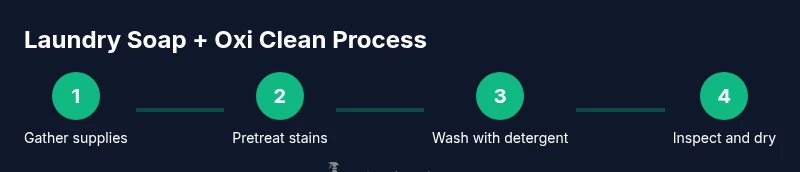
- 1
Gather supplies
Collect detergent, oxygen booster, measuring tools, spray bottle, brush, and a small bucket. Confirm garment care labels and ensure you have a clean workspace to prevent cross-contamination of stains.
Tip: Having everything ready speeds up the process and reduces the temptation to skip steps. - 2
Check garment care labels
Inspect labels for fabric type, bleach instructions, and washing temperature ranges. Separate items that require delicate handling from sturdier fabrics.
Tip: When in doubt, err on the side of gentleness with delicate fabrics. - 3
Pretreat stains
Mix a small amount of booster with water in a spray bottle, apply to stains, and let dwell for 10–15 minutes (longer for stubborn stains). Use a soft brush to work it in gently.
Tip: Avoid aggressive rubbing that can damage fibers. - 4
Sort laundry
Group by color and soil level. Heavily stained items go in a separate load or extra-long cycle to avoid redepositing soils on lighter garments.
Tip: Sorting helps maintain color and fabric integrity. - 5
Measure and apply detergent + booster
Add detergent to the wash according to the load size. If using booster, add it to the wash or pre-dissolve and apply to heavily soiled areas.
Tip: Do not exceed recommended amounts to prevent residue. - 6
Run the wash
Choose an appropriate cycle and temperature for the fabric type. Use the recommended wash time; avoid overloading the drum.
Tip: Adequate agitation and rinsing improve stain removal. - 7
Inspect during rinse
Check if stains have faded; re-treat if necessary and run a second rinse for residues on sensitive fabrics.
Tip: Residue can cause dulling or skin irritation if left behind. - 8
Dry and store
Air-dry delicate fabrics; machine-dry sturdier textiles as directed. Store clean garments in a cool, dry place away from sunlight.
Tip: Air drying can preserve brightness and reduce fiber stress.
Questions & Answers
Can I use laundry soap with Oxi Clean on all fabrics?
Most cottons and synthetics respond well when you follow care labels. Delicate fabrics may require milder treatment or avoiding oxygen boosters. Always test a hidden area if you’re unsure.
Most fabrics are safe if you follow care labels and do a quick colorfast test on a hidden seam.
Should I presoak stains before washing when using Oxi Clean?
Yes for tough stains. Presoak stained items in warm water with a small amount of booster for 10–20 minutes before washing. Delicate fabrics may need shorter soaking.
Presoak tough stains for better results, but don’t overdo it on delicate fabrics.
Can I substitute Oxi Clean for laundry detergent?
No. Oxi Clean is a booster and should be used with a regular detergent. Detergent supplies the primary cleaning action while Oxi Clean boosts stain removal.
Oxi Clean works with detergent, not as a replacement.
Is it safe to mix Oxi Clean with chlorine bleach?
No. Mixing oxygen-based cleaners with chlorine bleach can release hazardous gases and damage fabrics. Never combine these in the same load.
Avoid mixing oxygen boosters with chlorine bleach.
How much Oxi Clean should I use per load?
Follow the product’s guidance and use the amount appropriate for your load size and stain severity. Start with a moderate amount and adjust as needed.
Always follow the product label and adjust based on soil level.
Can I use this method for colored fabrics?
Yes, with colorfast fabrics. Avoid repeated heavy pretreatment on bright colors; test first and wash separately if needed.
Colorfast fabrics usually tolerate this method, but test first.
Watch Video
The Essentials
- Use detergent as the daily cleaner and oxygen booster for tough stains
- Pretreat stains with a diluted booster solution before washing
- Match wash temperature to fabric type to preserve color and fibers
- Inspect garments after washing and air-dry to prevent heat-set stains
- The Cleaning Tips team recommends following product labels and testing fabrics first