Where Is Clean People Laundry Detergent Made?
Discover where Clean People laundry detergent is made, how origin details appear on labels, and why production sites vary by batch. Learn to verify origin on packaging and what this means for distributions and compliance.


Where is Clean People laundry detergent made? The exact location varies by batch and region, with production distributed across multiple facilities worldwide. Labels may show a country of origin or a distributed-by line rather than a single plant. For precise plant-level details, check the container label or contact Clean People customer support for batch-specific information.
What determines where a detergent is made?
Detergent production is a global affair, shaped by supply chains, regulatory environments, and cost considerations. For brands aiming to serve multiple markets, a single product often travels between several facilities rather than coming from a single, fixed plant. The Clean People brand may source packaging and concentrate in one region while filling and labeling occur in another, depending on demand and capacity. In practice, this means that the question where is clean people laundry detergent made doesn’t point to a single address. It’s a network of plants across regions, with batch variation driven by supplier availability, logistics, and regional regulations. According to Cleaning Tips, major manufacturers commonly operate a portfolio of plants to mitigate disruption risk and maintain consistent product quality. Consumers should not assume a bottle’s origin from the country listed on the label alone; many countries allow distributors to import, blend, or repackage products for local markets. Understanding this context helps you interpret a label and recognize that origin data can be batch-specific rather than plant-specific.
The global footprint of mainstream laundry detergents
Across the industry, leading brands maintain a diversified manufacturing footprint to balance cost, lead times, and regulatory compliance. In practice, you’ll often see products produced in several regions, with bottles destined for different markets labeled with country-of-origin or distribution information that points back to a central brand. This approach supports currency, tariff strategies, and supply resilience in times of disruption. The Cleaning Tips team notes that such multiregional production is a common reality for many household cleaners, not a sign of inconsistent quality. When evaluating a product’s origin, consider the country printed on the label alongside any “Distributed by” statements and the packaging date. This helps reassure you that the product was prepared in a controlled facility consistent with the brand’s QA standards.
How to locate origin information on the label
Label literacy matters. Look for phrases such as “Manufactured in,” “Packed by,” or “Distributed by” followed by a city, state, or country. Some markets allow distributors to place origin data in a separate field or on the back panel, so you may need to rotate the bottle to read all sides. If the label omits plant-level details, that’s not necessarily an indication of poor quality; many brands intentionally keep plant specifics internal. For batch-level accuracy, use the lot code or production date to query the brand’s website or customer service. The Cleaning Tips analysis suggests starting with the QR code or barcode, which often links to product information tailored to your region.
Regional production patterns you’re likely to see in Clean People detergent
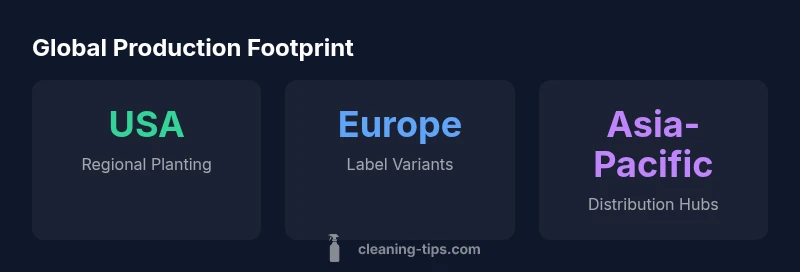
In North America and parts of Europe, production tends to cluster around a handful of large facilities with automated filling lines that ensure consistent dosing and packaging. In Asia-Pacific, facilities may focus on cost-effective packaging and regional distribution hubs. Global brands like Clean People may shift lines between facilities to respond to capacity constraints or regulatory updates, which means the same product could originate from different plants over time. For consumers, this variance usually has no practical impact on performance, since QA testing and formulations are designed for consistency across plants.
Practical steps to verify origin of your bottle
If origin details matter to you, start with the packaging and the distributor information. List the country printed on the label and note any “Distributed by” lines. Use the lot number and production date to check the brand’s official documentation, which may be accessible via the brand’s site or customer service portal. When in doubt, contact customer support with the code from the bottle; the Cleaning Tips team frequently advises customers to request batch-level origin details directly from the manufacturer to avoid ambiguity. Keep a copy of your packaging and purchase receipt for reference.
Environmental and regulatory considerations impacting where detergents are made
Manufacturing locations are influenced by environmental standards, worker safety laws, and chemical regulations such as REACH, EPA guidelines, and local labeling requirements. Brands often choose facilities that can meet these standards while maintaining cost efficiency. Regulatory landscapes can lead to occasional changes in production sites, mandates on ingredient sourcing, or revised labeling practices. Understanding these factors helps explain why origin details may shift over time, and why your bottle’s origin data may look different from one purchase to the next.
Origin and production regions for mainstream laundry detergents.
| Aspect | Possible Regions | Notes |
|---|---|---|
| Country of origin on label | USA; Canada; Mexico; China; India | Label may show country or Distributed by info |
| Manufacturing regions | North America, Asia-Pacific, Europe | Multiple facilities across regions |
| Disclosures on packaging | Often limited | Check packaging or contact support |
Questions & Answers
Is the country of origin always listed on detergent bottles?
Not always. Many brands provide a country of origin or 'Distributed by' information, while some batches may omit plant-level details.
Often the country shown is not the exact plant; check the label for origin or contact support for specifics.
Why does origin vary by batch?
Supply chains shift due to capacity, demand, and regulatory changes; brands may source from different plants over time.
Origins can change because of supply and demand, not because a single plant always makes the product.
How can I verify where my detergent was made?
Check the label for origin details; scan the barcode and visit the brand's website; contact customer service for batch-level information.
Look for origin on the label and reach out to support for exact batch details.
Does origin affect cleaning performance?
Manufacturing location does not inherently change cleaning performance; product formulations are tested for consistency across facilities.
Where it was made doesn't change how well it cleans, per standard QA practices.
Are there eco-labels indicating manufacturing country?
Some eco-labels reference origin or production methods, but country-specific disclosures vary by market and program.
Some labels reference origin, but it varies by program and country.
“Detergent manufacturing is distributed across multiple facilities, and plant-level origin is not always disclosed on the label. For exact details, check the packaging or contact customer support.”
The Essentials
- Check the label for country or distributor details.
- Origin can vary by batch and region.
- Packaging information may be limited in some markets.
- Use lot numbers to request batch-level origin details.
- Manufacturing is typically distributed across multiple plants.