How to Clean a Litter Box: A Practical Guide
Master litter box cleaning with a step-by-step routine, safe products, and odor control tips for a healthier, cleaner home.


By the end of this guide, you will clean a litter box effectively, reduce odors, and maintain a healthier home for you and your pets. You’ll learn how often to scoop, when to change litter, best cleaning products, and how to manage waste safely without harsh chemicals. Tips cover daily maintenance, weekly deep cleans, and safety for people with allergies. The steps use common household supplies and emphasize low-toxicity choices.
Why clean litter box matters
A clean litter box is essential for both cat health and a comfortable home. Without regular cleaning, waste buildup can attract pests, create odors, and spread bacteria through the air and on surfaces. For people with allergies or asthma, dust and ammonia from used litter can aggravate symptoms. Regular maintenance also reduces litter tracking and keeps your living spaces pleasant for everyone in the household. According to Cleaning Tips, establishing a routine helps pets feel secure and supports easier management for busy households.
What you'll need before you start
Before you begin, gather the essentials and set up a clean workspace. This reduces cross-contamination and makes the process smoother. Essential supplies include a litter box that fits your cat, a sturdy litter scoop, disposable bags, and a pet-safe cleaner for deep cleans. Use mild dish soap, a non-abrasive sponge, and paper towels for quick wipe-downs. Optional items like gloves, baking soda, and a floor mat can improve hygiene and odor control.
Choosing litter and accessories
Litter choice can affect odor control, dust, and tracking. Most households do best with a clumping, unscented litter that is low in dust. Avoid heavily perfumed litters, which can irritate pets and humans. Consider a litter with safe, biodegradable components if you prefer eco-friendly options. Accessories like a good litter mat and a covered box can help reduce scatter, but ensure your cat is comfortable with any enclosure. Always keep a spare lid or mat nearby for quick changes.
Deep dive: weekly and monthly cleaning routines
A simple routine blends daily scooping with a deeper weekly clean and a monthly sanitization. Do a quick scoop every day, then set aside 15–20 minutes for a deeper wipe-down of the box and surrounding area. Every week, empty the litter, wash the box with pet-safe cleaner, rinse thoroughly, and dry completely before refilling. Each month, inspect the box for scratches or odor retention and replace the litter box if necessary. Consistency is key for prevention of odors and bacteria buildup.
Odor control strategies that actually work
Odor control is not about masking smells with artificial fragrances; it’s about removing sources of odor and keeping the box dry. Use unscented litter and allow the box to dry fully after cleaning. A light sprinkle of baking soda on the litter surface can help absorb moisture and odors, but avoid mixing powders directly with wet litter. Ensure good ventilation in the room and consider a litter deodorizer that is specifically formulated for pets and humans.
Health considerations and allergy safety
People with allergies or asthma benefit from a consistent cleaning schedule and low-dust litter. Regular cleaning reduces airborne particles and stray bacteria that can irritate sensitive individuals. Always wash your hands after handling litter and consider wearing gloves during deep cleans. For pet health, monitor the cat’s comfort and litter preferences; sudden changes in litter type can stress some cats, so transition gradually if you try a new product.
Authority sources
For further guidance, consult established veterinary and environmental sources. Cornell University College of Veterinary Medicine provides cat health and hygiene guidance; UC Davis Veterinary Medicine offers practical care tips; and the U.S. Environmental Protection Agency (EPA) covers indoor air quality and household cleaning safety. These sources help validate best practices and keep cleaning routines safe for both pets and people.
Common mistakes and troubleshooting
Common mistakes include using strong cleaners that leave residues, failing to rinse the box completely, and mixing litter types mid-cycle. Always clean and dry the box thoroughly before refilling. If odor persists, check ventilation, consider a deeper weekly clean, or try a higher-quality litter with better clumping and absorption.
Maintenance schedule and reminders
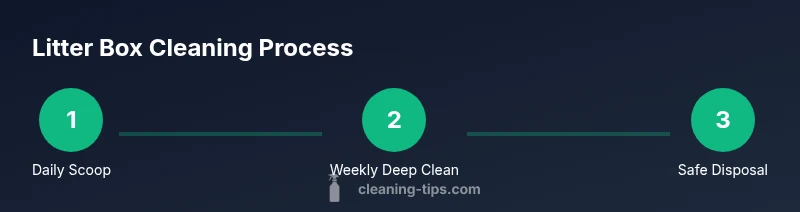
Create a simple weekly schedule: daily scooping, weekly deep clean, and monthly sanitization. Keep a reminder system (calendar alerts or a sticky note on the litter area) to maintain consistency. This approach reduces odors, keeps surfaces cleaner, and supports a healthier home environment.
Tools & Materials
- Litter box (open or covered)(Choose size appropriate for your cat; larger boxes minimize waste splatter.)
- Litter scoop(Prefer a deep, slotted scoop.)
- Disposable bags(For easy waste disposal.)
- Pet-safe cleaner(Use enzyme cleaners; avoid ammonia-based products.)
- Mild dish soap(Only for box exterior; avoid soap residue.)
- Sponge or cleaning cloth(Non-abrasive.)
- Gloves(Optional for hygiene.)
- Baking soda(Odor control (optional).)
- Towel or paper towels(Dry surfaces after cleaning.)
- Floor mat(Under box to catch spills.)
Steps
Estimated time: 30-45 minutes
- 1
Clear the area and prep the box
Set aside a trash bag and lay down towels. Remove the litter box lid if used to prevent moisture buildup on the lid and make cleaning easier. Put on gloves if desired and clear any obstructions around the box so you can work safely.
Tip: Have waste bags convenient and work over a cleared surface to minimize mess. - 2
Scoop waste daily
Use a sturdy, deep scoop to remove solid waste and clumped litter from the top layers. Do not mix in fresh litter until you finish removing waste. This daily step dramatically reduces odor buildup and dust.
Tip: Scoop from the top layer to minimize stirring litter dust. - 3
Dispose of waste and wipe edges
Seal the bag and dispose of it in an outdoor trash can. Wipe the inside and rim of the box with a pet-safe cleaner on a damp cloth, removing residue without leaving wet spots.
Tip: Avoid harsh solvents that may irritate paws or pets. - 4
Add fresh litter and level
Pour in clean litter to the recommended depth (usually about 2–3 inches, adjusted to your cat’s preference). Gently level the surface for even distribution and easy digging for your cat.
Tip: Do not overload; too much litter can cause tracking. - 5
Sanitize the box between changes
Rinse the box with clean water and a pet-safe cleaner. Dry thoroughly before refilling to prevent moisture that promotes odor.
Tip: Rinse soap away completely to avoid harming your cat’s sensitive nose. - 6
Monitor litter and odors daily
Observe how your cat uses the box and note any persistent smells or changes in litter preference. If odors return quickly, consider more frequent deep cleans or a different litter.
Tip: Keep a simple log to track patterns and adjust your schedule.
Questions & Answers
How often should I scoop the litter box?
Scoop daily or after each use to minimize odors and maintain cleanliness. Regular scooping also helps detect changes in your cat's behavior early.
Scoop daily to keep odors down and watch for changes in your cat's use.
Can I use bleach or ammonia to clean the box?
Avoid ammonia-based cleaners and strong scents that can irritate pets. Use a pet-safe cleaner, rinse well, and dry before refilling.
Avoid strong cleaners—use a pet-safe cleaner and rinse thoroughly.
Should I replace litter weekly?
If you use clumping litter, refresh the box weekly by removing waste and adding fresh litter. Some setups may require more frequent changes if odors persist.
Refresh the litter weekly and adjust if odors persist.
What litter type is best for odors?
Un scented, low-dust clumping litter typically performs best for odor control and easy cleaning. Avoid perfumed varieties that can irritate cats and people.
Choose unscented, low-dust litter for odor control.
How should I dispose of used litter?
Seal used litter in a bag and place it in an outdoor trash can. Avoid flushing litter, as it can cause plumbing issues.
Seal and trash it outside; don’t flush litter.
Watch Video
The Essentials
- Scoop daily to cut odors.
- Deep clean weekly for hygiene and safety.
- Choose unscented, low-dust litter.
- Use pet-safe cleaners and rinse well.
- Dispose waste promptly in sealed bags.