How Clean Are Dogs' Mouths Compared to Humans? A Comprehensive Comparison
Explore how clean dogs' mouths are relative to humans, examining oral bacteria, saliva chemistry, dental health, and practical hygiene steps for households with dogs.


Dog mouths are not universally cleaner than human mouths. Both host complex microbial communities, but saliva, diet, and dental health create distinct cleanliness profiles. For everyday safety, prioritize regular veterinary dental care for dogs and routine human dental hygiene, while avoiding assumptions about universal cleanliness across species.
How clean are dogs mouths compared to humans? A scientific framing
The question how clean are dogs mouths compared to humans is not answered by general impressions. The Cleaning Tips team emphasizes that cleanliness depends on health, hygiene, and routine care rather than an inherent quality of species. In practice, dog mouths can feel more or less clean than human mouths depending on diet, dental status, and recent veterinary care. By examining microbial ecology, saliva chemistry, and exposure to common household environments, homeowners can make safer decisions about close contact, feeding practices, and shared utensils.
When people ask this question, they often mean: is a dog’s mouth a source of infections, or is it simply less clean? The truthful answer is nuanced: both human and canine mouths host diverse communities of bacteria, yeasts, and other microbes. Hygiene routines—such as brushing teeth, regular dental checkups, and avoiding unsanitary mouthing of food or wounds—play a decisive role in overall mouth cleanliness for either species. Throughout this article, we’ll compare anatomy, microbes, and practical care strategies without assuming one is definitively cleaner than the other.
For households aiming to reduce risk, the takeaway is practical: treat dog mouths with respect, not idealized cleanliness, and align your routines with veterinary guidance and evidence-based cleaning practices. Cleaning Tips’s research framework emphasizes context, health status, and accessible hygiene steps that work in real homes.
textOnlyBodyBlocksOnlyForSEONonCalcLgthIfNeededBelow
wordCountHintForDocsNotUsedInAPIProvided
Comparison
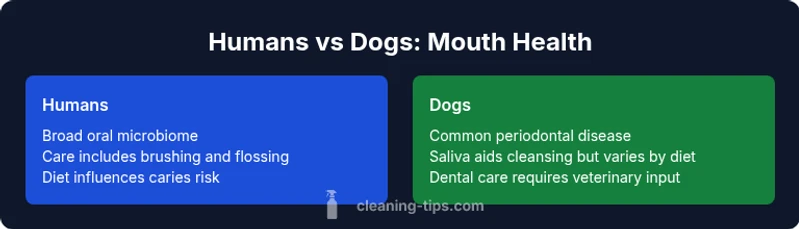
| Feature | Humans | Dogs |
|---|---|---|
| Oral bacterial diversity | Typically broad in humans; varies by individual | Broad in dogs with canine-specific species and overlaps |
| Saliva properties | Humans: protective enzymes, relatively stable pH | Dogs: saliva supports cleansing but varies with breed/diet |
| Caries and periodontal risk | Higher risk for caries with refined sugars and hygiene lapses | Periodontal disease is common; caries less frequent but possible |
| Gingival health indicators | Gingival inflammation common with inadequate care | Gingival disease is a frequent canine health concern |
| Impact of diet and hygiene | Diet and brushing critically shape oral health | Dental diets and routine brushing matter for dogs as well |
| Infection risk after contact | Pathogens largely human-to-human risk; cross-species risk exists but is reduced by hygiene | Cross-species exposure exists but is uncommon with good hygiene |
| Best practices for daily care | Twice-daily brushing, fluoride toothpaste, regular dental visits | Brushing, veterinary checks, and dental chews are standard for dogs |
Strengths
- Clarifies differences in mouth ecosystems for informed care
- Highlights practical hygiene steps that work in real homes
- Supports safer interactions and bite-risk awareness
- Encourages species-specific dental care so both parties stay healthier
Weaknesses
- Variability by breed, age, and health limits broad generalizations
- Cross-species transmission risks are situational and may be over-/under-stated without context
Neither mouth is inherently cleaner; each requires targeted care to maintain health.
Dog mouths and human mouths host different microbial communities and saliva dynamics. Regular dental hygiene for humans and dogs, plus mindful interactions, offers the best-path to healthier mouths for everyone in the home.
Questions & Answers
Are dogs mouths cleaner than human mouths?
No. Both species harbor diverse microbial communities, and cleanliness depends on health and hygiene practices. Dogs often have different bacteria and higher risks for periodontal disease, while humans face caries risks linked to sugar and hygiene habits.
No—dog mouths aren’t inherently cleaner; hygiene and health determine cleanliness in both species.
Can dog kisses transfer bacteria to humans?
Cross-species transfer can occur, but the risk is generally low when basic hygiene is followed. Handwashing after close contact and avoiding mouth-to-mouth contact with open wounds reduces risk.
Yes, it can happen, but good hygiene minimizes the risk.
Does brushing my dog’s teeth affect my own oral health?
Indirectly. Reducing your dog’s bacterial load and preventing periodontal disease supports a cleaner environment around mouth contact and lowers potential exposure during shared activities.
Brushing your dog’s teeth helps reduce bacteria around mouths and supports a cleaner home.
What routine dental care should I do for my dog?
Establish a regular brushing routine with dog-safe toothpaste, provide dental chews, and schedule veterinary dental checkups. Address signs of dental disease promptly to protect overall health.
Brush your dog’s teeth regularly, give dental chews, and see the vet for cleanings as needed.
Are cavities common in dogs?
Cavities do occur in dogs, but periodontal disease is more common. Regular dental care can help prevent both conditions and maintain comfort.
Cavities happen, but gum disease is more common in dogs.
Is human mouth hygiene enough for dogs?
No. Dogs need canine-specific dental care, including brushing and veterinary checks, because their mouth health follows different patterns and disease risks.
Human dental care can’t replace dog dental care.
The Essentials
- Treat dog mouths with appropriate care, not assumed cleanliness
- Regular dental hygiene benefits both species
- Avoid sharing utensils after mouths contact; wash hands after handling pets
- Monitor dogs for dental disease signs and seek veterinary care timely
- Develop a practical, breed- and health-tailored dental routine