How to Clean When a Cat Sprays: A Practical Guide
Learn how to clean when a cat sprays with proven odor-neutralizing methods for carpets, fabrics, and hard surfaces. This Cleaning Tips guide covers safety, supplies, and prevention to restore a fresh home.


Goal: remove cat spray odor and stains quickly and safely. This guide walks you through a step-by-step cleaning plan that works on carpets, upholstery, and hard surfaces. By following these steps, you’ll neutralize odors, prevent repeat marking, and keep your home healthier. From finding the right cleaners to drying times and safety tips, this answer helps you act confidently.
Understanding cat spraying and why odor lingers
Cat spraying is a form of territorial marking and stress response common in healthy adult cats. Even when the spray dries, odor molecules can cling to carpets, fabrics, and porous surfaces. According to Cleaning Tips, several factors influence the persistence of odor, including surface type, ventilation, and the age of the stain. In households with multiple pets or high-stress transitions (new furniture, moving, guests), the impulse to spray can increase. The key to effective cleanup is acting promptly, using enzyme-based cleaners when recommended, and ensuring thorough drying to prevent bacterial growth and residual smells. This section lays the groundwork for a practical, science-based approach to restoration, so you can confidently tackle the mess without compromising safety or fabric integrity.
Immediate cleanup: quick actions within minutes
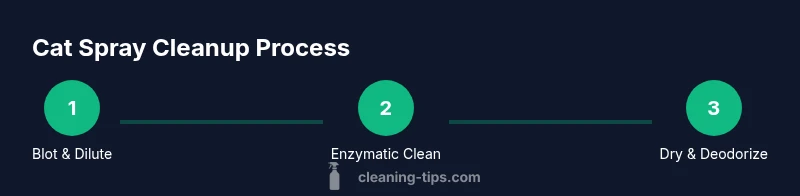
When you discover a spray, start with fast, decisive actions to limit staining and odor. Start by blotting up as much liquid as possible with clean paper towels or microfiber cloths—do not rub, which can push the odor deeper into the fibers. If the spray is on carpet, press towels into the pile and lift away moisture repeatedly. For hard surfaces, wipe with a mild cleaner to remove surface residues before treating with odor-neutralizing products. Ventilate the area by opening windows or turning on a fan to accelerate evaporation. These first steps make the subsequent enzymatic cleaning more effective and reduce the risk of smells seeping into padding or walls.
Surface-specific strategies: carpets, upholstery, hard floors
Carpets and rugs absorb spray quickly; treat with enzymatic cleaner designed for urine odors, following label directions for coverage and dwell time. For upholstery, test a hidden area first and then apply the cleaner gently, working from the outside in to prevent spreading. On hard floors, use a two-step approach: a mild detergent to remove surface residues, followed by an odor eliminator. Always ensure the surface is thoroughly dried to prevent mold growth and lingering odors. Cleaning Tips recommends avoiding ammonia-based products near cats, as they can trigger further spraying.
Cleaning agents: choosing the right products
Enzymatic cleaners are often the most effective for urine-based odors because they break down organic compounds that cause persistent smells. If you don’t have enzymatic cleaner on hand, a solution of white vinegar and water can help neutralize odors on non-porous surfaces, but it may not fully remove residues on fabrics. Always follow product instructions, test on inconspicuous areas, and avoid mixing cleaners with bleach or ammonia. For fabrics, consider a fabric-safe enzymatic product and a gentle extractor or steam cleaner if available. Cleaning Tips emphasizes using products that are safe for pets and humans and suitable for the specific material you’re treating.
Drying, deodorizing, and preventing re-sprays
After cleaning, thoroughly dry the area using towels, fans, or a dehumidifier. Odor control is enhanced by sprinkling baking soda over carpets or upholstery after the cleaner has dried, then vacuuming once dry. To prevent future spraying, ensure your cat has a clean, quiet space, provide enrichment, and consider pheromone diffusers or behaviorally-informed strategies. Regularly washing removable covers and mats helps maintain a neutral environment and reduces the chance of a repeat marking incident.
When to seek veterinary or behavioral help
If spraying persists despite cleaning, address potential medical causes first. Urinary tract infections or pain can cause stress-related spraying, and a vet visit can rule out medical issues. A veterinary behaviorist or certified trainer can help implement a plan for reducing stress and marking behavior. Early intervention often yields the best outcomes for both your cat and your home.
Tools & Materials
- Enzymatic cleaner (pet-appropriate)(Follow label instructions for coverage and dwell time.)
- White vinegar(Dilute 1:1 with water for non-porous surfaces; avoid on delicate fabrics.)
- Baking soda(Used after cleaning to neutralize odor on textiles and carpet piles.)
- Hydrogen peroxide (3%)(Test fabric first; may bleach some materials.)
- Spray bottle(For even application of cleaners.)
- Microfiber cloths(Blotting and lifting moisture without spreading odor.)
- Scrub brush(Gentle brush for textured surfaces and upholstery.)
- Bucket(For mixing solutions when needed.)
- Gloves (rubber or nitrile)(Protect hands from cleaners and pet dander.)
- Fan or dehumidifier(Accelerates drying and reduces odor retention.)
- Carpet cleaner or extractor (optional)(Deep cleaning for large carpeted areas.)
Steps
Estimated time: 90-120 minutes
- 1
Blot up fresh spray
Place several layers of clean towels on the damp area and press firmly to absorb as much liquid as possible. Avoid rubbing, which can push odor deeper into fibers. Repeat with fresh towels until no more liquid transfers. This step minimizes spread and prepares the surface for treatment.
Tip: Work from the outside edge toward the center to avoid widening the stained area. - 2
Rinse and blot on porous surfaces
Rinse with a little clean water on carpets or fabric surfaces and blot again to dilute residues. For hard surfaces, wipe with a damp cloth to remove surface residues before applying cleaners. This helps prevent a stubborn odor from taking hold.
Tip: Rinsing reduces the concentration of contaminants before enzymatic treatment. - 3
Apply enzymatic cleaner
Apply the enzymatic cleaner generously to the affected area, ensuring full coverage of fibers or porous material. Let it sit for the recommended dwell time. Enzymes break down urine proteins that cause lingering odors.
Tip: Do not skip the dwell time; it’s critical for enzyme effectiveness. - 4
Neutralize odor with baking soda
After the enzymatic cleaner has dried, sprinkle baking soda over the area and let it sit for 15-30 minutes to absorb residual odors. Vacuum thoroughly to remove the baking soda and any loosened particles.
Tip: For deep pile carpet, gently work the baking soda into the fibers before vacuuming. - 5
Tackle fabric odors with vinegar solution
If the stain remains on fabric, mix a 1:1 solution of white vinegar and water and apply lightly. Blot dry and allow to air-dry completely. Vinegar can help neutralize remaining odors on non-porous or lightly-treated fabrics.
Tip: Test a hidden patch first to ensure colorfastness. - 6
Dry thoroughly and ventilate
Open windows or run a fan to accelerate drying. Ensure the area is completely dry before replacing cushions or covers. Poor drying can lead to mold and musty smells that reappear after reoccupying the space.
Tip: Aim for 24–48 hours of drying time in humid rooms.
Questions & Answers
What causes a cat to spray, and can it be stopped?
Spraying is a marking behavior often tied to stress, territory, or medical issues. Addressing triggers, providing enrichment, and consulting a vet or behaviorist can help reduce incidents.
Spraying happens when cats mark territory, often due to stress or medical problems. Reducing stress and seeking professional guidance can help stop it.
Are enzymatic cleaners necessary for cat spray cleanup?
Enzymatic cleaners are typically the most effective because they break down urine proteins that cause odors. Use them as directed and follow with thorough drying.
Enzymatic cleaners are usually best for cat spray odor because they target the odor-causing proteins.
Can I use vinegar to clean cat spray?
Vinegar can help neutralize some odors on non-porous surfaces, but it may not remove all residues on fabrics. Use in combination with enzymatic cleaners and test fabrics first.
Vinegar can help on hard surfaces, but enzymes are usually better for fabrics.
How long does it take for odors to disappear after cleaning?
If cleaning is thorough and surfaces are dried completely, odors should fade within 24-48 hours in most cases. Persistent odors may require repeat treatments.
Odors usually fade within one or two days if you dry the area well and treat it properly.
Should I replace padding or furniture after a spray?
If the odor penetrates deeply into padding or cushions, replacement or professional extraction may be necessary to fully remove the smell.
If the smell sticks around after cleaning, you might need to swap the padding or call a pro.
When should I seek veterinary or behaviorist help?
If spraying continues despite cleaning, rule out medical issues with a vet and consider a behavior consult for long-term management strategies.
If spray keeps happening, a vet check and behavior guidance can help you address both health and behavior.
Watch Video
The Essentials
- Act quickly to limit staining and odor
- Use enzymatic cleaners for best results
- Dry thoroughly to prevent mold and recurring smells
- Test everything on inconspicuous areas first
- Ventilate the space during and after cleaning