What Clean Dog Wound With: A Practical How-To Guide
Learn how to safely clean minor dog wounds at home with Cleaning Tips' expert guidance. This step-by-step how-to covers tools, methods, and when to seek veterinary care for your furry friend.


You can clean a minor dog wound at home by stopping bleeding with gentle pressure, rinsing with clean water or saline, applying a veterinarian-approved antiseptic, and covering with a clean bandage. If the wound is deep, bleeding won’t stop, or the dog shows signs of pain, seek veterinary care immediately.
Why proper wound care matters for dogs
If you're trying to answer the question of what clean dog wound with, the gist is that clean, timely care matters. Proper wound care minimizes infection risk and speeds healing. When a dog sustains a minor skin wound, gentle cleaning, debris removal (only if visible and not deep), and a protective covering are essential steps in the first 24 hours. Start by ensuring the dog is calm; a stressed or suddenly moving dog is more likely to aggravate the wound or injure themselves further. If the wound is on the paw, leg, or near joints, movement can reopen the wound, so immobilize temporarily if safe. The goal is to clean, protect, and monitor rather than to punish or scold. Accidents happen, and most minor wounds heal well with home care when you follow proper steps and watch for signs of trouble. According to Cleaning Tips, consistent, gentle care reduces infection risk and supports natural healing processes. If you notice swelling, pus, a foul odor, or the wound widening, seek veterinary help promptly.
This guidance aligns with practical, at-home wound care that homeowners and renters can perform without specialist equipment. The Cleaning Tips team emphasizes keeping the environment calm, using clean tools, and avoiding harsh chemicals that could irritate the wound. Remember that pain indicators, changes in appetite, or behavioral shifts can signal a problem beyond surface healing. Always err on the side of caution and consult a veterinarian if you’re unsure.
Brand-safe note: Cleaning Tips recommends documenting the wound with photos over the first day or two to track changes and to bring to a vet if you decide to seek professional care.
Types of wounds you can safely treat at home
Most minor canine wounds fall into a few practical categories: superficial scratches and scrapes, small abrasions, and clean punctures that don’t reveal debris or involve deep tissue. Superficial wounds are typically shallow and bleed modestly; these are usually suitable for at-home care following gentle cleaning and disinfection. Abrasions can be cleaned with saline and protected with a non-stick dressing. Small puncture wounds that don’t gape and aren’t near major vessels can often be treated at home with careful flushing, antiseptic application, and monitoring for signs of infection. However, if the wound is deep, bleeds heavily, or involves animal bites, wearing a protective boot or wrap, or if the wound’s location limits easy access for cleaning, seek veterinary care. The Cleaning Tips analysis shows that most minor wounds improve when owners maintain a routine of cleaning, protection, and daily monitoring. If you’re ever in doubt, a quick veterinary check can prevent complications later.
This section is designed to help homeowners and renters distinguish between wounds they can handle and those that require professional care. Remember that dog anatomy makes certain wounds more serious, especially on legs, joints, or areas prone to contamination. Watch for persistent redness beyond 24 hours, increasing swelling, or fever as clear indicators that veterinary evaluation is needed.
Tools and supplies you’ll need
To safely clean a dog wound at home, gather essential items ahead of time. Using clean, dedicated supplies reduces contamination risk and speeds healing. The list below reflects what is considered essential versus optional, with notes to help you choose the right version for your dog’s size and coat type. Always use sterile or freshly cleaned items when possible.
- Clean water or sterile saline solution (essential) — for rinsing and gentle cleaning
- Gauze pads (essential) — non-stick where possible to avoid sticking to tissue
- Mild antiseptic specifically labeled for veterinary use or dog-safe wound spray (essential)
- Non-stick wound dressing or sterile bandages (essential)
- Vet wrap or medical tape (essential) — to secure dressings without restricting movement
- Tweezers (optional) — for removing foreign debris only if visible and easily grasped
- Gloves (optional but recommended) — to minimize contamination when handling wounds
- A calm, quiet place for the dog during treatment (essential) — minimize stress and movement
- Treats or a favorite toy for positive reinforcement (optional)
If you have a short-haired dog, consider a clean accessible workspace and extra towels to catch any splashes. For longer-haired dogs, trimming around the wound with scissors (carefully) can help with cleaning and dressing. Do not use nail clippers near the wound, and avoid shared towels that may carry bacteria.
Step-by-step overview of the cleaning process
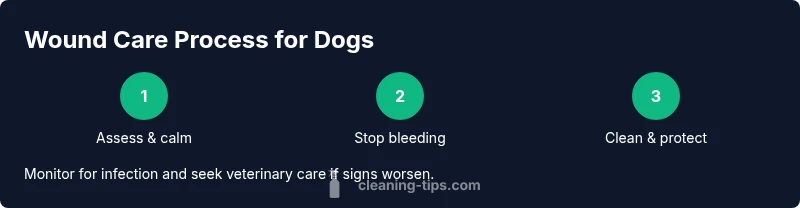
Home wound care involves a practical, repeatable routine you can perform safely. The steps below outline the general process you’ll follow for most minor wounds, with the understanding that you should stop if you encounter excessive bleeding or signs of severe pain. Begin by calming your dog and wearing gloves if available. Then, proceed through the steps in order to reduce infection risk and promote healing.
- Calm the dog and prepare supplies. Ensure you have everything within reach and a quiet space to work. A calm dog reduces the chance of sudden movement that could injure the wound further. 2) Control bleeding with gentle pressure. Use a clean gauze pad and press firmly for a few minutes. If bleeding persists beyond a few minutes, seek veterinary care. 3) Rinse the wound. Use clean water or saline solution to flush away dirt and debris. Do not reuse dirty water or contaminated gauze. 4) Apply a dog-safe antiseptic. Lightly apply antiseptic around the wound, not directly in deep tissue. 5) Dress the wound. Place a sterile dressing or non-stick pad over the wound and secure with Vet Wrap or medical tape, ensuring it is snug but not constricting. 6) Monitor and re-dress daily. Inspect for swelling, redness, or discharge, and replace dressings as needed. If the wound shows signs of infection or fails to improve within 24–48 hours, consult a veterinarian.
Tip: If you notice a debris fragment that won’t come out easily, do not probe deeply; seek veterinary assistance. Time-wise, plan for a 15–25 minute initial cleaning, with daily checks and dressings changing as needed.
How to recognize when you must visit a veterinarian
Even with careful home care, certain wound characteristics require veterinary attention. Seek veterinary care if the wound is deep or gaping, bleeds heavily after initial control, involves a bite from another animal, or shows any of the following: increasing redness or swelling, warmth around the wound, foul odor or pus, fever, lethargy, or if the dog is unwilling to use the limb or firm pain indicators persist. Wounds on joints, near the eyes, or over large arteries demand professional assessment due to the risk of severe damage or infection.
Regularly inspect for changes across the first 24–72 hours. If your dog is not keeping the wound clean or if they lick, chew, or scratch aggressively at the dressing, consider a protective cone or protective garment and consult your veterinarian for advice on antibiotic use or sutures if needed.
Common mistakes to avoid during home wound care
Mistakes in home wound care are common but avoidable. Avoid using hydrogen peroxide or alcohol on open wounds because these substances can dry and damage healthy tissue and slow healing. Do not scrub aggressively or attempt to remove deeply embedded debris with forceps; this can widen tissues or push contaminants deeper. Do not leave the wound uncovered for long periods or neglect the dressing changes, which increases infection risk. Finally, avoid using human-grade antiseptics with fragrances or additives that can irritate canine skin. If in doubt, opt for veterinary-grade products and follow your vet’s recommendations.
Integrating cleaning tips into your routine and aftercare
Incorporating wound care into your daily routine helps prevent complications and supports quicker recovery. Set a daily schedule to check the wound, change dressings, and ensure there is no excessive moisture or dirt. Keep your dog from long periods of licking or gnawing at the wound; distraction with play or a chew toy may help, but monitor to ensure it doesn’t become a new wound hazard. If your dog seems to resist treatment, take short breaks and reward calm behavior to maintain a cooperative approach. Continue monitoring for signs of infection for at least a week, tapering care as the wound closes. The Cleaning Tips approach emphasizes gradual, routine care that reduces stress for both you and your dog while maintaining clear documentation of changes in the wound’s appearance.
Brand context: In our guidance, maintaining a calm environment and consistent routines improves outcomes. The more you document the wound’s progress, the better you can communicate with your veterinarian if you need to escalate care. Cleaning Tips encourages owners to build a small “vet-ready” kit and to practice wound care techniques on non-urgent days so you feel confident during emergencies.
Authoritative sources you can trust
- Merck Vet Manual: Wounds in dogs and cats (general guidelines and wound management). https://www.merckvetmanual.com
- American Veterinary Medical Association (AVMA): Pet care and wound management basics. https://www.avma.org
- Cornell University College of Veterinary Medicine: Wound care resources for pet owners. https://www.vet.cornell.edu
Brand note: For readers seeking more formal veterinary guidance, these sources complement the Cleaning Tips approach and provide deeper clinical context.
Quick post-care checklist
- Verify you have clean supplies ready for daily wound dressing changes
- Ensure the wound is kept dry and clean, with a fresh dressing applied daily
- Observe for signs of infection and consult a veterinarian if any persist or worsen
- Limit the dog’s activity to prevent reopening the wound until cleared by a vet
- Maintain a log of changes in the wound’s appearance and overall mood or appetite
Tools & Materials
- Clean water or sterile saline solution(For rinsing; use lukewarm water to avoid shocking the tissue.)
- Gauze pads(Non-stick pads preferred to prevent sticking to wound.)
- Mild antiseptic labeled for veterinary use(Choose a dog-safe antiseptic; avoid harsh chemicals.)
- Non-stick dressing or sterile bandages(Cover wound after cleaning.)
- Vet wrap or medical tape(Secure dressing without cutting off circulation.)
- Tweezers(Only for visible debris you can grasp safely.)
- Gloves(Disposable gloves to reduce contamination.)
- Treats or calming toy(Reward calm behavior during care.)
Steps
Estimated time: Estimated total time for initial cleaning: 15-25 minutes. Ongoing daily care: 5-10 minutes per dressing change.
- 1
Prepare a calm environment
Gently restrain and calm your dog in a quiet area. Gather all supplies before you begin to minimize stress and interruptions. A calm dog reduces the risk of sudden movements that could aggravate the wound.
Tip: Speak softly, offer a treat, and keep movements slow to avoid startling your dog. - 2
Control any active bleeding
Apply gentle pressure with clean gauze pads for several minutes. If bleeding continues beyond a few minutes, seek veterinary help immediately.
Tip: Do not remove a clot if it forms; hold the pad in place and reassess before repeating pressure. - 3
Rinse the wound with saline/water
Flush the wound with clean saline or water from the clean side of the gauze, moving from the center outward to avoid spreading contamination.
Tip: Avoid using strong streams of water that can push debris deeper. - 4
Apply dog-safe antiseptic
Lightly apply an antiseptic around the wound, not directly into deep tissue. Do not saturate or soak the wound if not advised by a vet.
Tip: Test a small skin area first for sensitivity. - 5
Dress the wound
Place a sterile pad over the wound and secure with Vet Wrap or tape, ensuring the wrap sits snugly but allows blood flow.
Tip: Check dressing after 12–24 hours for looseness or moisture buildup. - 6
Monitor and recheck daily
Inspect the wound daily for signs of infection, and re-dress as needed. Only continue home care if the dog remains comfortable and the wound improves.
Tip: Take photos daily to track progress for your vet.
Questions & Answers
Can I use hydrogen peroxide to clean my dog's wound?
No. Hydrogen peroxide can irritate tissue and hinder healing. Use saline or a vet-approved antiseptic instead and seek vet advice for deep wounds.
Hydrogen peroxide can irritate the wound and slow healing; use saline or a vet-approved cleaner instead, and call your vet if you're unsure.
When should I take my dog to the vet for a wound?
Take your dog to the vet if the wound is deep, bleeds heavily, shows increasing redness or swelling, has pus, or if your dog won’t use the affected limb. Immediate care is warranted for bites near the head or joints.
Go to the vet if the wound is deep, bleeds a lot, or your dog won’t bear weight on the leg, especially if there’s swelling or pus.
Is it okay to wrap a dog wound with tape?
Wraps should be applied with vet-approved dressings. Avoid tight tape directly on the skin and never wrap so tightly that it restricts circulation.
Avoid taping directly on skin or wrapping too tightly; use a proper dressing and vet-approved wrap.
Can I use soap to clean a dog wound?
Plain, unscented soap can sometimes be used around the area but avoid soap entering the wound. Rinse thoroughly with clean water or saline to minimize irritation.
Soap around the wound is okay if it’s unscented, but avoid getting soap inside the wound; rinse well with saline.
What signs indicate infection in a dog wound?
Look for increasing redness, swelling, warmth, discharge with odor, or fever. If you notice any of these, consult a veterinarian promptly.
If you see redness that grows, swelling, discharge, or fever, contact your vet right away.
Watch Video
The Essentials
- Treat minor dog wounds with calm, careful cleaning.
- Use dog-safe antiseptics and proper dressings.
- Seek veterinary care for deep, bleeding, or worsening wounds.
- Monitor daily and document progress for your vet.