What to Do to Clean My Dog's Teeth
Learn a practical, step-by-step approach to cleaning your dog's teeth at home, with essential tools, care routines, when to seek veterinary help, and tips for different life stages.


To clean my dog's teeth effectively, start with a dog-safe toothpaste and a soft brush, brushing the outer surfaces daily or as often as possible. Use dental chews and water additives to support cleaning, and schedule professional dental cleanings per your vet’s advice. This guide explains the step-by-step method, tools, and safety tips.
Why canine dental health matters
If you're asking what to do to clean my dogs teeth, you're not alone. Canine dental health is a major part of overall well-being, and neglect can lead to painful gums, infections, and trouble chewing. The Cleaning Tips team notes that a proactive routine helps prevent escalation and supports the dog's comfort and appetite. Dental health isn't just about breath; it's linked to heart, kidney, and liver health through circulating bacteria. Regular care sets a foundation that makes future visits smoother and often less stressful for both you and your dog. Understanding how plaque forms, what early warning signs look like, and how daily actions accumulate over time makes dental care approachable. The approach outlined here is designed for homeowners and renters who want practical, step-by-step guidance that fits real life, not perfect-world benchmarks. With consistency, you can minimize painful episodes and keep your dog enjoying meals, playing, and calm during grooming.
Building a dental routine that sticks
A sustainable routine is more than a single brushing session. It blends brushing, chews, and mindful observation into daily life. Start by selecting dog-friendly toothpaste and a brush that fits your hand and your dog’s mouth. Schedule regular check-ins with a veterinarian to confirm your technique is effective and to catch any issues early. By framing dental care as a shared activity—one that includes treats and praise—you increase the likelihood of ongoing adherence. Cleaning Tips emphasizes that small, steady steps compound into noticeable improvements over time, especially when you tailor the approach to your dog's age, breed, and temperament.
Choosing tools that actually help
Not all dental products work equally well for every dog. The right tools for you are the ones you will use consistently. A soft-bristled dog toothbrush or a gentle finger brush is essential for safe brushing. Enzyme-based dog toothpaste prevents foaming and helps reduce bacteria without harsh abrasives. If brushing feels intimidating, start with dental wipes or gauze on the outer surfaces. Pair brushing with dental chews or treats that carry veterinary approval to support mechanical cleaning between sessions. Remember: tools are only as good as how you use them, so practice patience and gradual exposure.
The at-home brushing plan: fundamentals and flexibility
Daily brushing forms the foundation, but frequency can be adjusted to fit your dog’s tolerance and health. Begin with short, positive sessions and gradually increase duration as your dog becomes comfortable. Always brush the outer surface first, then the inner surfaces, and finish with a quick wipe along the gumline. Move slowly to avoid triggering stress or resistance, and reward your dog with praise and a small treat after each session. If your dog shows signs of frustration, pause and try again later with a shorter, reward-filled session. The goal is consistency, not perfection in every single brushing.
Diet, chews, and supplements that support enamel
Diet and dental chews can complement brushing, but they should not replace it. Look for veterinary-approved chews designed to reduce plaque buildup and support gum health. Water additives or oral rinses can provide additional surface cleaning, especially on days when brushing is challenging. Always introduce any new product gradually and monitor for adverse reactions. Cleaning Tips recommends consulting your veterinarian before adding supplements to ensure compatibility with any existing health conditions or medications.
Signs of dental trouble you should never ignore
Healthy mouths are not always obvious from a quick glance. Watch for persistent bad breath, red or swollen gums, excessive drooling, difficulty eating, or a sudden change in appetite. If you notice loose teeth, bleeding after chewing, or pain when opening the mouth, schedule a vet visit promptly. Early detection makes treatment simpler and less disruptive for your dog. Regular home checks, combined with periodic professional assessments, help maintain oral health and overall well-being.
Professional cleaning: when and why it matters
Veterinary dental cleanings provide a thorough assessment beyond what home care can achieve, including a professional polish and x-rays if needed. For some dogs, especially those with heavy tartar, gum disease, or older age, professional cleaning can be essential. Your veterinarian can tailor recommendations to your dog’s breed and health status, balancing at-home care with in-clinic procedures. The Cleaning Tips team suggests discussing a reasonable cleaning schedule with your vet to prevent progression of dental disease and preserve comfort during meals and daily activities.
Puppies, seniors, and breed-specific considerations
Puppies begin with a learning process that includes acclimating to brushing and handling the mouth. For seniors, tooth wear and gum recession may change the brushing technique and product choices. Some breeds are more prone to dental issues due to jaw structure or enamel quality. In all cases, gentle handling, appropriate tools, and gradual progression are key. A dog-friendly routine should respect age-related sensitivity and provide consistent, positive reinforcement to build lasting habits.
Quick-start plan: a practical 7-step pathway
- Gather dog-safe toothpaste and a soft brush. 2) Introduce the brush with a few seconds of contact while offering a treat. 3) Start brushing the outer surfaces of the front teeth. 4) Increase coverage to the back teeth gradually. 5) Use dental wipes as an alternative if brushing is difficult. 6) Add a vet-approved dental chew to the routine. 7) Schedule a veterinary check-in to assess progress and adjust as needed.
A simple, weekly checklist to keep you on track
- Brush at the same time each day, if possible. - Use a small amount of toothpaste and start slowly. - Include a dental chew on non-brushing days to support cleaning. - Monitor gums and breath, noting any changes. - Schedule routine veterinary dental exams to stay proactive.
Tools & Materials
- Dog toothbrush or finger brush(Soft-bristle brush or finger brush designed for dogs; fit comfortably in your hand)
- Dog toothpaste(Enzyme-based, flavored for dogs; never use human toothpaste)
- Dental wipes or gauze(Useful when brushing isn’t possible; can clean outer tooth surfaces)
- Vet-approved dental chews(Choose products with veterinary endorsement; supervise during use)
- Towel or non-slip mat(Helps keep your dog steady and comfortable during brushing)
- Positive reinforcement treats(Small, soft treats to reward calm behavior after brushing)
- Vet appointment scheduling(Maintain a regular check-in with your veterinarian for dental assessments)
Steps
Estimated time: 5-10 minutes per brushing session
- 1
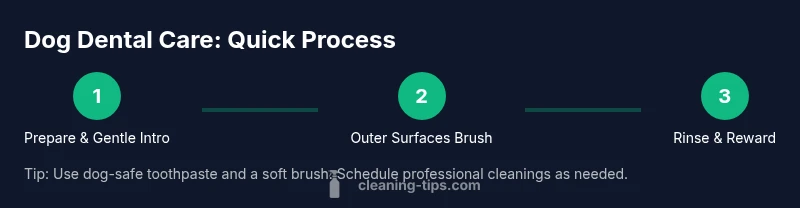
Prepare the dog and the space
Create a calm, comfortable setup. Have the brush and toothpaste ready, and place your dog on a familiar surface. This initial step reduces anxiety and sets a positive tone for brushing.
Tip: Keep sessions short at first; gradually increase as your dog becomes comfortable. - 2
Introduce toothpaste and brush
Let your dog sniff the toothpaste and brush to reduce fear. Apply a tiny amount of toothpaste to the brush and let your dog lick it off to associate the taste with a pleasant outcome.
Tip: Never use human toothpaste; it can upset your dog’s stomach. - 3
Position and mouth restraint
Sit beside or in front of your dog. Gently lift the lips to expose the outer surfaces of the teeth. Keep the dog calm with a soft voice and light touch.
Tip: If your dog pulls away, pause and reward, then retry in a few moments. - 4
Brush outer surfaces
Begin with the outer surfaces of the front teeth using slow, circular motions. Move along the gumline to give the toothpaste access to the area where plaque forms.
Tip: Use short, controlled strokes and avoid forcing the brush into the mouth. - 5
Brush inner surfaces and back teeth
Gently brush the inner surfaces and the molars using the same technique. The inner surfaces can be more sensitive, so proceed gradually and reward frequently.
Tip: Work from the back toward the front to minimize stress on your dog. - 6
Rinse, reward, and monitor
Wipe away excess toothpaste with a damp cloth or let your dog rinse if they tolerate it. Offer a reward and monitor for any signs of discomfort in subsequent sessions.
Tip: Consistency beats intensity; aim for regular short sessions rather than rare long ones.
Questions & Answers
How often should I brush my dog's teeth?
Daily brushing is ideal, but any consistent routine is better than neglect. Start with short sessions and increase as your dog becomes comfortable, aiming for regular maintenance.
Brush your dog's teeth daily if possible, starting with short sessions and gradually increasing as your dog gets used to it.
What if my dog refuses to let me brush?
Begin with non-brushing alternatives like dental wipes or gradual desensitization. Reward calm behavior and slowly introduce the brush, keeping sessions brief.
If your dog resists, start with wipes and rewards, then gradually add brushing in short, positive sessions.
Are dental chews as effective as brushing?
Dental chews support cleaning but do not replace brushing. Choose vet-approved products and use them in combination with brushing for best results.
Chews help, but brushing remains essential; use them together for the best outcome.
Can I use human toothpaste on my dog?
No. Human toothpaste contains ingredients that can be harmful if swallowed by dogs. Use a toothpaste formulated for dogs.
Never use human toothpaste; use dog toothpaste instead.
When should I seek veterinary dental care?
If you notice persistent bad breath, red gums, bleeding, loose teeth, or trouble eating, schedule a veterinary dental exam promptly.
If you notice bad breath or pain, see your vet for an exam and possible cleaning.
What signs indicate dental disease at home?
Look for bad breath, tartar buildup, red gums, drooling, and changed eating behavior. These can signal disease requiring professional assessment.
Watch for bad breath, red gums, and changes in eating; get a vet check if they appear.
Watch Video
The Essentials
- Establish a consistent dental routine with brushing and chews.
- Use dog-safe tools and avoid human products.
- Monitor for signs of dental disease and seek veterinary care when needed.
- Progress gradually for anxious or reluctant dogs.
- Professional cleanings play a key role in comprehensive dental health.