Will Cleaner Shrimp Eat Ich: A Practical Guide for Aquarium Hobbyists
Discover if will cleaner shrimp eat ich, how ich cycles interact with cleaners, and practical steps from Cleaning Tips for safer parasite management.


In short, cleaner shrimp may nibble at some free-swimming ich forms and surface parasites, but they are not a guaranteed cure. Ich has a complex life cycle with stages that hide in the tank, so relying on cleaners alone can leave an outbreak uncontrolled. Use cleaners as part of a broader plan that includes quarantine, stable water quality, and approved treatments when appropriate.
Will Cleaner Shrimp Eat Ich? What the Evidence Says
The question "will cleaner shrimp eat ich" comes up often among hobbyists. In reality, cleaner shrimp can interact with obvious external parasites on fish, but ich (Ichthyophthirius multifiliis) has a multi-stage life cycle that often keeps it hidden from cleaners. According to Cleaning Tips, cleaner shrimp should not be relied upon as the sole method to control ich. They can reduce some surface-level parasites and offer a bit of help in the early stages, but a comprehensive approach is essential for real protection. This article digs into what that means for your tank and how to coordinate cleaners with proven practices.
Ich Life Cycle: Why Timing Matters for Cleaners
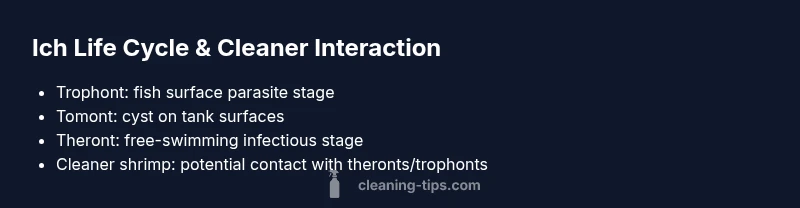
Ich undergoes several stages: trophont on fish, tomont on surfaces, and theront as free-swimming larvae. The trophont stage attaches to the fish, the tomont forms protective cysts on tank surfaces, and theronts seek new hosts. Cleaner shrimp are best positioned to encounter theronts or exposed trophonts rather than cysts. This means cleaners may assist only part of ich’s life cycle, and their impact depends on temperature, fish stress, and how well you control water quality. The Cleaning Tips analysis (2026) notes that results vary and should be considered supplementary evidence rather than definitive proof.
How Cleaners Behave in Different Tanks: Reef vs Freshwater Contexts
In reef and community tanks, cleaner shrimp may sample external parasites on fish and potentially remove some free-swimming stages. In freshwater or brackish setups, limitations remain similar: cleaners can contribute modestly but rarely stop an outbreak on their own. Different shrimp species exhibit varying feeding habits; some are more proactive about parasites than others. Regardless, owners should expect a partial role for cleaners and plan to combine them with robust parasite management strategies.
Practical Management Plan: When to Add Cleaners to a Parasite Scenario
Use cleaner shrimp as part of a broader plan, not as a replacement for proper quarantine and treatment. Copper-based medications and many other chemical treatments can be harmful to crustaceans, so check product labels for compatibility before use. Maintain stable temperature and salinity, perform gradual water changes, and quarantine new fish before introducing them to a display tank. By coordinating cleaners with these fundamental practices, you reduce the risk of Ich outbreaks and improve overall tank health.
Step-by-Step Plan for Hobbyists: Integrating Cleaners with Quarantine and Treatment
- quarantine all new fish for 4–6 weeks; observe for any signs of Ich. 2) if you run a display tank with invertebrates, confirm medication compatibility with cleaners. 3) introduce a small number of compatible cleaner shrimp only after the quarantine period or once fish are parasite-free. 4) monitor behavior daily and adjust feeding and tank cleanliness to minimize stress. 5) consider temporary removal of cleaners during certain treatments that may harm them, then reintroduce when safe.
Common Myths vs. Realities: What You Shouldn’t Believe
Myth: Cleaner shrimp will cure ich. Reality: They can help with some parasites but are not a guaranteed cure. Myth: Copper treatments are always safe in reef tanks. Reality: Copper is toxic to many invertebrates, including cleaner shrimp, and must be used with caution or avoided. Myth: Quarantine is unnecessary if you already have cleaners. Reality: Quarantine reduces introductions of pathogens; cleaners are not a substitute.
Real-World Observations: What Hobbyists Report About Cleaners and Ich
Many hobbyists report occasional anecdotal successes when cleaners are present, particularly for visible external parasites. However, there are as many reports of limited impact as there are successes, and outcomes depend on many factors, including tank age, cleanliness, and how ich is managed. The takeaway is clear: rely on a holistic approach rather than expecting cleaners to resolve ich on their own.
What to Do If You Suspect Ich in Your Aquarium
If you notice white spots, flashing, or labored breathing, begin with quarantine for new fish and assess your water quality. Do not assume cleaners alone will fix an outbreak. Review medication labels for compatibility with invertebrates, and consult trusted guides before applying treatments. Maintain consistent feeding, aeration, and husbandry to support fish during any treatment plan.
Estimated interactions between ich life-cycle stages and cleaner shrimp behavior
| Aspect | Ich Life Cycle Interaction | Practical Guidance |
|---|---|---|
| Life cycle stages | Trophont on fish; tomont on surfaces; theront free-swimming | Stage affects interaction with cleaners; not all stages targeted |
| Shrimp interaction with ich | Cleaners may remove some free-swimming forms; evidence is anecdotal | Not a standalone solution; use as part of plan |
| Medication compatibility | Copper-based meds can harm crustaceans | Check compatibility; avoid incompatible treatments |
| Quarantine value | Reduces parasite introduction | Essential practice regardless of cleaners |
| Tank conditions | Stability reduces outbreaks | Maintain water quality and stress-free environment |
Questions & Answers
Will cleaner shrimp eat ich?
They may remove some free-swimming forms, but they do not reliably cure ich. Use cleaners as part of a broader parasite-management plan.
Cleaner shrimp can help a little with free-swimming forms, but they aren’t a guaranteed ich cure.
Can ich survive if a cleaner shrimp is present?
Ich can persist; cleaners aren’t a guaranteed cure and should not replace quarantine or treatment.
Ich can persist; cleaners alone won't eliminate it.
Should I keep cleaners with infected fish?
No—treat and quarantine fish; cleaners should be part of an overall plan, not the sole solution.
Don't rely on cleaners alone; treat and quarantine first.
What treatments work best alongside cleaners?
Quarantine and tank management are essential; verify that medications are compatible with crustaceans before use.
Quarantine and tank care are key; check meds for compatibility with invertebrates.
How can I tell if ich is returning after treatment?
Watch for new white spots, flashing, or labored breathing; monitor fish closely and adjust treatment as needed.
Look for new spots or fish stress; act quickly if symptoms reappear.
Are there differences in freshwater vs. saltwater tanks?
Care varies by species and salinity; always verify guidance for your specific setup.
Yes—check your tank type and species, and follow setup-specific guidance.
“Cleaner shrimp can contribute to parasite control on the fish’s surface, but ich resilience means you should not rely on them alone. A holistic approach—quarantine, water quality, and approved treatments—is essential.”
The Essentials
- Cleaner shrimp alone won't cure ich; use as part of a broader plan
- Quarantine new fish to prevent ich introduction
- Maintain stable water quality to reduce outbreaks
- Check treatment compatibility; invertebrates are sensitive to many meds
- Observe shrimp health and tank dynamics; adjust as needed