Can You Put Cleaner in a Steam Mop: A Practical Guide
Discover whether you can put cleaner in a steam mop, why most manufacturers discourage it, and safe, water-only cleaning strategies. This guide provides practical tips from Cleaning Tips to protect your device and floors.


According to Cleaning Tips, steam mops should be used with plain water unless the manufacturer explicitly approves a cleaner. These devices rely on heated water to sanitize floors, and adding soaps or detergents can clog the system, degrade seals, and leave residues. Always check your manual before use at all times.
Why steam mops are designed to use water only
Steam mops rely on high-temperature water vapor to loosen dirt and sanitize floors. They are built with sealed reservoirs, heating elements, and microfiber pads designed to work with water-only steam. Introducing chemical cleaners can foam, clog nozzles, and leave residues that may transfer to surfaces. Cleaning Tips emphasizes following the model’s instructions to avoid damage and ensure safe operation. By sticking to water, you minimize mineral buildup and reduce the risk of damaging seals or electronics over time. This approach also preserves the longevity of the mop and keeps floors safe for children and pets. Always prioritize the manufacturer’s guidelines, and consider water-only use as the baseline recommended by professionals.
What happens if you add cleaner to a steam mop
Adding cleaners to a steam mop can create several problems. Detergents can cause foaming that interferes with steam delivery, leaving sticky residues on floors or inside the nozzle. Chemicals may degrade gaskets, seals, and plastic components, potentially causing leaks or reduced performance. Some cleaners can react with the manometer or heater controls, creating unsafe conditions or triggering warning indicators. In many cases, using cleaners also voids warranty coverage. If you’re ever unsure, pause and consult the manual or reach out to customer support. Cleaning Tips notes that the safest default is water-only steam.
Safe cleaning alternatives for sticky grime
When floors are stubborn, focus on mechanical and surface-level approaches rather than chemical cleaners in the steam system. Pre-vacuum or sweep to remove loose debris, then use a damp microfiber pad with plain water for targeted spots. For truly tough grime, pre-treat the area with a small amount of water and wipe with a cloth before re-steaming. You can also use a light, manufacturer-approved spray on the floor after steaming and drying, if your model’s manual allows post-cleaning sprays. Always test on a hidden area first to confirm there is no discoloration. The goal is to avoid residues that can transfer to the pad and reduce cleaning efficiency over time.
How to maintain your steam mop for longevity
Regular maintenance helps your steam mop keep performing without cleaners. Use distilled water to minimize mineral deposits, particularly in hard water regions. After each use, empty the reservoir, wipe the interior with a damp cloth, and allow the unit to dry completely before storage. Clean or replace pads as needed, and inspect hoses and seals for signs of wear. Store the mop in a cool, dry place away from direct heat. Keeping a consistent cleaning routine and following the manual’s guidance reduces the likelihood of clogs or damage that could arise from improper liquid use.
Step-by-step safety considerations
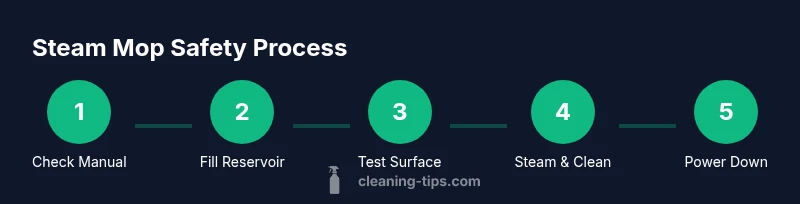
- Before you start, read the model’s manual to confirm liquid compatibility. If in doubt, use water only.
- Use distilled water to minimize mineral buildup that can affect steam quality and pad effectiveness.
- Always unplug the unit before refilling or cleaning and let it cool.
- Test on a small, inconspicuous area to ensure surfaces won’t react to moisture or residues.
- Keep children and pets away from the cleaning area to avoid accidents when the device is in use.
Different floor types and steam mop compatibility
Ceramic, vinyl, and sealed wood floors generally respond well to water-only steam cleaning, but you should check your floor manufacturer’s guidance. Unsealed wood or porous surfaces can be sensitive to moisture, so use the lowest heat setting and the lightest touch. For delicate surfaces, consider a pass with a dry microfiber pad and a minimal amount of water. In all cases, avoid prolonged exposure in one spot to prevent warping or water damage. Cleaning Tips recommends always verifying floor type and mop setting before starting.
Authoritative sources and safety notes
- Consumer Reports: Cleaning guidelines and appliance safety considerations (https://www.consumerreports.org)
- OSHA safety resources on electrical appliance use and personal safety in the home (https://www.osha.gov)
- Mayo Clinic safety and home hygiene insights (https://www.mayoclinic.org)
Tools & Materials
- Steam mop unit(Ensure it is in good working order and inspect the cord for damage.)
- Distilled water(Preferred to minimize mineral buildup.)
- Microfiber cleaning pads(Use a fresh pad for each cleaning session.)
- Manual / model instructions(Know model-specific guidelines and cleaning recommendations.)
- Soft cloth or sponge(For exterior surfaces and quick wipe-downs.)
- Vacuum or broom(Pre-remove loose debris before steaming.)
- Measuring cup(Useful for precise water handling if required by model.)
- Safety gloves(Protect hands when handling hot components.)
Steps
Estimated time: 15-25 minutes
- 1
Check the manual
Read the model’s manual to confirm whether any cleaners are permitted and to understand the recommended water type and fill capacity. This step prevents accidental damage and ensures you follow safety guidelines.
Tip: If anything is unclear, contact the manufacturer’s support line before proceeding. - 2
Prepare the water
Fill the reservoir with distilled water unless the manual specifies otherwise. Distilled water reduces mineral buildup that can affect steam quality and pad performance.
Tip: Avoid overfilling; use the line markers to prevent leaks. - 3
Fill the reservoir
Securely connect the reservoir cap after filling. Ensure there are no cracks and that the cap seals properly to avoid steam leakage.
Tip: Wash hands after handling hot components and ensure the unit is unplugged during filling. - 4
Attach the pad
Affix a fresh microfiber pad to the mop head. A clean pad improves contact with the floor and enhances steam transfer.
Tip: Check that the pad is centered and secured before starting. - 5
Test on a small area
Run a quick test on an inconspicuous patch to ensure there’s no surface reaction and to verify steam output.
Tip: If the area darkens or warps, stop immediately and reassess surface suitability. - 6
Begin steaming in overlapping moves
Move the mop in slow, overlapping strokes to maximize dirt release without lingering on one spot.
Tip: Keep the pad moving to avoid over-soaking one area and to prevent moisture buildup. - 7
Finish and store
Allow the mop to cool, empty the reservoir, wipe down exterior surfaces, and store in a dry place.
Tip: Dry the pad or replace it for next use to prevent mildew.
Questions & Answers
Can you put cleaner in a steam mop?
Generally no. Most models are designed to use only water to generate steam. Using cleaners can damage components and void warranties.
No—steam mops are intended for water-based cleaning unless the manual allows a specific cleaner.
Will using cleaner void the warranty?
Yes, many manufacturers exclude coverage if cleaners are used in the steam system. Always check the manual for guidance.
Yes, cleaners can void warranties according to many manuals.
What water should I use in my steam mop?
Distilled water is often recommended to minimize mineral buildup and keep steam quality high.
Distilled water is usually best to reduce mineral deposits.
Are essential oils safe in a steam mop?
Most models do not support essential oils; they can clog the nozzle and degrade seals.
No, avoid essential oils unless the manual says it's okay.
What should I do if my steam mop stops producing steam?
Check water level, clean the nozzle, and ensure the unit isn’t overheated. If problems persist, consult the manual.
Check the tank, nozzle, and temperature settings; if still not steaming, refer to the manual.
Watch Video
The Essentials
- Follow water-only use unless the manual allows a cleaner.
- Always read the manual first.
- Pre-clean floors to improve steam effectiveness.
- Use manufacturer-approved pads and settings.
- Avoid cleaners that could damage seals or void warranties.