Do You Put Cleaning Solution in a Steam Cleaner? Safe Practices
Discover whether you should add cleaning solutions to a steam cleaner, when it’s safe, and how to clean effectively with water-only steam. Practical guidance from Cleaning Tips for homeowners and renters.


Do not assume you should add cleaning solution to a steam cleaner. In most units, you run the device with water only, unless the manufacturer explicitly approves a cleaning agent. Using detergents or solvents can clog the system, damage seals, or produce harsh residues. Always consult your manual before adding any additive.
What steam cleaners are and how they work
Do you put cleaning solution in a steam cleaner? The short answer is usually no. Most steam cleaners heat water to a high temperature to emit steam that loosens dirt and sanitizes surfaces without chemicals. The Cleaning Tips team found that the vast majority of consumer models are designed to operate with plain water only. Detergents, solvents, or concentrated cleaners can foam inside the boiler, clog nozzles, or leave sticky residues that require extra scrubbing. Always check the user manual to confirm whether additives are permitted for your model. Steam chemistry relies on heat, humidity, and contact time—chemicals can alter those dynamics and undermine safety.
Water quality matters too. Hard water can leave mineral deposits that build up in nozzles and hoses, reducing steam output over time. If your manufacturer allows it, use distilled water to extend the device’s life and keep surfaces from chalky residues. If you do encounter stubborn grime, focus on technique and surface preparation rather than additives. The goal of steam cleaning is to rely on heat and moisture to lift dirt, not to mask it with chemicals.
This distinction matters for daily cleaning tasks in kitchens, bathrooms, and living spaces where family members may have sensitivities or allergies. By keeping the process water-only unless guidance says otherwise, you reduce exposure to harsh fumes and keep your equipment running smoothly for longer.
noteValueStructureValues":null}
When additives are allowed (and when they aren’t)
There are legitimate exceptions when additives are part of the cleaning equation, but they depend on the device and the surface. Some steam cleaners designed for carpet or upholstery include a cleaning solution cartridge or a separate chamber for approved detergents. Others are marketed as “wet steam” or “steam plus cleaning agent” models and come with explicit instructions about which cleaners to use. If your model has such a feature, ensure the product you choose is compatible, pre-mixed, and labeled for steam cleaning. Never improvise with household cleaners not listed by the manufacturer. For all other functions—tile, grout, sealed wood, fabric, or glass—stick with water unless the manual says otherwise. Even then, always test on an inconspicuous area first to detect any adverse reactions, such as discoloration or foaming.
Understanding the surface type is key. Carpet and upholstery often benefit from a cleaning solution approved by the manufacturer, while sealed hard floors typically require water-only steaming unless the product explicitly permits a cleaner. If you must use a solution, ensure you’re using the correct cartridge or chamber and never mix cleaners directly in the water tank. Following the official guidance helps protect your warranty and keeps surfaces safe from unintended chemical damage.
Household chemistry can be surprising. Some cleaners can react with rubber seals, metal fittings, or plastic housings, leading to leaks or degraded performance. If you’re unsure, err on the side of water-only steaming and supplement with targeted wipe-downs or pre-treatments that you rinse away after steaming.
Your decision should hinge on your equipment’s documentation and the specific surface you’re cleaning. When in doubt, choose water-only steam and reserve chemical cleaners for surfaces that the manufacturer explicitly authorizes. This conservative approach reduces risk while preserving cleaning efficacy over time.
noteValueStructureValues":null}
Risks of adding cleaning solutions to a steam cleaner
Introducing detergents, solvents, or essential oils into a steam cleaner can create a range of problems. Chemicals can react with rubber seals and plastic components, accelerating wear or causing leaks. Residues left on surfaces may require additional rinsing, defeating the purpose of a quick steam pass. Foaming in the boiler or nozzle can reduce steam output and cause pressure irregularities, potentially damaging the heating element. In some cases, using unapproved additives may void the warranty or contravene safety certifications. The same concerns apply to portable handheld models, which often lack the reservoir design to mix cleaners safely. Given these risks, the safest approach for most surfaces is water-only steam and a follow-up wipe with a damp cloth if needed.
Some consumers report pleasant scents when adding certain essential oils, but those oils can cling to internal parts, clogging pathways over time. Oils also increase the risk of slipping hazards on floors if residues aren’t fully evaporated. If you’re trying to address odors, consider post-cleaning air fresheners or fabric refreshers that are designed for use after steam cleaning, rather than adding scent to the steam itself.
Another consideration is compatibility with materials. Natural stone, certain laminates, or unfinished wood can be particularly sensitive to moisture. Steam can cause warping, staining, or dulling if used improperly. Always verify surface compatibility and perform a patch test on an inconspicuous area before tackling larger sections. When you protect your device from additives, you also protect your living spaces from unexpected chemical reactions.
Finally, remember that many manufacturers require you to run a maintenance cycle after using any additives to prevent residue buildup. If the device isn’t designed for chemical carriers, you may need to disassemble seals or filters to fully remove residues, which can be complicated and risky. In short, skipping the additive path and sticking with water is the simplest, safest route for most homeowners.
noteValueStructureValues":null}
Safe, effective steam cleaning with water only: a practical approach
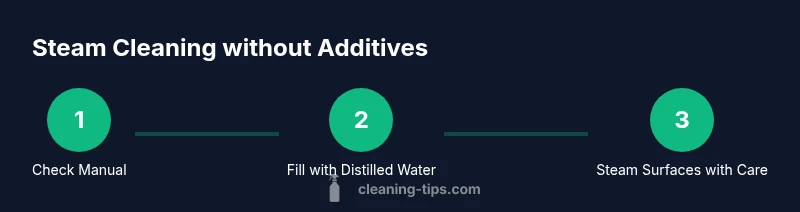
If you’re sticking to water, you can still achieve thorough cleaning with careful technique. Begin by clearing the area of loose debris; vacuum or sweep as appropriate. Fill the reservoir with distilled water to reduce mineral buildup, then attach the correct nozzle for the surface you’re treating. Always perform a quick test on a hidden patch to ensure no staining or warping. As you apply steam, move slowly in smooth, overlapping passes to maximize contact and heat exposure. Maintain the nozzle about an inch or two from the surface for most applications, unless your manual specifies otherwise. After finishing a section, wipe with a microfiber cloth to remove loosened grime and prevent drip marks. When finished, allow the unit to cool, empty the tank, and rinse or wipe the nozzle to prevent mineral deposits. Cleanliness improves with routine maintenance, so schedule a quick descale every few months if you live in hard-water regions.
If you’re cleaning delicate surfaces, adjust the distance and speed to minimize moisture contact. For grout lines, a small brush attachment can help dislodge stubborn particles without soaking adjacent tiles. After steaming, always give the area a final wipe with a dry microfiber cloth to ensure no dampness remains, which can otherwise lead to mold growth in porous materials.
In busy homes, a regular steam-clean routine can dramatically reduce grime buildup and odors. Treat surfaces in a consistent order, and dedicate time for post-clean checks to ensure everything is dry and residue-free. With patience and proper technique, water-only steam cleaning delivers dependable results without introducing chemical risks.
noteValueStructureValues":null}
Surface-specific guidance: where steam shines (and where to be cautious)
Proper use varies by surface. For tile and grout, steam is particularly effective: keep the nozzle moving and use a small brush attachment to dislodge cement-like grime. On sealed hardwood and laminate, use gentler passes and avoid excessive moisture; a damp microfiber cloth can follow after steaming. For fabrics and upholstery, test a hidden area and use the fabric attachment; steam can relax fibers and remove odors, but excessive moisture can lead to mold if not dried promptly. Glass and chrome surfaces respond well to warm steam, but avoid abrasive powders. In all cases, don’t linger on one spot too long to prevent moisture intrusion and warping. If a surface has a delicate finish or untreated wood, skip steam altogether or consult a surface-specific guide.
noteValueStructureValues":null}
Maintenance and long-term care to keep your steamer performing well
To extend the life of your steam cleaner, use distilled water whenever possible and empty the tank after each session. Rinse and wipe the nozzle and attachments, then let them air-dry. Periodically descale the heating element with a manufacturer-approved cleaner or a simple vinegar-water solution only if your unit’s manual allows it; never apply strong solvents inside the boiler. Store the device in a dry place and avoid exposure to freezing temperatures. If you notice reduced steam output or unusual odors, consult the manual’s troubleshooting section or contact customer support. Regular maintenance helps prevent mineral buildup that can obstruct steam flow and compromise cleaning efficiency. Also consider replacing worn seals or gaskets as recommended by the manufacturer to maintain a tight seal and consistent steam pressure.
In high-use homes, scheduling a quarterly maintenance check with the manufacturer or a qualified technician can prevent unexpected failures. Keep a log of descale dates and any replacements so you can track the device’s health over time.
noteValueStructureValues":null}
Manufacturer guidance and safe practices you should follow
Manufacturers provide the final word on safety. Before using any additive, read the safety data and product recommendations in your steam cleaner’s manual. If the manual specifies water-only operation, respect that instruction. When an approved additive is permitted, use only formulas labeled for steam cleaning and mix them exactly as directed. Keep kids and pets away during operation, and ensure the area is well-ventilated. For sensitive surfaces such as natural stone or antique finishes, consider alternative cleaning methods rather than steam to avoid damage. By adhering to official guidance, you protect your equipment, safeguard your surfaces, and preserve the warranty. If you ever notice unusual performance after trying a new product, discontinue use immediately and consult the manufacturer’s guidelines.
Practical tip: maintain a dedicated set of attachments for surfaces that are highly prone to residue or staining. This reduces cross-contamination and helps you keep the steam path clean for all future tasks. The Cleaning Tips team emphasizes that informed, surface-specific usage is the key to long-term satisfaction with any steam-cleaning regimen.
noteValueStructureValues":null}
Quick-start checklist before your next clean
- Confirm your model’s stance on additives in the manual or product page.
- Use distilled water to reduce mineral buildup.
- Attach the correct nozzle for the surface and maintain distance.
- Test a small area first, then treat larger sections.
- Wipe surfaces with a microfiber cloth after steaming for best results.
noteValueStructureValues":null
What homeowners should know about steam cleaning and additives (recap)
In almost all standard households, do you put cleaning solution in a steam cleaner? Usually the answer is no. Stick to water and rely on heat, moisture, and time to break down grime. If you need sanitization beyond steam, select a product that is explicitly approved for steam cleaning and use it only in the designated cartridge or chamber, following exact mixing instructions. Avoid solvents, degreasers, and essential oils that aren’t listed for your device; they can corrode seals and void warranties. For sensitive surfaces such as unfinished wood, natural stone, or antique finishes, opt for non-steam cleaning methods. Finally, document your cleaning sessions and monitor for any signs of moisture intrusion or residue. The Cleaning Tips team reiterates that safe, manufacturer-approved practices are the best path to long-term results and device longevity.
Tools & Materials
- Water (distilled recommended)(Fill the reservoir with distilled water to minimize mineral buildup.)
- Measuring cup (optional)(Only if your appliance uses additives; not needed for water-only use.)
- Soft microfiber cloths(For wiping and drying surfaces after steaming.)
- Appropriate attachments/nozzles(Floor head, brush, or fabric attachment based on surface.)
- Bucket or tray (optional)(For initial pre-wipe or rinsing if needed.)
- Soft brush or upholstery attachment (optional)(For stubborn grime on fabric surfaces.)
Steps
Estimated time: 25-45 minutes
- 1
Check the manual and surface compatibility
Begin by reviewing the user manual to confirm whether additives are permitted and which surfaces are safe for steam cleaning. Identify the appropriate attachment and note any distance guidelines. This ensures you don’t inadvertently damage seals or finishes.
Tip: Always start with a test patch on an inconspicuous area. - 2
Prepare the machine and materials
Close the reservoir, remove any residual cleaners, and ensure the nozzle is clean. Fill with distilled water if possible, and attach the correct head for your surface. Having everything ready reduces interruptions during the clean.
Tip: Use distilled water to minimize mineral buildup. - 3
Perform a small surface test
Turn on the unit and apply steam to a hidden corner for 10–20 seconds. Check for discoloration, excessive moisture, or unusual odors before proceeding.
Tip: If anything looks off, stop and consult the manual. - 4
Steam with methodical passes
Keep the nozzle 1–2 inches from the surface and move slowly in overlapping strokes. For grout, use a small brush; for fabric, use the appropriate attachment and avoid saturating fibers.
Tip: Avoid staying in one spot to prevent moisture damage. - 5
Wipe and dry after steaming
Use a microfiber cloth to wipe away loosened grime and dry surfaces promptly to prevent mold or water marks.
Tip: A quick follow-up wipe improves results and dries surfaces faster. - 6
Cool down and maintenance
Turn off the unit, unplug, and let it cool. Empty the tank, rinse attachments, and allow parts to dry completely before storage.
Tip: Clean the nozzle tip to prevent mineral buildup. - 7
Evaluate results and plan next steps
Inspect the cleaned area, repeat on stubborn spots if needed using the same water-only approach, and schedule routine descale if you live in hard-water areas.
Tip: Document any surfaces that required extra attention for future cleanings.
Questions & Answers
Can I use vinegar in a steam cleaner?
Vinegar or other acidic cleaners are generally not recommended unless explicitly approved by the manufacturer. Acidic solutions can corrode seals and components, void warranties, and leave residues. If unsure, avoid vinegar in steam cleaning and rely on water-only operation.
Vinegar isn’t usually recommended in steam cleaners unless your manual approves it; it can corrode seals and void warranties.
What happens if I add cleaning solution to my steam cleaner?
Adding an unapproved cleaning solution can clog the system, cause foaming, damage the heater, and leave residues that require extra effort to remove. It may also void the warranty. Always follow the manufacturer’s guidance.
If you add an unapproved cleaner, you risk damage and voiding the warranty.
Are there steam cleaners designed to use cleaners?
Yes, some models are designed to use approved cleaning agents in a dedicated cartridge or chamber. Use only products labeled for steam cleaning and follow the exact mixing and usage instructions from the manufacturer.
Some models allow cleaners in a dedicated cartridge—check your manual.
Should I ever use essential oils with a steam cleaner?
Essential oils are generally not advised unless the manufacturer specifies that they are compatible with the device. Oils can clog internal parts and create residues that are hard to remove.
Only if the manual says it’s okay; otherwise avoid oils in steam cleaning.
Will using additives affect my warranty?
Using unapproved additives can void warranties and impact safety certifications. Always follow the manufacturer’s recommendations to protect coverage and device integrity.
Unapproved additives can void warranties, so follow the manual.
What’s the best way to sanitize surfaces with a steam cleaner without chemicals?
Steam alone can lift grime and reduce germs. For deeper sanitization, ensure surfaces reach high enough temperatures and dwell time as designed by the manufacturer, then finish with a wipe or air dry.
Steam can sanitize if the surface reaches the right temperature; follow the device’s guidelines.
Watch Video
The Essentials
- Use water-only steam in most cases.
- Consult the manual before any additives.
- Test patches to prevent damage.
- Maintain your steamer to prevent mineral buildup.
- Choose surface-appropriate methods for best results.