How to Clean a Mattress Vacuum: A Practical Guide
Learn how to clean a mattress with a vacuum, remove dust mites and odors, choose the right attachments, and dry properly for a healthier bed. Practical steps, tools, stains, and long-term care from Cleaning Tips.


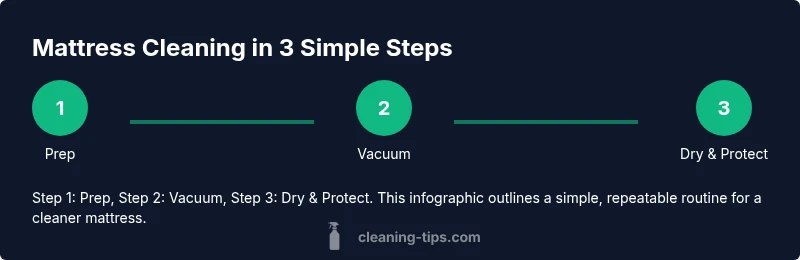
In this guide, you’ll learn how to clean a mattress using a vacuum and attachments for a fresh, allergen-free bed. You’ll need a vacuum with strong suction, an upholstery nozzle, a crevice tool, baking soda, and a mattress protector. By following prep, cleaning, stain treatment, and drying steps, you’ll extend mattress life and improve sleep quality.
Why clean mattress vacuum matters
Regularly cleaning a mattress with a vacuum helps reduce allergen buildup, including dust mites, dead skin cells, and pet dander. Over time, these particles accumulate in the fabric and inner layers, which can trigger sneezing, congestion, and skin irritation for sensitive sleepers. A dedicated mattress vacuum with strong suction and an upholstery attachment can lift surface dust and reveal a cleaner surface for stain treatment and freshen odors. The Cleaning Tips team emphasizes that consistent, gentle vacuuming is a foundational habit for a healthier sleeping environment. While a vacuum cannot eliminate every microscopic organism, it dramatically lowers exposure and buys you time between deep clean sessions. For households with allergy sufferers or kids in the home, prioritizing mattress maintenance is part of a broader, practical cleaning routine.
Tools and materials you'll need
Before you begin, assemble essential tools and materials to keep the process smooth and safe. The goal is to clean without soaking the mattress or damaging fabric.
- Vacuum cleaner with strong suction (HEPA preferred) — required
- Upholstery nozzle — required
- Crevice tool — required
- Mattress protector or clean sheet — required
- Baking soda — optional for odor control
- Clean microfiber cloths — required
- Spray bottle with water and mild detergent (or vinegar solution) — optional
- Mild detergent for spot cleaning — optional
Having these items handy reduces interruptions and helps you work efficiently. Always test any cleaning solution on a hidden area first to avoid discoloration. And remember to unplug the vacuum when switching attachments.
Prep the room and mattress
Clear the area around the bed and remove all bedding, including sheets, pillowcases, and mattress toppers. Launder fabrics according to care labels and air them as needed. Vacuuming should start with a dry surface; moisture increases the risk of mildew. If possible, open a window or turn on a fan to improve air circulation. By preparing the space, you protect surrounding furniture and reduce the chance of spreading debris while you work. Now you’re ready to start the vacuuming with purpose, knowing you’ve cleared the path for thorough cleaning.
According to Cleaning Tips, preparation is half the victory; a clean workspace reduces cross-contamination and helps you see how much debris is left after the first pass.
Vacuuming technique: surface and deep
Position the mattress on a stable surface or floor, and use the upholstery nozzle to cover the entire top surface in overlapping, straight strokes. Move in a grid pattern so no area is missed. Apply moderate, steady pressure to lift dust without compressing the fabric. When you reach the edges, switch to the crevice tool to clean seams and piping. Vacuum the sides as well to remove debris that can migrate into the core when rolled or stored. This is the core cleaning pass that removes most of the loose material that irritates sleepers.
Stain removal and odor control
Stains require a targeted approach. Blot spills with a clean cloth to remove excess moisture, then treat small areas with a mild cleaning solution applied to a cloth — never pour liquid directly on the mattress. Gently blot, rotate, and blot again to lift the stain. For odors, lightly sprinkle baking soda over the surface and leave it for a while before vacuuming it up. If a stain persists, repeat the blot step or use a fabric-safe stain remover following the product instructions and patch test first. Finish with a final vacuum to pick up any remaining residue.
Drying and protection
Moisture is the enemy of a clean mattress. After cleaning, allow the mattress to air-dry completely in a well-ventilated room. If you can, place the mattress in a shaded area away from direct sunlight to avoid fabric fading. Use fans or a dehumidifier to speed up drying. Once dry, reassemble bedding and consider a washable, breathable mattress protector to reduce future staining and moisture buildup. Regular drying helps prevent mold and keeps the surface fresh for longer.
Maintenance and long-term care
Set a quick weekly vacuum schedule and pair it with a monthly deep clean to keep debris from building up. Rotate and flip the mattress if recommended by the manufacturer to promote even wear and contour. Use a mattress protector to shield against spills and skin oils, then launder the protector regularly. Inspect the mattress for signs of moisture or mildew after cleaning and address promptly. With consistent habits, your mattress stays fresher, cleaner, and healthier for sleep.
Tools & Materials
- Vacuum cleaner with strong suction (HEPA preferred)(Ensure it has an upholstery nozzle attached; consider sealed canister for better filtration.)
- Upholstery nozzle(Essential for surface cleaning without saturating fabric.)
- Crevice tool(Use for seams, piping, and edges where dust hides.)
- Mattress protector or clean sheet(Protects mattress after cleaning and makes future cleanups easier.)
- Baking soda(Odor control; sprinkle and vacuum after a short dwell time.)
- Clean microfiber cloths(Lint-free for blotting and gentle cleaning.)
- Spray bottle with water and mild detergent(Optional for spot cleaning; test patch first.)
- Mild detergent for spot cleaning(Choose a gentle formula suitable for fabrics.)
Steps
Estimated time: 45-60 minutes
- 1
Prep the bed and space
Strip all bedding and remove pillows. Launder fabrics as needed and air them out. Clear the area around the bed to minimize contamination, and set up a ventilation aid like a fan or open window. This prepares you for an efficient cleaning pass and helps you see debris clearly.
Tip: Having a clear space reduces the chance of transferring dirt to other surfaces. - 2
Attach and verify attachments
Attach the upholstery nozzle for the mattress surface and the crevice tool for seams. Check that the attachments are securely connected and that the vacuum is set to the appropriate suction level for fabric without damage.
Tip: Test suction on a scrap fabric before starting the main pass. - 3
Vacuum the mattress surface
Vacuum using even, overlapping strokes from top to bottom. Maintain a comfortable pace to lift dust without pressing hard; treat one section at a time to avoid missing spots.
Tip: Work in a grid pattern to ensure full coverage. - 4
Vacuum seams and edges
Switch to the crevice tool and run it along seams, piping, and stitched areas. Dust tends to settle into these crevices, so a targeted pass helps prevent buildup.
Tip: Angle the tool to reach tight corners without snagging fabric. - 5
Address stains and odors
Blot stains with a damp cloth and a mild cleaner; avoid soaking. For odors, apply baking soda and let it sit before a final vacuuming. Patch-test any product and re-blot if needed.
Tip: Always patch test first to protect the fabric. - 6
Dry and protect the mattress
Allow complete air-drying in a ventilated space, preferably out of direct sun. Once dry, reassemble bedding and place a breathable protector on the mattress for ongoing protection.
Tip: Enhance drying with a fan or dehumidifier to speed up the process.
Questions & Answers
Do I need a special mattress vacuum or can any vacuum work?
A standard vacuum with strong suction and an upholstery nozzle is usually enough. A HEPA-filter model helps capture fine particles.
A standard vacuum with good suction and the upholstery attachment is usually enough.
How should I test cleaning solutions on a mattress?
Always patch-test on an inconspicuous area before applying to visible fabric to avoid staining.
Patch test first.
Can I vacuum a mattress with the bed in place?
If space is tight, you can vacuum while the bed is on the frame, but ensure you do not pull on the sheets and avoid over-wetting.
You can vacuum on the frame, just be careful.
How long does it take for a mattress to dry after cleaning?
Drying time depends on humidity and ventilation; ensure complete dryness before sleep.
Let it dry completely before using again.
Is baking soda safe for all mattress fabrics?
Baking soda is generally safe for many fabrics; test first and brush off after several hours.
Test first, then brush away.
Watch Video
The Essentials
- Vacuum regularly to reduce allergens
- Use the right attachments for efficient cleaning
- Avoid soaking; ensure complete drying
- Protect the mattress with a breathable cover