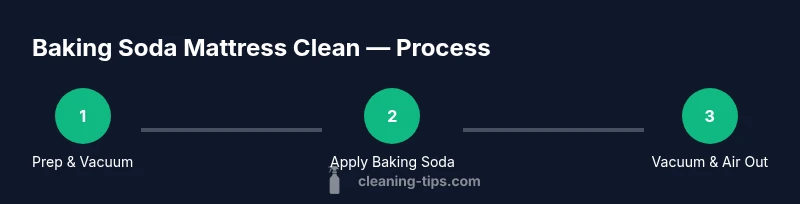
Baking Soda Mattress Clean: A Practical Guide
Learn how to clean a mattress with baking soda to deodorize, lift light stains, and refresh sleeping surfaces. This educational guide from Cleaning Tips covers prep, application, waiting times, and safe vacuuming for a healthier home.


You can safely refresh a mattress using baking soda to absorb odors and stains. This guide shows how to prepare, apply, and vacuum the powder without leaving residue. Gather baking soda, a vacuum with a HEPA filter, a soft brush, and a clean cloth. Let the mattress air out after treatment.
Why Baking Soda Mattress Clean Is Effective
This baking soda mattress clean approach helps refresh a sleeping surface by absorbing moisture and neutralizing odors. Baking soda acts as a dry-cleaning agent that traps particles on the surface, making subsequent cleaning steps more effective. It does not sanitize or remove deep-set stains, but it can significantly improve freshness when used as part of a broader cleaning routine. According to Cleaning Tips analysis, unscented baking soda can be a reliable first step for routine mattress refreshes. Always test a small, inconspicuous area first to ensure there is no adverse reaction with your fabric.
Preparing Your Mattress for Treatment
Before applying baking soda, strip the bed and launder any washable bedding. Vacuum the mattress surface thoroughly to remove dust, skin cells, and debris that could mix with the powder. Inspect for visible stains and note any areas that feel damp or odor-prone. If the mattress is damp, allow it to dry completely before applying baking soda. Use a clean cloth to blot lightly if needed. A well-ventilated room helps the powder work more effectively and reduces the risk of moisture being trapped under the bedding. This preparation step sets the stage for a faster, safer clean and helps you achieve more consistent results with Baking Soda Mattress Clean methods.
Odors and Stains: What Baking Soda Can Help With
Odor absorption: Baking soda is excellent at soaking up basic odors—sweat, body oils, and milder smells. It helps create a fresher sleeping surface without introducing moisture. Light stains: For minor stains, baking soda can lift some surface coloration when used with light brushing, but it won't remove deep-set dyes. In staining scenarios, consider pretreating with a mild enzyme cleaner or hydrogen peroxide in a safe spot test if appropriate for your fabric. Do not mix baking soda with other cleaners directly on the fabric; apply cleaners separately and rinse thoroughly before reapplying powder.
Best Practices for Application, Timing, and Vacuuming
Evenly spread a thin, generous layer of baking soda across the entire mattress surface. A grime-prone area may benefit from slightly more powder, but avoid clumping. Let it sit for 20-60 minutes to maximize odor capture; longer times are fine on dry mattresses but do not leave powder on overnight unless you plan to vacuum it thoroughly the next day. Vacuum the mattress using a upholstery attachment and the HEPA-filter vacuum to remove all powder residue. For fabric care, go slow and overlap passes to ensure no powder remains. If you have a foam mattress, keep the powder light to avoid settling into foam pores.
When to Consider Alternatives or Professional Help
Baking soda works for many routine refreshes but may not fully eliminate tough stains or deep odors. For urine, perspiration, or smoke odors, consider a targeted stain remover or a mild cleaner followed by thorough drying before applying powder. Persistent odors after vacuuming may indicate hidden moisture or embedded compounds better addressed with professional cleaning. If your mattress has a visible mold, is very damp, or shows signs of mildew, skip baking soda and consult a professional cleaning service. Ensure all products used are compatible with your mattress type, especially memory foam or latex.
Tools & Materials
- Baking soda (unscented)(Fine granules, sprinkle evenly (approximately 1 cup per 8-10 square feet).)
- Vacuum cleaner with HEPA filter(Upholstery attachment for gentle suction and powder removal.)
- Soft brush or microfiber cloth(For light agitation and surface prep.)
- Clean microfiber cloth(For blotting and wiping any possible residue.)
- Drop cloth or old sheet(Protects floor and bedding from powder.)
- Mask or gloves(Optional if you are dust-sensitive.)
Steps
Estimated time: 1.5-3 hours (including airing)
- 1
Prepare area and remove bedding
Strip the bed, launder sheets if possible, and move the mattress to a clear area. Vacuum nearby surfaces to reduce dust that can settle on the mattress. This initial prep minimizes mess and helps you work more efficiently.
Tip: Protect surrounding surfaces with a drop cloth to catch any escaping dust. - 2
Vacuum the mattress surface
Use a vacuum with a upholstery attachment to remove loose debris and skin cells. Vacuum in long, slow passes, overlapping sections to cover the entire surface. This step reduces the amount of powder you’ll need and improves odor absorption.
Tip: Keep the vacuum at a steady pace to avoid pushing debris deeper into the fabric. - 3
Lightly brush and inspect
Gently brush the fabric to loosen any embedded particles and check for damp areas or stains. Address damp spots separately by ensuring they dry fully before applying baking soda.
Tip: Test a small hidden area if you’re concerned about colorfastness. - 4
Evenly sprinkle baking soda
Sprinkle a light, even layer over the entire mattress surface. Focus extra powder on areas with odors or dampness. Do not over-saturate or form clumps, which can be difficult to remove.
Tip: If you have a darker fabric, use a light brush to help distribute the powder evenly. - 5
Let it sit to absorb moisture
Allow the baking soda to sit for 20-60 minutes, giving it time to absorb odors and moisture. In very dry environments, you can extend the time a bit, but avoid leaving powder on too long if you plan to sleep on the bed soon.
Tip: Use a timer to remind you to vacuum when the time is up. - 6
Vacuum thoroughly to remove powder
Vacuum again with the upholstery attachment, overlapping passes to ensure no powder remains. Check seams and edges where powder can hide. If any residue remains, go over those areas again.
Tip: Finish with a final pass on the edges to prevent powder from seeping into the frame. - 7
Air out and replace bedding
Return the mattress to its frame and replace bedding after a short airing period. If possible, leave the room well-ventilated to help any remaining moisture evaporate.
Tip: If you have a memory foam mattress, avoid heavy moisture; ensure warmth and airflow to speed drying.
Questions & Answers
Can baking soda harm my mattress fabric?
Generally safe for standard mattress fabrics when used dry and thoroughly vacuumed. Avoid applying to damaged fabrics or areas with visible wear; always test a small area first.
Baking soda is typically safe on standard mattress fabrics if used dry and vacuumed well; test a small area first.
How long should baking soda sit on a mattress?
Let baking soda sit for 20-60 minutes to absorb odors and moisture. Longer times are fine on dry mattresses, but avoid extended times if you won’t vacuum promptly.
Let it sit for 20 to 60 minutes, longer is fine if the mattress is dry, then vacuum well.
Will baking soda remove tough stains?
Baking soda helps with light, surface stains and odor, but it isn’t a guaranteed solution for deep-set stains. Pretreat with a mild cleaner if needed and always test first.
It helps with light stains and odors, but it won’t remove deep-set stains every time.
Is baking soda safe for memory foam?
Yes, generally safe when used sparingly and fully vacuumed. Avoid leaving powder on the foam for too long and ensure it dries completely before using the bed.
Yes, but vacuum well and let it dry fully before you sleep on it.
What if odors persist after cleaning?
Persistent odors may indicate hidden moisture or deeper issues. Consider targeted cleaners or a professional service if odors remain after thorough drying and vacuuming.
If odors persist after cleaning, you may need deeper treatment or professional help.
Watch Video
The Essentials
- Test a hidden area before full application
- Vacuum thoroughly to remove all powder
- Air out the mattress completely before reuse
- Choose unscented baking soda for best results