How to clean the dryer: a practical step-by-step guide
Learn how to clean the dryer safely, reduce fire risk, and improve efficiency with a comprehensive step-by-step guide, tools, maintenance tips, and FAQs from Cleaning Tips.


This guide will help you clean the dryer safely, covering lint trap maintenance, drum cleaning, and vent checks. You’ll need basic tools and a few minutes for each task. By following these steps, you reduce fire risk, improve efficiency, and extend your dryer's life. This quick answer helps homeowners start safely today.
Why cleaning the dryer matters
According to Cleaning Tips, regular dryer cleaning is essential for both safety and efficiency. Lint and residue can restrict airflow, causing longer drying times and higher energy use. Over time, heat and restricted airflow stress components, increasing the risk of failure. A well-maintained dryer dries clothes faster, consumes less energy, and lowers the chance of a fire. Cleaning Tips team emphasizes routine checks as part of prudent home maintenance, especially for households with frequent laundry loads or high-dryer usage. A simple cleaning routine can be incorporated into monthly chores, requiring only a small amount of time but delivering meaningful benefits to your home’s safety and energy bills.
How lint buildup affects efficiency and safety
Lint accumulation is more than a just-aesthetics issue. It acts like a barrier to proper airflow, forcing the dryer to work harder and longer to achieve desired dryness. This extra strain can overheat heating elements, shorten the life of belts, and increase energy consumption. The Cleaning Tips analysis shows that regular lint screen cleaning and vent inspection can dramatically reduce drying times and help prevent heat-related malfunctions. By keeping the lint trap clear and the vent paths open, you maintain better airflow, safer operation, and lower energy bills over the appliance’s lifespan.
Essential tools and materials for a safe clean
Before you start, gather the right tools to avoid interruptions. A vacuum with a narrow nozzle, a soft brush, mild detergent, a microfiber cloth, and safety gloves are essential. Having a flashlight helps you inspect tight corners, and a stiff brush is great for lint screen bristles. Always choose non-abrasive cleaners for the drum to avoid scratching finishes. A helper or a second pair of hands can make handling panels safer when removing components. By preparing properly, you reduce the risk of accidental damage and speed up the process.
Step-by-step guide to cleaning the dryer safely
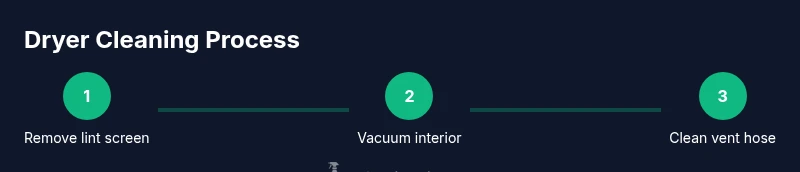
This section provides a clear, safety-first approach. Begin by unplugging the dryer and turning off any gas supply if applicable. Remove the lint screen, wash it with warm water and mild detergent, and let it dry completely. Vacuum the interior drum and lint trap housing to remove hidden lint, then inspect the vent hose for kinks or clogs. Detach the vent hose from the back and clean both ends with a brush or vacuum attachment. Reconnect the hose securely, clean the outdoor vent cap, and run a short test cycle to verify airflow. Finally, wipe down the drum with a damp cloth and allow it to dry before reusing.
According to Cleaning Tips, performing these steps monthly or after heavy laundry usage keeps your dryer efficient and safe. A thorough inspection of the vent system every season helps ensure optimal airflow year-round.
Preventive maintenance and long-term care
Create a simple maintenance schedule that fits your laundry routine. Clean the lint trap after every load, inspect the vent hose quarterly, and schedule a professional vent cleaning annually if you have long or frequently used runs. Cleaning Tips recommends documenting when you cleaned the lint trap and vent so you can track maintenance consistency. A proactive approach reduces the risk of fires, minimizes energy waste, and extends the life of your appliance by preventing accumulation of stubborn residues in critical pathways.
Tools & Materials
- Vacuum cleaner with narrow nozzle(Use a crevice attachment to reach lint behind the lint screen and inside the lint housing.)
- Soft brush or old toothbrush(Helpful for dislodging lint from the screen and drum seams.)
- Mild detergent and warm water(For washing the lint screen and any sticky residues.)
- Microfiber cloth(For wiping the drum interior and exterior surfaces.)
- Safety gloves(Protect your hands while handling panels and vents.)
- Flashlight(Helps inspect hard-to-see corners behind the lint trap.)
- Duct tape or foil tape(Use if you need to seal minor vent hose gaps after cleaning.)
- Screwdriver (flathead and Phillips)(For removing access panels if needed.)
Steps
Estimated time: 60-90 minutes
- 1
Power down and prep
Unplug the dryer to prevent any electrical risk. If you have a gas dryer, shut off the gas valve and ensure the area is well-ventilated. Gather all tools and place a towel beneath the area to catch any loosened lint.
Tip: Double-check the power cord and ensure it cannot be reconnected accidentally during cleaning. - 2
Remove and clean lint screen
Take out the lint screen and wash it with warm water and a mild detergent. Gently scrub away residue, rinse, and let it dry completely before reinserting. This prevents lint from bypassing the trap.
Tip: Avoid using hot water that could warp plastic lint screens. - 3
Vacuum drum and lint housing
Use a narrow nozzle attachment to vacuum the interior of the drum and the lint housing around the screen. Wipe any remaining debris with a damp microfiber cloth. Check for signs of wear that may require part replacement.
Tip: Work slowly to avoid missing hidden lint behind seams. - 4
Inspect and clean vent hose
Disconnect the vent hose from the dryer and clean the interior with a brush or vacuum extension. Pay attention to tight bends where lint loves to accumulate. Reconnect securely after cleaning.
Tip: If you notice crushed sections or cracks, replace the hose to maintain proper airflow. - 5
Clean exterior vent and cap
Clean the outdoor vent cap with a brush and rinse away lint near the opening. Ensure the cap can open and close freely, and remove any bird nests or debris.
Tip: Clear any obstructions within a 2–3 inch radius of the exterior vent to maximize airflow. - 6
Test run and reassembly
Reconnect power, run a short cycle to verify airflow, and listen for unusual noises. Wipe the drum one final time and ensure all panels are secure before using the dryer again.
Tip: Run a test with no clothes for 5–10 minutes to confirm even airflow and cooling.
Questions & Answers
How often should I clean the dryer's lint trap and vent?
Clean the lint trap after every load. Inspect the vent hose and outdoor vent quarterly, and consider a professional vent cleaning annually if your usage is high or you notice longer drying times.
Clean the lint trap after every load and inspect vents quarterly. Consider annual professional vent cleaning if you use the dryer a lot.
Does cleaning the dryer reduce fire risk?
Yes. Lint buildup is a common fire hazard. Regular cleaning of the lint screen and vent path helps prevent overheating and reduces the risk of a dryer fire.
Regular lint screen and vent cleaning reduces the fire risk associated with dryers.
Should I disconnect power before cleaning?
Always unplug the dryer before starting. If you have a gas dryer, shut off the gas valve and ventilate the area before you begin.
Always unplug first, and shut off gas if you have a gas dryer.
What is the best method to clean the vent hose?
Use a vacuum attachment or stiff brush to clear lint from the hose. Reconnect securely and test airflow. Replace a damaged hose to maintain safe operation.
Vacuum and brush the hose, then reattach securely. Replace damaged hoses.
Can I use vinegar or other cleaners on the drum?
Mild detergents are safe for the drum; avoid harsh chemicals that can damage coatings. Rinse and dry thoroughly after cleaning.
Use mild detergents, avoid harsh cleaners, rinse and dry completely.
Watch Video
The Essentials
- Regular lint trap cleaning improves airflow.
- Inspect and clean the vent hose for best efficiency.
- Safety first: unplug and, if gas, shut off the supply.
- Test airflow after cleaning to ensure proper operation.