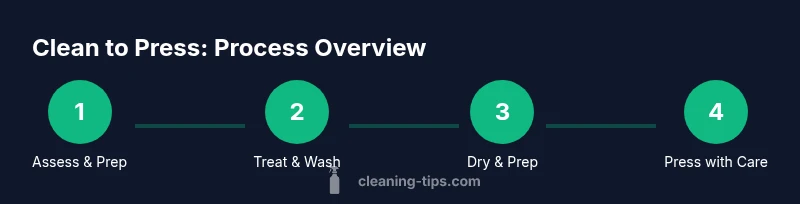
Clean to Press: Step-by-Step Garment Prep for Crisp Results
Learn how to clean to press with a practical, step-by-step guide. Get stain removal tips, safe heat settings, and pro techniques for crisp, professional-looking garments.


Learn how to clean to press effectively, ensuring fabrics respond to heat without scorching or setting stains. This guide covers prep steps, why cleanliness matters, and how to time each action for crisp results—from stain removal and washing to drying and the correct pressing technique. With practical tips, you’ll achieve professional-looking creases.
Why clean to press matters for garment care
Clean to press isn't just about removing visible stains; it's about creating the ideal surface for heat and pressure to work. When fabrics carry oils, body soils, or residues from detergents, heat can set these substances, leading to shiny patches or stiff creases. According to Cleaning Tips, a deliberate prep leads to longer-lasting creases and a neater finish. The goal is to prepare fibers so they respond to your iron or press with predictable behavior, reducing the risk of scorch marks and fabric shimmer. The idea is simple: clean fabrics press better, and a well-prepped garment looks more professional in every setting. In this section, you'll see how cleansing and preparation establish the foundation for precise creases and uniform texture across seams and darts. You’ll also learn how cleanliness interacts with steam and heat to shape the final look.
Defining clean to press: prep work
Clean to press starts long before the first stroke of the iron. It begins with choosing appropriate cleaning steps for the fabric type, then pre-treating marks that would otherwise be magnified by heat. Pre-wash or hand wash when appropriate; use a gentle detergent for delicate fabrics; skip bleach on sensitive fibers. The Cleaning Tips team highlights that stain removal should precede the wash, since many stains set under heat. Prepping means inspecting the garment for soil, oil, or residual detergent, then choosing a plan that preserves color and finish. You’ll want to assess pile direction, fabric weight, and visible wrinkles before you start. The end result is a garment that responds to heat evenly, making the pressing step faster and more predictable.
Fabric science: why cleanliness interacts with heat
Fibers shrink, stretch, and hold crease lines differently depending on moisture content and surface cleanliness. Clean surfaces reduce friction, enabling smoother glide of the iron; dirty surfaces increase friction that can distort seam lines. Steam relaxes fibers better when the fabric is free of residues that trap moisture in unwanted places. Understanding this helps you set the right heat and moisture balance to avoid scorching or gloss marks. When you remove soil and oil, you minimize transfer from one garment to another and protect your ironing board cover and your iron's plate from staining. This section bridges the theory of fabric physics with practical steps you can apply in your own laundry routine.
Tools and materials you truly need before you start
Having the right tools makes clean to press easier and safer. Gather a clean, heat-safe ironing board, a well-maintained iron or professional press, a spray bottle with distilled water, a mild stain remover, and clean pressing cloths. A lint roller or nylon brush helps you lift surface dust before pressing; a seam roll keeps seams flat during work. Don’t forget a timer or watch to keep track of heat exposure, and a small towel to wipe the iron if it accumulates residue. If you’re pressing wool or synthetic blends, lay out a protective pressing cloth to prevent shine. The goal is to minimize surprises during the actual press by having everything ready and within reach.
Step-by-step workflow: stain removal to wash
Begin with staining assessment, then treat marks with a suitable remover chosen for the fabric. Gently dab, don’t rub, to lift color without pushing it deeper. After pre-treating, wash according to garment care labels, choosing the gentlest cycle and temperature that still remove soil. Remove promptly from the washer to avoid setting wrinkles; lay flat to air-dry or tumble dry on low heat if indicated. If a stain remains, repeat the treatment rather than trying to force it with heat. Clean to press requires patience: rushing this step makes the final crease unreliable and increases the risk of heat damage.
Drying and prepping fabric before pressing
Drying is critical to success. Fabrics should be evenly damp or fully dry depending on the fiber and the heat you will apply. Use a clean, breathable hanger for shirts and a flat surface for trousers. Lightly smooth the fabric with your hands to relax fibers; avoid pulling or stretching, which creates distortions. If you’re short on time, a low-heat tumble can be acceptable for sturdier fabrics, but resist high heat on delicate textiles. A damp garment may benefit from a light misting with distilled water to re-activate fibers before pressing, but don’t oversaturate. Proper drying ensures the fabric glides smoothly under the iron, producing clean lines and crisp pleats.
Pressing technique: heat, steam, and precision
Set the iron to the fabric’s recommended temperature, then test on an inconspicuous area before proceeding. Use a pressing cloth on dark fabrics to prevent shine and transfer. Move deliberately, applying steady pressure rather than quick strokes, and avoid lingering on one spot to prevent scorching. For cotton and linen, press with steam to relax fibers; for synthetics, use a dry heat or low-moisture approach. Keep the board surface smooth and the garment flat. If you’re using a professional press, follow the manufacturer’s guidelines to achieve even density and consistent creases. Your goal is to produce uniform, sharp edges without creating new wrinkles around seam lines.
Troubleshooting common issues during pressing
If you notice shiny patches, check heat level and ensure you’re using a pressing cloth on glossy fabrics. White residue on dark fabrics usually means you began with hard water; switch to distilled water and wipe the plate. If fabrics buckle or pull, back off heat slightly and adjust the fabric’s alignment with the seam. Persistent creases can be caused by over-drying or pressing over a wrinkled area; re-wet or re-drape the fabric and re-press. For stubborn stains, pre-treat again with appropriate remover and re-wash. Regularly cleaning the iron plate and cover prevents residue from transferring to future garments, keeping results clean and predictable.
Maintenance and safety for your pressing tools
Clean to press safely requires routine maintenance. Empty the water reservoir after use, wipe the plate, and inspect cords and plugs for signs of wear. Store the iron upright and away from children; use a heat-resistant mat when not in use. Check the steam vents and use distilled water to reduce mineral buildup. If you use a steam press, follow the manufacturer’s instructions for heat cycles and safety cutoffs. Regularly replace worn pressing irons or boards, and keep a dedicated space free of clutter. Routine upkeep extends tool life and protects fabrics from heat-related damage.
Delicate fabrics and stain-specific tips
Delicates such as silk, satin, and certain synthetics require cooler temperatures and gentler handling. Use a pressing cloth and test on a hidden area before applying heat. For protein-based stains (blood, sweat), pre-treat with a gentle detergent and cool water, then rinse; avoid hot water that can set proteins. For oily stains, a solvent-based remover or dish soap dilution may work, followed by a careful wash. Always check care labels for recommended heat and avoid rubbing; instead, pat and lift. With fragile fibers, consider using a professional press or hand-pressing technique to prevent crease distortion and shine.
Tools & Materials
- Iron or professional press(Ensure clean soleplate; test on scrap fabric.)
- Adjustable ironing board(Stable, heat-resistant cover.)
- Distilled water spray bottle(For steam generation and misting.)
- Mild stain remover suitable for fabrics(Follow label directions.)
- Pressing cloth or cotton muslin(Used on shiny or dark fabrics.)
- Lint roller or soft brush(Pre-clean surface before pressing.)
- Timer or clock(Track heat exposure time.)
- Towels or blotting cloth(Absorb moisture during prep.)
Steps
Estimated time: 60-90 minutes
- 1
Inspect and assess garment
Check care label, identify stains, choose pre-treatment. Decide whether to wash or hand wash first based on fiber and soil level.
Tip: Test stain remover on an inconspicuous area before applying. - 2
Pre-treat stains
Apply product to the stain with a light touch; avoid rubbing, which can push stain deeper. Let sit according to product directions.
Tip: Use the smallest amount that covers the stain to prevent residue. - 3
Wash according to care label
Select the gentlest cycle and temperature that removes soil; use a mild detergent for delicates.
Tip: Always check the label for water temperature guidelines. - 4
Dry and prepare
Dry to a state appropriate for the fabric (damp for some wools, fully dry for cottons). Smooth seams and lay flat to minimize new wrinkles.
Tip: For shirts, hang; for trousers, lay flat to avoid creases. - 5
Set up pressing area and test heat
Test iron heat on a scrap fabric or seam allowance; verify that the heat matches the garment type.
Tip: Test area should resemble the fabric’s weight and finish. - 6
Press with proper technique
Apply even pressure with controlled strokes; use steam where appropriate and avoid lingering on any one area to prevent scorching.
Tip: Follow grain lines (along seams and edges) for crisp results.
Questions & Answers
What is clean to press?
Clean to press means preparing garments by cleaning and pre-treating stains before pressing to achieve crisp creases and prevent heat damage.
Clean to press means prepping clothes with cleaning and stain removal before pressing to get crisp lines.
Should I wash before pressing?
Yes. Washing removes soils that can dull creases or transfer to the iron. Pre-treat noticeable stains first, then wash according to garment care labels.
Yes—wash before pressing to remove soils and prevent transfer.
Can I press on a damp garment?
Damp garments can be pressed on lightly to set creases when using steam and appropriate heat. However, overly damp fabric may cause water spots or longer drying time.
You can press slightly damp fabrics with steam, but avoid excess moisture.
Which fabrics require lower heat?
Delicates and synthetics require lower heat settings; always check the care label and test on an inconspicuous area before full pressing.
Delicates need cooler heat; test first.
How often should I clean the iron?
Regular cleaning prevents residue transfer. Wipe the plate after use and perform a deeper clean periodically depending on mineral buildup.
Wipe the plate after each use and clean periodically.
Watch Video
The Essentials
- Inspect garments before pressing.
- Pre-treat stains to prevent setting.
- Use the right heat and moisture balance.
- Press with consistent technique for sharp creases.
- Maintain tools to protect fabrics.