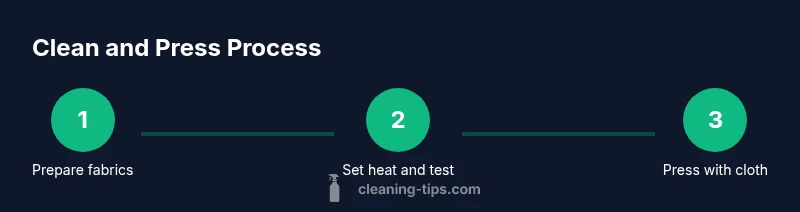
Clean and Press Laundry: A Practical How-To Guide 2026
Learn to clean and press laundry with confidence. This comprehensive guide covers fabrics, temps, tools, step-by-step workflow, and safety tips for homeowners and renters. Brought to you by Cleaning Tips for healthier, wrinkle-free garments.


By the end of this guide, you will clean and press garments with confidence, avoiding scorch marks and fabric shine. This approach emphasizes fabric-conscious temps, proper heat distribution, and safe pressing techniques. Before you begin, gather a steam iron, an ironing board, press cloths, distilled water, and mild detergent to prep and protect fibers. According to Cleaning Tips, this method helps maintain fabric integrity while delivering professional-looking results at home.
Understanding the clean and press method
The clean and press method is a practical approach for renewing garments and reducing wrinkles with controlled heat and moisture. It combines light washing expectations for certain items with precise pressing, ensuring fibers regain a smooth look without damage. The Cleaning Tips team notes that Fabric-safe temps and proper moisture management are the core principles behind successful results. For homeowners and renters, mastering clean and press means fewer trips to the dry cleaner and better looks on everyday clothing.
Before you begin, always check garment care labels. Cotton blends tolerate higher heat, while synthetics require lower temps. Delicate fabrics such as silk or wool often benefit from pressing on the wrong side and using a protective cloth. A well-ventilated ironing area reduces heat buildup, and a clean board surface prevents impression marks. The goal is to transfer wrinkles to the pressing cloth rather than directly into the fabric, which helps prevent shiny patches and fiber crush. By adopting a consistent rhythm—test temp, adjust, press, and rest—you can achieve professional-looking results at home.
In this guide, you will learn the exact tools, temperature guidelines, and step-by-step workflow to implement clean and press in a safe, repeatable way. The Cleaning Tips team emphasizes careful prep and patience as the core principles of successful pressing.
Benefits of clean and press for fabrics
Adopting a clean and press routine offers several practical benefits. It eliminates excessive wrinkling after washing, extends wear between washes, and reduces the need for frequent dry-cleaning fees. Fabrics breathe better when pressed with the right moisture balance, helping knit and woven textiles maintain their shape. For homeowners and renters, the method translates to cleaner-looking shirts, trousers, and blouses without harsh mechanical rubbing. The light-touch approach also reduces fiber pilling and minimizes heat damage compared to aggressive ironing.
Consistent pressing improves results on seam lines, collars, and cuffs, which often become creased after washing. A well-pressed garment retains its appearance, allowing you to pair it with accessories confidently. The approach is especially effective for cottons, cotton blends, and poly-cotton fabrics, where a crisp finish is desirable. Remember to respect care labels; some fabrics require gentler handling or avoided heat altogether.
Tools, temps, and fabrics overview
A successful clean and press starts with knowing your fabrics and selecting appropriate temperatures. Start with a versatile iron that offers adjustable heat and a steam option. An oversized ironing board with a clean, heat-resistant cover helps distribute pressure evenly. Pressing cloths—clean cotton or muslin—protect delicate surfaces and prevent shine on dark fabrics. Use distilled water if your iron has a steam function to minimize mineral buildup and residue.
Fabrics fall into broad categories: cotton and cotton blends (high heat tolerance), polyesters and poly-cotton blends (low to medium heat), and natural silks or wools (low heat with pressing cloth). For delicate fabrics like silk and satin, consider using a specialized setting and a gentle touch. Always pre-test on a hidden area, especially when working without a starch finish. Proper moisture management—lightly damp pressing cloths or a light mist—helps the fabric accept the heat without scorching.
Finally, arrange clothes in order from sturdy to delicate, so you don’t transfer heat-sensitive marks between pieces. Create a small workflow that moves from collars and cuffs to larger areas, finishing with the main body of the garment. This rhythm minimizes repositioning and keeps lines sharp across the entire item.
Fabric-specific guidance: cottons, synthetics, and delicate fibers
Cotton and cotton blends respond best to crisp pressing. Use a medium to high heat, with steam if the fabric label allows. Always press on the wrong side first to prevent shine on the right side, then finish with a quick pass on the right side for a polished look. For poly-cotton blends, choose a lower heat and avoid prolonged contact to prevent heat setting and glossy patches.
Delicate synthetics, such as polyester or rayon, require lower temperatures and shorter contact times. Employ a pressing cloth and a gentle touch; avoid heavy weight that can flatten fibers. Silk and wool should, ideally, be pressed with the cloth in place and minimal heat to prevent color transfer and fiber damage. If you’re unsure, test on a small area and opt for a cool setting. Remember that moisture control is key—too much moisture can lead to water stains, while too little can leave stubborn creases.
Moisture management and pressing cloth strategies
Moisture plays a crucial role in the clean and press technique. Lightly dampen fabrics or use a damp pressing cloth to help the fabric lift wrinkles with less heat. For very delicate fabrics, use a dry option with minimal heat and a pressing cloth. A well-prepared pressing cloth should be clean, lint-free, and large enough to cover the area you’re pressing. Replacements should be ready if the cloth starts to show wear.
Press in long, straight strokes rather than small, circular passes. This approach creates clean lines and reduces the risk of creating new creases. For areas like collars and cuffs, use narrow sections of the cloth to protect edges and soften results. Temperature control matters more than time; a quick pass at the right temperature yields a crisper finish than a prolonged, overheated session.
Finally, if you’re dealing with thick fabrics, raise the board slightly or apply a press with a mild weight to avoid compressing the weave. After pressing, allow garments to cool on a hanger for a few minutes to set the crease and prevent new wrinkles as you move to storing.
Common mistakes and how to avoid them
Common mistakes include pressing directly on fabric without a cloth, overheating, and not testing heat settings first. Direct heat on fibers can cause shine, scorch marks, and fiber weakening, especially on dark fabrics. Always test a hidden area before proceeding and use a press cloth as a shield for delicate textiles. Over-wetting fabric can lead to water stains, so adjust moisture carefully.
Another frequent error is rushing through a session and using short, jagged strokes. Long, smooth passes create crisp lines and reduce surface shine. Ignoring care labels is a quick path to damage; if a fabric warns against ironing, do not press it. Finally, neglecting to let the garment rest after pressing can set creases unevenly. Give fabrics a few minutes to cool and settle before folding or wearing.
By maintaining a calm, consistent rhythm and using the right tools, you’ll avoid most common issues and achieve professional-looking results.
Finishing touches: storage after pressing
After pressing, hang garments immediately to preserve the crease or lay flat when appropriate to avoid new wrinkles. Use slim, sturdy hangers for shirts and jackets to maintain shoulder shape. For trousers, fold along natural creases if you do not plan to wear them right away, or hang them by the waistband to prevent creasing along the legs.
Store pressed items in a clean, dry closet away from steam sources or direct sunlight. If you notice any wrinkles after storage, a quick re-pass with a light touch can refresh the finish. Consider anti-wrinkle sprays sparingly on natural fibers, following care labels. Regularly cleaning the ironing board cover and iron sole plate helps prevent transfer of dust and residue onto fabrics.
Safety and maintenance tips
Always unplug the iron before refilling with water and never leave a hot iron unattended. Keep the power cord away from the ironing surface to avoid tangling or heat damage. Use distilled water in steam irons to reduce mineral buildup that can transfer to fabrics over time. Store ironing accessories in a cool, dry place to prevent corrosion and deterioration.
Check the iron’s sole plate for nicks or sticky residue and clean as needed with a damp cloth. Replace worn pressing cloths and covers to maintain even heat distribution. If you notice persistent scorch marks or rust, reassess heat settings and consider professional service for your equipment. Regular maintenance extends the life of your tools and improves results over time.
Real-world scenarios and quick hacks
In real-world settings, you’ll likely press a mix of office shirts, chinos, and casual tops without starch or heavy finishes. Start with the sturdy pieces and finish with more delicate fabrics. If you’re pressed for time, a quick pass on the right side after a brief rest can refresh a wrinkled look. For outdoor fabrics like denim, apply a slightly higher heat and a longer pass, but always keep a pressing cloth handy to protect the surface.
A practical hack is to align fabric edges with the board edges so you can press seams and hems cleanly. Use the edge of the board as a guide for seam alignment to produce crisp cuffs and collars. When in doubt, err on the side of lower heat and shorter pressing times; you can always re-run a pass if needed. With habit, clean and press becomes a routine that keeps clothes looking neat throughout the week.
Tools & Materials
- Iron (steam or dry)(Look for adjustable temperature control; test heat on a fabric scrap first)
- Ironing board(Stable surface; heat-resistant cover; consider anti-slip feet)
- Press cloths (cotton or muslin)(Protects fabrics and prevents shine on dark colors)
- Distilled water(Prevents mineral buildup in steam irons)
- Spray bottle (optional)(Light mist for dampening fabrics without soaking)
- Stain remover pen or sticks(Pre-treat visible stains before pressing)
- Lint roller or brush(Remove lint/fuzz before pressing for a smoother finish)
Steps
Estimated time: Estimated total time: 25-40 minutes
- 1
Prepare fabrics and workspace
Inspect care labels, sort by fabric type, and set aside any delicate items. Lay out an ironing board in a well-ventilated area. Place a clean pressing cloth over the ironing board so the fabric has a protective barrier from direct heat.
Tip: Pre-test a hidden seam with a small patch to confirm heat level won’t cause damage. - 2
Set the correct iron temperature
Choose the lowest heat that safely handles the fabric you’re pressing. For cotton, select higher heat; for synthetics, lower heat is safer. Allow the iron to reach the chosen setting before starting any pass to avoid scorching.
Tip: Always start with the fabric’s lowest safe setting and escalate only if needed. - 3
Dampen or lightly mist fabric as needed
Lightly dampen the fabric if it's unusually wrinkled; for delicate fabrics, use a tiny amount of moisture on the pressing cloth rather than direct application. Steam can help reduce creases on natural fibers but can set wrinkles on synthetics if overused.
Tip: Use a spray bottle sparingly to avoid water stains. - 4
Press seams and edges first
Begin with collars, cuffs, and hem edges. Place the pressing cloth over seam lines and press from the seam outward to avoid creating new creases. Lift and reposition rather than sliding across the fabric to prevent stretching.
Tip: Press each area with a single long stroke instead of multiple short passes. - 5
Finish with large-area passes
Move to larger surfaces, keeping the fabric taut and flat. Use long, straight passes to create crisp, even results. For thick fabrics, apply a gentle warm press and allow the cloth to capture extra heat rather than pressing too hard.
Tip: Keep the cloth in place to prevent shine on dark fabrics. - 6
Cool and inspect before wearing
Let the fabric rest on a hanger or flat surface for several minutes. Check for missed wrinkles, then perform a quick follow-up pass if needed. Allow the garment to cool completely before folding or wearing.
Tip: Rests prevent new wrinkles caused by heat retention. - 7
Clean and store equipment
Unplug and empty the iron if needed, wipe the soleplate, and let it cool. Store pressing cloths and tools in a dry place to prevent mold or mildew. Keep the ironing board cover clean for the next use.
Tip: Regular maintenance prevents residue transfer and ensures smoother future passes. - 8
Evaluate outcome and adjust
Review the finished garment under good lighting. If any area looks off, reapply a brief pass with adjusted heat and cloth protection. Keep a small notebook for fabric-specific heat settings for future sessions.
Tip: Document your settings for quick reference next time.
Questions & Answers
What fabrics are best suited for the clean and press method?
Cotton, cotton blends, and durable synthetics respond well to clean and press when you use the right heat and moisture. Delicate fabrics like silk, satin, and wool require careful handling and lower heat with a pressing cloth. Always check care labels before proceeding.
Best results come from cotton and sturdy synthetics; delicate fabrics need gentler handling.
Can I clean and press without washing first?
Light wrinkles can often be pressed after a light wash or air-dry, but heavy soil should be cleaned first. Pressing dirty fabric can set stubborn stains. Always inspect for stains and treat them before pressing.
Usually better to clean first; otherwise wrinkles trap dirt and stains set in.
What heat setting should I use for cottons?
Cotton generally tolerates higher heat. Start with a mid-to-high setting and adjust as needed if the fabric shows any shine or scorching. Use a pressing cloth on darker cottons to prevent heat marks.
Cotton loves heat, but test first and use a cloth on dark fabrics.
How do I avoid shiny marks on dark fabrics?
Shiny marks occur when heat is too high or pressure is excessive. Use a pressing cloth, light moisture, and long, smooth passes. Press on the wrong side when possible and finish with a light pass on the right side if needed.
Shield the fabric with a cloth and avoid lingering heat on the same spot.
Is steam beneficial for all fabrics?
Steam helps natural fibers relax and release wrinkles but can leave water spots on delicate synthetics. Use steam selectively and always with a pressing cloth on sensitive fabrics.
Steam helps natural fibers, but test first on delicate fabrics.
How often should I press clothing to keep it looking neat?
Press garments as needed based on wear and washing frequency. Over-pressing can wear out fibers; give fabrics time to rest between sessions and avoid repeated high-heat passes.
Press as needed; don’t overdo it or you can wear out fabrics.
Watch Video
The Essentials
- Test heat on hidden areas first
- Use a pressing cloth for protection
- Press in long, smooth motions
- Let garments rest after pressing
- Store tools properly to extend their life