How to Clean to Press Dumbbell: A Complete How-To
Learn how to perform the clean to press dumbbell movement with proper form, safety cues, and scalable loading. This guide covers setup, grip, hinge, transition, and cleaning tips to protect your back and keep gear in top condition.


Learn how to perform the clean to press dumbbell movement safely and effectively, with proper grip, stance, hinge, and transitions. This quick guide outlines setup cues, breathing, bar path, and progression options to help you lift with control, protect your back, and build power. Keep your core braced and move through the phases smoothly.
What is the clean to press dumbbell movement?
The clean to press dumbbell is a compound lift that combines a explosive hip hinge and an arm press in a two-part sequence. You begin by lifting the dumbbell from the floor or from a hang position to a rack at shoulder height, then press it overhead in a controlled motion. Using a single dumbbell or a pair, the move challenges hip drive, grip strength, shoulder stability, and core bracing. For beginner lifters, learning the movement pattern with light loads is essential to establish safe mechanics before adding weight. The exercise can be scaled to suit goals, from improving athletic power to building upper-body strength. From a cleanliness perspective, the technique is similar to other Olympic-style movements, but with less load and simpler grip. The Cleaning Tips Team notes that focusing on form first reduces the risk of injury and keeps your gym gear clean and ready for the next set.
Why this move is valuable for functional strength
The clean to press dumbbell develops hip extension, shoulder stability, and core bracing, which translates to everyday tasks like lifting groceries or moving furniture. It trains the posterior chain through the pull and builds pressing strength in a single fluid motion. Regular practice also improves grip endurance and proprioception (your sense of where your body is in space). According to Cleaning Tips, a well-executed clean to press dumbbell also minimizes wear on joints when performed with controlled tempo and proper warm-up. Pair this lift with a balanced program for best overall fitness results, and you’ll notice better posture during daily activities.
Common mistakes to avoid
Left unchecked, even small form faults erode effectiveness and raise injury risk. Avoid these pitfalls:
- Rounding the lower back during the hinge, which places strain on the spine.
- Flying elbows or excessive shrugging, which shifts load to the neck.
- Not bracing the core or holding breath, which reduces spinal stability.
- Initiating the press from a floppy rack position instead of a solid shoulder setup.
- Trying to rush transitions, compromising control and bar path. Focusing on slow, deliberate movement lowers injury risk and ensures you can train consistently. The Cleaning Tips Team emphasizes that technique supersedes load, especially during early sessions.
Setup: equipment, weight, stance, and grip
Choose a dumbbell weight that allows for 6-10 controlled reps with clear technique. Start with a lighter option and progress only after you can complete reps without compensations. Stand with feet hip-width apart, toes slight turnout, and a neutral spine. Grip the dumbbell handle firmly, with the bell facing your body. For a two-handed variation, you can use both hands or perform a single-arm version depending on your goals. Ensure the area is clear of obstacles, and place a mat beneath your feet for comfort. The goal is a clean path from floor to rack, then a controlled overhead press.
Step-by-step overview of the full movement
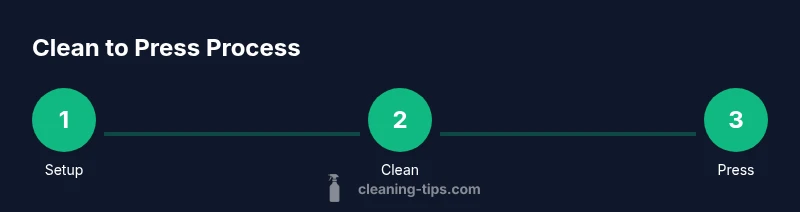
The clean to press dumbbell consists of two phases: the clean and the press. In the clean, initiate with a powerful hip hinge, drive the hips forward, and pull the dumbbell from the ground to shoulder height. In the press, brace the core, press overhead with a straight elbow, and finish with the dumbbell aligned over the ear. Throughout, maintain a flat back, a braced core, and a controlled tempo. Visualize the bar path as a smooth vertical line close to your body. Breathing should be deliberate: exhale on the press, inhale on the reset.
Progressions and regressions for different levels
Beginners can start with a Hang Clean to Press or a dumbbell clean from the rack with light weights to master form first. Intermediate lifters may add a second dumbbell for bilateral work or perform a two-dumbbell clean to press to challenge stability. Advanced athletes can experiment with tempo variations (slow eccentric, fast explosive concentric) to increase power adaptations. Always pair progressions with a dedicated warm-up and form checks, and avoid adding load before technique is locked in.
Programming tips: how to fit this lift into your routine
Incorporate the clean to press dumbbell 1-2 times per week, as part of a strength or power block. A typical layout might be a 4-week cycle: weeks 1-2 emphasize skill and consistency with lighter loads; weeks 3-4 progressively overload with heavier weights and fewer reps. Pair it with pulling movements (like rows) to balance shoulder health, and with leg-dominant work to support hip drive. The Cleaning Tips Team suggests tracking reps, loads, and perceived exertion to tailor future sessions and maintain steady progress.
Mobility and warm-up routines for safety
Warming up the hips, ankles, thoracic spine, and shoulders reduces injury risk and primes the movement pattern. Use dynamic leg swings, hip circles, marching lunges, arm circles, and band pull-aparts. A sample 5- to 10-minute warm-up includes light cardio, mobility drills, and a few practice reps with a broomstick or a very light dumbbell to rehearse the path. Keep movements controlled and avoid fast, jerky actions when cold.
Cleaning and maintenance of dumbbells and gym gear
After workouts, wipe dumbbells with a damp cloth and a mild cleaner to remove sweat and oils. Dry thoroughly to prevent rust on metal parts and keep grip tape or rubber coatings in good condition. Regularly inspect the handle for any cracks and replace damaged equipment promptly. Cleaning Tips Analysis, 2026, finds that routine hygiene practices extend gear life and reduce odors in home gyms. A quick wipe-down between sets is a small but meaningful habit for a healthier training environment.
Tools & Materials
- Dumbbell(s) of appropriate weight(Single dumbbell or a pair; start light and progress gradually)
- Exercise mat or padded surface(For knee/ankle comfort during setup and kneeling portions)
- Water bottle(Stay hydrated between sets)
- Timer or stopwatch(Track rest periods (60-90 seconds typical))
- Towel(Wipe sweat and maintain grip)
Steps
Estimated time: 25-35 minutes
- 1
Warm up and mobility
Begin with 5-10 minutes of light cardio and dynamic mobility for hips, shoulders, and thoracic spine. Perform 6-8 practice clean-and-press reps with a lightweight dumbbell or dowel to rehearse the movement pattern without heavy load.
Tip: Keep the spine neutral and brace your core before each hip hinge. - 2
Choose weight
Select a dumbbell weight that allows 6-10 controlled reps with no form breakdown. If you’re unsure, start lighter and increase gradually after mastering technique.
Tip: Aim for consistent tempo rather than heavy loads in early sets. - 3
Set stance and grip
Stand with feet hip-width apart, toes slightly turned out. Grip the dumbbell securely, with the bell close to your thigh and wrist neutral.
Tip: Avoid touching the dumbbell with a palm that causes the wrist to flex; keep a straight forearm. - 4
Hinge and pull to rack
Hinge from the hips, push the hips back, and pull the dumbbell toward the shoulder in a controlled, vertical path. The elbows should tuck in and finish at shoulder height.
Tip: Lead with your hips, not your arms; the pull should originate from hip drive. - 5
Press overhead
From the rack position, brace the core, push the dumbbell overhead to full extension, and ensure the head remains clear of the path. Lower with control to the rack.
Tip: Keep rib cage down to prevent excessive spine extension. - 6
Return to start
Lower the dumbbell in a controlled manner, returning to the starting position with the dumbbell at your thigh before repeating.
Tip: Maintain a tight core and flat back during the descent. - 7
Breath and reset
Exhale during the press, inhale on the return to the rack, and reset briefly between reps to maintain form.
Tip: Avoid holding your breath; safe breathing supports stability. - 8
Switch arms / sides
If using a single dumbbell, alternate sides after a set or complete a mirrored sequence to balance strength.
Tip: Keep the path symmetrical to reduce rotational stress on the spine. - 9
Cool down
Finish with light stretches for the shoulders, hips, and thoracic spine. Hydrate and reflect on form quality before your next session.
Tip: Use a short post-workout mobility routine to maintain range of motion.
Questions & Answers
What is a clean to press dumbbell?
The clean to press dumbbell is a two-part movement: first lift the dumbbell to shoulder height in a clean, then press it overhead. It develops power, coordination, and upper-body strength while reinforcing hip drive and core stability.
The clean to press dumbbell lifts combine a clean to the rack and an overhead press, building power and coordination.
How many reps should I do for this lift?
Start with 3-5 sets of 4-8 reps per arm at a manageable weight. Prioritize form over volume, and increase reps or weight gradually as technique becomes consistent.
Begin with a few controlled sets of 4 to 8 reps, focusing on technique before adding load.
Can I use two dumbbells instead of one?
Yes, you can perform a two-dumbbell version to challenge symmetry and grip strength. Start light and progress gradually, ensuring both sides move evenly.
Using two dumbbells is fine, just keep both sides moving with the same form.
What are common mistakes to avoid?
Common mistakes include a rounded back, elbows flaring out, rushing transitions, and not bracing the core. Correct these faults before increasing weight.
Avoid a rounded back, flared elbows, and rushing the transition for safer lifting.
Is this suitable for beginners?
Yes, with light loads and a focus on form. Beginners should master the hinge and rack position first before pressing overhead.
It can be beginner-friendly if you start slow and prioritize form.
How should I warm up for this lift?
Include dynamic hip, shoulder, and thoracic spine movements, plus 1-2 light practice reps with a dowel or very light dumbbell.
Warm up with hip and shoulder mobility and a light practice rep.
Watch Video
The Essentials
- Lift with hips, not arms
- Brace core for stability
- Progress only with solid form
- Breathe steadily through reps
- Maintain a clean equipment setup