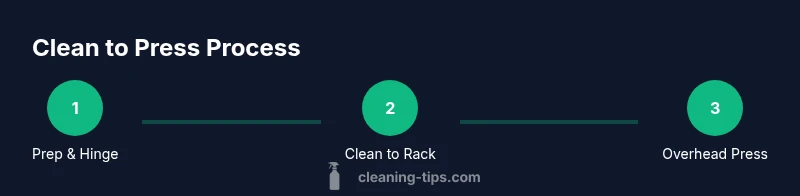
Clean to Press Kettlebell: A Complete How-To Guide
Master the clean to press kettlebell with a safe, progressive approach. This guide covers grip, hip drive, rack setup, and a controlled press, plus common mistakes and training progressions for sustainable strength.


Learn to perform a clean to press with a kettlebell safely and effectively. This quick guide shows the hip-driven clean, vertical press, and essential setup to protect your spine and shoulders. You’ll get grip, stance, breathing cues, progression, and common mistakes to avoid for steady gains.
Why Master the Clean to Press
The clean to press is a foundation movement that trains explosive hip drive, scapular stability, and overhead strength in a single, efficient pattern. Executed correctly, it translates to better performance in workouts, daily tasks, and functional training. The kettlebell travels in a smooth arc from the ground to the rack, then rises overhead, challenging your coordination and cardio in one fluent sequence.
According to Cleaning Tips, the key to a durable clean-to-press is progressive loading, deliberate warm-ups, and attention to form before adding heavy weight. Start light to sense the rhythm: hinge at the hips, engage the glutes, and let the kettlebell swing toward the rack without pulling with the arm alone. When you set the bell in the rack, keep the elbow close to the torso and the wrist neutral. From there, exhale and press upward with a tall spine and active shoulder, avoiding overextension at the top.
The practical value is clear: this lift combines power, stability, and mobility, and it does so in a way that can be scaled to different fitness levels. Beginners should dedicate several sessions to mastering the hip drive and rack position before attempting a heavier press. Consistency matters more than speed, and a well-timed reset between reps reduces injury risk.
Anatomic Breakdown: The Clean and The Press
The clean-to-press sequence engages multiple joints and muscle groups in a coordinated pattern. The initial clean uses a hip hinge and a strong shrug to propel the kettlebell toward the rack. The press then moves the weight from the rack to the overhead position, relying on a braced core, a stacked spine, and active lats to protect the shoulder.
Key players include the glutes and hamstrings for the hip hinge, the obliques and erector spinae for torso stability, the deltoids and triceps for the press, and the upper back muscles for control during the rack. Wrist and grip position matter; keep the wrist neutral and the knuckles tall to reduce strain on the forearm.
Understanding how these segments connect helps you diagnose faults. If the weight drifts away from your body, you may be losing hip drive or letting the kettlebell swing too far forward. If you feel the shoulder pinching or the elbow flaring, check your rack position and scapular retraction.
Start with Safe Progressions
Progression is safer and more effective than chasing heavy loads early. Begin with a hip-dominant clean from the ground using a light kettlebell, then practice a strict, controlled press from the rack without locking out the elbow aggressively. As you gain confidence, add reps and slightly heavier weights while maintaining alignment and tempo. Include mobility and warm-up drills for the hips, thoracic spine, and wrists to improve patterning and reduce injury risk.
Structure your progression around quality reps rather than volume. Use deliberate, controlled movements and take short pauses if you feel any compromise in form. Rest between sets to maintain technique and prevent fatigue from turning into sloppy reps.
Finally, incorporate pulls and carries that support the same muscle chains (hips, back, core) to reinforce postural endurance. This balanced approach helps you build sustainable strength instead of short-term, injury-prone explosiveness.
Common Mistakes and How to Fix Them
Common faults include a broken wrist at the rack, a punchy press with the elbow flaring, and a loss of neutral spine during the hip hinge. To fix these, focus on a clean rack, keep the chest up, and brace the core before initiating the press. If the bell drifts forward, reduce weight or slow the hip drive until control returns. If you feel pinching in the shoulder, reassess the rack height and ensure the elbow sits tight to the torso.
Other frequent issues are rushing the transition from clean to press and neglecting breath cues. Use a two-count tempo: inhale before initiating the clean, exhale during the press, and reset between reps. A dedicated warm-up routine that targets wrists, shoulders, and hips reduces the likelihood of bad habits forming over time.
Programming Your Clean-to-Press: Sets and Reps
A practical starting point is 3–4 sets of 5–6 reps per side, with a weight that allows clean technique and a controlled press. As technique solidifies, you can progress to 4–5 sets of 3–5 reps or perform tempo-based schemes (2 seconds to clean, 2 seconds to press) to enhance control. Train 2–3 times per week with at least one rest day between sessions to optimize recovery. Track form, not just reps, and reduce weight if technique falters.
Consider pairing the clean-to-press with other kettlebell movements such as swings, Turkish get-ups, and goblet squats to maintain a well-rounded program. Include deload weeks every 4–6 weeks if you’re lifting heavy consistently, to prevent plateaus and support long-term progress.
Maintenance, Mobility, and Recovery
Mobility work for the hips, thoracic spine, wrists, and shoulders supports clean-to-press performance. Include daily hip thrusts, thoracic rotations, wall slides, and fingertip stretches to keep joints ready for each session. After training, perform a light cooldown that includes breath work and gentle mobility work to reduce muscle stiffness and improve range of motion over time.
Adequate sleep and protein intake help the body repair and adapt after heavy reps. Hydration matters for joint lubrication, particularly when training overhead. If you experience persistent pain or sharp discomfort, pause the exercise and seek guidance from a qualified trainer or healthcare professional.
Authority and Safety Notes
Always prioritize safety when practicing the clean to press. If you’re new to kettlebell work, consider coaching to ensure technique is sound before progressing. Use a safe, controlled environment and start with lighter loads to master the pattern. As always, listen to your body and adjust based on how you feel during and after each session.
Tools & Materials
- Kettlebell(Choose a weight you can safely clean into the rack for 6-8 reps; start light if new)
- Non-slip workout mat(Optional for floor work or kneeling drills)
- Towel(Grip management during sweaty sets)
- Water bottle(Stay hydrated throughout the session)
- Grip aids or chalk(Optional if grip slips during transitions)
- Mirror or smartphone for form checks(Use to self-correct wrist/shoulder alignment)
Steps
Estimated time: 30-40 minutes
- 1
Find stance and warm up
Stand with feet hip-width apart, toes pointed slightly out. Do 5 minutes of light cardio and dynamic hip/opening drills to prepare the hips and ankles for the hinge pattern. This prepares you to generate powerful hip drive without compromising balance.
Tip: Do dynamic hip hinges and ankle mobility for 5 minutes before loading. - 2
Grip, hinge, and set
Grip the kettlebell with a firm but relaxed hand, hinge at the hips, and keep the back neutral. The weight should travel close to your body as you initiate the clean. Avoid letting the kettlebell swing away from you or pull with the arm only.
Tip: Keep the kettlebell close to your body and maintain a neutral spine. - 3
Perform the clean
Use a powerful hip hinge and shrug to propel the kettlebell toward the rack. Catch it in the rack with the elbow near the torso and the bell resting on the forearm. Breathe in as you prepare for the rack.
Tip: Lead with hips, not arms; imagine lifting with the hips to guide the bell into the rack. - 4
Rack and brace
Stand tall in the rack position with the kettlebell rested on the forearm and the elbow tucked in. Brace the core, retract the shoulder blade, and align the wrist neutral. This creates a solid platform for the press.
Tip: Keep the wrist neutral and the elbow close to the body to minimize shoulder strain. - 5
Press overhead
From the rack, exhale and press the kettlebell overhead, keeping the ribs down and the spine tall. Avoid shrugging the shoulder or flaring the elbow; finish with a controlled lockout and steady gaze.
Tip: Breathe out during the press and maintain a braced core. - 6
Lower and reset
Lower the kettlebell back to the rack with control, then smoothly return to the hip hinge and ready position. Reset your stance and take a brief rest if needed before the next rep.
Tip: Lower along the same path to reinforce consistent mechanics.
Questions & Answers
What is the clean to press kettlebell?
The clean to press is a two-part kettlebell lift: you first clean the weight to a rack position, then press it overhead in a controlled movement. It trains hip drive, core stability, and shoulder strength in one fluid pattern.
The clean to press is a two-part kettlebell lift where you clean to the rack and then press overhead, building hip drive, core strength, and shoulders.
Who should start with this lift?
Beginners should start with light loads and thorough technique work, ideally under supervision or with coaching. Intermediate and advanced lifters can gradually increase weight as form remains impeccable.
Begin with light weights and focus on technique, preferably with coaching. Increase load only when form is solid.
What are signs of poor form?
Common signs include a rounded back during the hinge, wrist bending at the rack, elbow flare during the press, or the kettlebell drifting away from the body. If you notice these, reduce weight and restore technique.
Watch for a rounded back, bent wrists, or elbows that flare. If you see these, slow down and fix your form.
Can I use a dumbbell instead of a kettlebell?
The basic pattern can be adapted with a dumbbell, but kettlebells often offer a smoother arc for the clean and a more natural grip for the press. If you use a dumbbell, be mindful of grip and contact points.
You can adapt with a dumbbell, but a kettlebell usually gives a smoother clean and natural grip for the press.
How often should I train this lift?
Train 2–3 times per week with at least one rest day between sessions. Alternate weeks of heavier loads with lighter technique-focused sessions to avoid overtraining.
Train 2–3 times per week, mixing heavier days with lighter technique days to avoid overdoing it.
What progressions help beginners?
Start with hip hinge practice, then unloaded rack holds, then light cleans to the rack, and finally press movements. Gradually add reps and weight as patterning becomes consistent.
Begin with hinge drills, rack holds, and light cleans, then add presses as patterning becomes consistent.
Watch Video
The Essentials
- Master hip drive before increasing load
- Keep the rack and press mechanics tight
- Progress gradually to prevent injuries
- Breath timing supports stable reps