How Long Does It Take to Clean an Oven: Time Estimates and Practical Tips
Discover realistic time estimates for cleaning an oven by grime level and method. Compare light wipes, full interior scrubs, and self-clean cycles with practical tips from Cleaning Tips for smoother, faster results.


If you’re wondering how long does it take to clean an oven, expect time ranges from about 30-60 minutes for a light wipe-down to 2-3 hours for a thorough interior clean. For stubborn, baked-on grime, plan for 1-3 hours, especially when scrubbing and soaking are involved. This guide from Cleaning Tips breaks down times by method and grime level.
Overview: estimating oven cleaning time in real life
How long does it take to clean an oven really depend on a few practical factors: the oven type, how dirty it is, and the cleaning method you choose. According to Cleaning Tips, a light surface wipe can be quick, while a deep interior scrub or an all-inclusive self-clean cycle can extend the cleanup to a few hours. The goal is to set realistic expectations before you start, gather the right supplies, and plan for breaks if needed. If you’re starting from a cold oven, allow extra time for cooling and drying, and remember that some steps, like soaking racks or preheating the oven for a self-clean cycle, add additional minutes or hours to the total.
In this guide, we’ll break down times by method, discuss factors that affect duration, and offer efficiency tips so you can predict and manage the total time without compromising results. Whether you’re a homeowner planning a weekly maintenance routine or a renter tackling a one-off deep clean, the approach remains consistent: preparation, method selection, and safe, thorough cleaning.
What factors influence your cleaning time
Time spent cleaning an oven isn’t random. Several variables determine the final duration:
- Grime level: light splatters vs. baked-on grease can dramatically change cleaning time. The phrase how long does it take to clean an oven is often answered with ranges precisely because grime level varies so much.
- Oven type and features: self-cleaning cycles have built-in heat and duration, but will require preheating and cooling time that adds to the total. Conventional ovens rely on manual scrubbing, soaking, and wipe-down, which can be faster or slower depending on the grime.
- Rack handling: removing racks, broiler pans, and racks for soaking can add 5-15 minutes at minimum and more if soaking is used.
- Soaking and dwell time: for baked-on spills, a soak with baking soda paste or a cleaner can shave minutes off elbow grease but adds waiting time.
- Tools and technique: abrasive pads vs. non-abrasive scrubbers, spray cleaners, and steam aids influence how quickly you work.
Understanding these factors helps answer the recurring question: how long does it take to clean an oven? The short answer is that time ranges from under an hour for quick maintenance to several hours for heavy-duty cleaning, based on the grime and method chosen.
Time estimates by method: quick reference
Here are practical time ranges you can expect for common oven-cleaning approaches. These figures assume standard residential ovens and typical kitchen grime. They’re intended as a reference to help you plan and decide which method suits your situation.
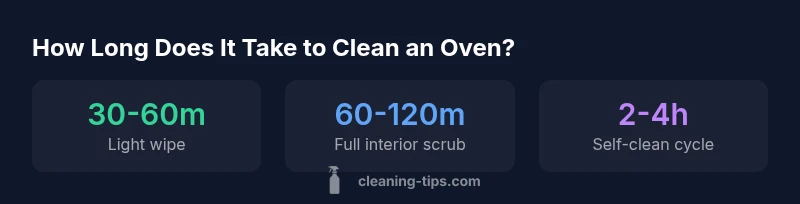
- Light surface clean: 30-60 minutes. A fast wipe-down with non-abrasive cleaner, a quick scrub of the door, and a wipe of racks if needed.
- Full interior manual clean (racks removed, soaking optional): 60-120 minutes. Scrubbing inside walls, ceiling, and floor with a non-abrasive pad and paste.
- Soaking racks and trays: 20-60 minutes soak per item, plus additional time for scrubbing.
- Self-cleaning cycle: 2-4 hours total, including preheat and cool-down. This is the most hands-off option but takes the longest clock time.
- Heavy grime with baked-on stains: 90-180 minutes manual plus soak time, depending on severity.
Note: The times above are estimates and vary by grime level, oven age, and how thoroughly you want to clean. They also assume you’re working with an empty oven and that the manufacturer’s guidelines permit the chosen method.
How to speed up manual cleaning without sacrificing results
If you want to reduce total time while keeping results solid, focus on preparation and technique. Start by clearing the oven, removing racks, and laying out all supplies. Use a baking soda paste for baked-on grime and let it sit for 15-30 minutes before scrubbing. Preheat only if your cleaner requires it, and use a microfiber cloth for final wipe-downs. A small, steady pace with a plan reduces the time spent redoing spots. Remember to rinse well to prevent residue that might require another pass. Regular maintenance lowers future cleaning times and makes the process smoother each time you tackle the oven.
In short, plan for how long does it take to clean an oven by method and grime level, and then adjust your approach based on what you see during the first 10-15 minutes of work.
Self-cleaning cycles vs manual cleaning: trade-offs
Self-cleaning cycles are convenient when you want to minimize hands-on labor, but they come with trade-offs: longer total time due to preheating and cooling, higher electricity use, and a risk of odor or residue if the oven isn’t empty or if there’s heavy grime. Manual cleaning provides speed for light cleans and tighter control for stubborn stains, but it requires more physical effort. For many households, a hybrid approach—quick manual wipe for routine upkeep and periodic self-cleaning for deeper maintenance—delivers the best balance between time and cleanliness.
If you’re balancing time and effort, think about how long does it take to clean an oven under different scenarios: routine upkeep vs. intervention for baked-on buildup.
Prep, tools, and setup that save time
A well-planned setup can shave 10-20% off cleaning time. Gather all supplies before you begin: non-abrasive scrubbers, baking soda, white vinegar, spray bottles, microfiber cloths, and a small bucket for soaking racks. Remove racks and trays first to expose all surfaces. Use a paste for heavy grime and let it dwell while you wipe the interior with cleaner on the door and edges. If you have a steam-cleaning option, consider a brief steam pass to loosen grime before manual scrubbing. Organizing your workspace and knowing where every item lives reduces back-and-forth and keeps the flow steady throughout the job.
Safety and aftercare: cooling, venting, and drying
Always start by turning off the oven and letting it cool completely before cleaning. If you’re using cleaners with fumes, ensure good ventilation by opening nearby windows or turning on the range hood. After cleaning, wipe down all surfaces, dry thoroughly, and reinsert racks only after they’re completely dry. Regularly drying and wiping can speed future cleans, as residue and moisture from improper drying contribute to new grime buildup. Finally, inspect seals and gaskets for wear; replacing worn parts can prevent extra scrubbing later on.
Maintenance habits to keep future cleans quick
To minimize future time spent on oven cleaning, adopt a weekly wipe-down routine and immediate spot-cleaning after spills. A quick spray and wipe reduces the need for long scrubs later. Consider setting a calendar reminder for a light clean every 1-2 weeks, depending on how often you use the oven. Keeping racks clean and avoiding sugary or fatty spills on the oven floor will help you maintain a quicker cleaning cycle over time. With consistent maintenance, you’ll find that how long it takes to clean an oven decreases as grime levels stay manageable.
Common pitfalls that waste time and how to avoid them
Avoid delaying a clean by waiting for “the right mood” or postponing until it’s an emergency. Skipping pre-soaks or reusing the same dirty cloth wastes effort. Don’t ignore venting when using cleaners; lingering fumes slow you down and can irritate the kitchen. Finally, avoid using harsh abrasives that can gouge the surface; this creates more work to fix and can extend cleaning time in the long run.
Time estimates by cleaning method
| Method | Typical Time Range | Notes |
|---|---|---|
| Light surface clean | 30-60 minutes | Quick wipe, minor residue |
| Full interior manual clean | 60-120 minutes | Racks removed; interior scrubbed |
| Self-clean cycle | 120-240 minutes | Includes preheat and cool-down |
| Heavy grime soak + scrub | 90-180 minutes | Long soak for baked-on stains |
Questions & Answers
How does the age of the oven affect cleaning time?
Older ovens usually have more baked-on grime, which can extend cleaning times. A newer oven with light residue can be cleaned faster with a quick wipe or light scrub.
Older ovens often take longer to clean due to baked-on grime; newer models clean faster with light residue.
Does a self-cleaning cycle really save time?
Self-cleaning cycles reduce manual labor but can take longer overall due to preheat and cool-down. They’re efficient for heavy buildup when you want to minimize scrubbing.
Self-cleaning saves hands-on time but lasts longer overall because of preheat and cool-down.
What’s the quickest way to deal with a spill while cooking?
Wipe up spills as soon as they cool enough to touch, then rinse and wipe again. For stubborn stains, apply a paste and let it dwell for 15-30 minutes before a final scrub.
Wipe spills when cool, then tidy with a quick scrub or soak if needed.
Is it necessary to remove racks for a fast clean?
Removing racks typically speeds interior cleaning and prevents grime transfer. It also allows you to soak metal components separately for better results.
Yes—removing racks usually makes the job faster and cleaner overall.
How often should I perform a deep oven clean?
For most households, a deep clean every 3-6 months helps keep maintenance manageable. Light weekly wipe-downs can prevent the need for frequent deep cleans.
Deep cleans every few months work well for most homes, with lighter maintenance in between.
Should I hire a professional for oven cleaning?
DIY is suitable for light to moderate buildup. If you have heavy, baked-on grime or oven safety concerns, a professional service can ensure thorough cleaning and safety.
DIY is fine for light grime; hire a pro for heavy buildup or safety concerns.
“A methodical approach to oven cleaning helps you predict duration and reduces frustration. Preparation and choosing the right method matter as much as technique.”
The Essentials
- Plan time by grime level and method
- Prepare supplies before you start
- Choose the least time-consuming method that meets cleanliness goals
- Use soaking to reduce elbow grease for baked-on grime
- Maintaining routine cleans keeps future times short