Cleaner Guru Cost 2026: Price Ranges and Pricing Models
Learn how much Cleaner Guru costs in 2026 with realistic price ranges, pricing models, and practical tips to compare quotes and save for your home and budget.


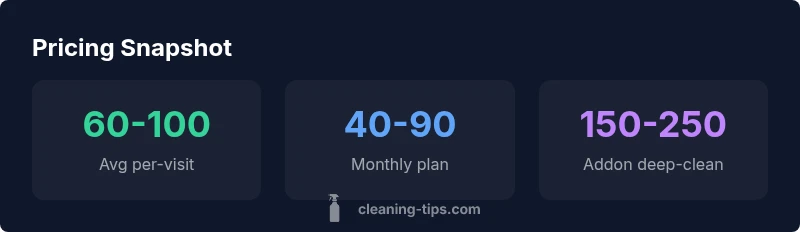
Cleaner Guru pricing varies by service scope, location, and plan, but most homeowners can expect a per-visit rate in the $40-$120 range or a monthly subscription around $40-$90. For larger homes or deep-clean packages, costs can rise to $150-$250 per visit. Annual contracts may offer 10%-20% savings compared with ad hoc visits. Prices exclude add-ons like specialty sanitizing or appliance cleaning.
What influences Cleaner Guru pricing
Pricing for Cleaner Guru is not one-size-fits-all. If you ask 'how much does cleaner guru cost', the answer depends on multiple factors. According to Cleaning Tips, pricing typically varies with service scope, location, frequency, and the inclusion of add-ons. A basic single-visit clean for a small apartment will differ from a full deep-clean in a family home with appliances to sanitize. Location matters: urban areas often show higher labor costs than rural regions, while demand peaks can shift pricing seasonally. Plan type also drives cost: ad-hoc visits are usually more expensive per service than bundled or monthly plans. When budgeting, consider whether you need recurring service, preferred days, or optional specialty tasks like oven cleaning or fridge sanitizing. Also, don't overlook the value of reliability, insured cleaners, and green cleaning options, which can influence overall cost through higher-quality results or added protections for your family. In short, understanding your needs and the service package will yield a clearer estimate of how much Cleaner Guru costs in your area.
According to Cleaning Tips, getting a clear picture of pricing starts with listing your exact needs and then asking for itemized quotes. This approach helps you see where you’re paying for frequency, add-ons, and travel time. If you’re shopping for a home with more than one living level or several appliances, expect a wider range and a longer service window. By framing the conversation around your priorities and timeline, you’ll better gauge whether the price aligns with the value.
Pricing models often used by cleaners
Most cleaners price services using a few common models. The per-visit model charges a flat rate for each cleaning session, with the final price depending on the scope and rooms involved. The hourly model bills by labor time, which can be attractive for smaller tasks but may surprise you with longer sessions. Flat-rate bundles and monthly subscriptions offer predictable costs and can include set numbers of visits or specific tasks. Some cleaners also provide deep-clean or appliance-cleaning add-ons at transparent, separate prices. When comparing quotes, map each model to your own needs: do you prefer a predictable monthly spend, or a pay-as-you-go approach that scales with how much you require? Also consider seasonal discounts or loyalty programs that reduce the overall price over time. In all cases, ensure you receive a written estimate that includes the base rate, any add-ons, and the expected tax. Transparent pricing reduces the risk of sticker shock at checkout.
Geography matters: pricing by region
Geography plays a major role in pricing, and your location will often determine the base rate for Cleaner Guru. Urban centers tend to have higher labor costs and demand for flexible scheduling, which can push per-visit prices upward. Suburban markets usually fall in the mid-range, while rural areas may cost less due to lower living costs and simpler access. Some cleaners charge travel fees for distant neighborhoods or require minimum service windows to justify the trip. Additionally, cultural expectations around cleaning frequency can influence pricing norms. In practice, you should expect more variability if you live in a dense city with high traffic, while a quieter suburb may offer steadier pricing. Keeping this in mind will help you set realistic expectations when you request quotes and avoid overpaying due to location alone.
What you should expect for different home sizes
Home size and layout are among the strongest drivers of Cleaner Guru pricing. A small studio or one-bedroom apartment typically requires less time and fewer supplies, resulting in lower cost per visit. A mid-size condo or three-bedroom house increases labor time and may include additional room-by-room tasks. Large homes with multiple bathrooms, higher ceiling heights, or extra appliances significantly raise the price, especially if you request deep cleaning or appliance-cleaning add-ons. When estimating, factor in square footage, the number of rooms, the presence of hard-to-clean surfaces, and the frequency of service. If you share a home with roommates or family members, negotiate a plan that fits everyone’s schedule and budget. For renters, ensure the plan aligns with your lease terms to avoid duplicative charges at move-out or during turnover periods.
Understanding add-ons and optional services
Add-ons are the most common source of price variability. Basic cleaning usually covers dusting, vacuuming, kitchen and bathroom wipe-downs. Deep cleaning can double the time and cost, especially in kitchens with heavy grease buildup or ovens requiring polishing. Appliance cleaning (refrigerators, ovens, microwave interiors) is typically priced separately. Sanitizing and disinfection services may incur a separate fee, particularly during peak flu season or when required by rental turnover protocols. If you have delicate surfaces, pet hair, or allergy concerns, discuss product choices (eco-friendly cleaners, fragrance-free formulas) and whether there are surcharge options for specialized products. Always request a line-item breakdown so you can compare apples to apples across providers.
How to estimate your total cost over a year
To forecast annual spending on Cleaner Guru, begin with your target service frequency and identify any seasonal peaks. Multiply the per-visit price by the expected number of visits, then add any monthly subscription costs if you plan to maintain a year-round schedule. Don’t forget add-ons that you anticipate regularly, and consider travel fees for scheduled deliveries or emergency times. If you anticipate mid-year changes (moving, renovations, or changes in household size), re-calculate estimates quarterly to avoid sticker shock. Some households find that committing to a longer-term plan reduces the average price per visit, while others prefer flexibility. The goal is to map costs to your calendar and budget, not just your cleaning needs—this approach helps you decide whether a monthly plan or a pay-as-you-go arrangement makes more sense for your household finances.
How to compare quotes and read pricing disclosures
Always request itemized quotes and compare providers on the same dimensions: base service, add-ons, travel or fuel fees, and tax. Watch for hidden costs such as minimum visit charges, cancellation fees, or price increases after introductory periods. Ask for the expected duration of each visit, the number of cleaners assigned, and the cleaners’ credentials. If a quote is significantly cheaper than others, probe carefully for exclusions (scope of work, number of rooms cleaned, time-limited coverage). A reliable provider will share their policy on substitutions and guarantee customer satisfaction. Finally, confirm whether the pricing is locked in for a term or subject to annual adjustment.
Quick decision tips: getting value, not just price
Value comes from consistency, reliability, and clear communication. Prioritize providers with transparent pricing, verified reviews, and clear cancellation terms. Look for insured, background-checked teams and green-clean options if those matter to your household. Ask about guarantees or re-clean policies if you’re not satisfied. Consider starting with a small trial period to measure results before committing to a longer-term plan. A slightly higher price can be worthwhile if it yields dependable scheduling, better service alignment with your needs, and fewer headaches when issues arise.
Real-world examples and scenarios
Scenario A: A 1-bedroom city apartment needing monthly visits. A typical per-visit range is lower, and a monthly plan may reduce overall costs. Add-ons such as fridge cleaning can increase the total, but the predictable monthly fee helps budgeting. Scenario B: A 3-bedroom home in a suburban area with two baths. Per-visit costs are higher than a small apartment, and an annual contract might offer meaningful savings if you anticipate year-round service. Scenario C: A large 5-bedroom house with multiple specialty tasks. The price range is higher due to time and travel, but a comprehensive plan could deliver better value if you require frequent cleanings and add-ons. These scenarios illustrate how size, location, tasks, and frequency shape total costs.
Pricing models for Cleaner Guru variants
| Pricing Model | Typical Range | Notes |
|---|---|---|
| Per-Visit | "$40-$120" | Flat rate per cleaning session, scope-driven |
| Monthly Plan | "$40-$90" | Predictable spend with set visits |
| Annual Contract | "$400-$1500" | Discounts for prepaid service |
Questions & Answers
What does a typical Cleaner Guru price include?
A typical price covers standard cleaning tasks like dusting, vacuuming, and surface wipe-downs. Add-ons such as deep cleaning, appliance cleaning, or sanitizing are usually billed separately. Always verify what is included in the base rate and request a written scope of work.
Most prices include standard cleaning; add-ons are extra. Always ask for a written scope of work.
Is Cleaner Guru cheaper than hiring a standard cleaning service?
Not necessarily. Cost depends on plan choice, frequency, and add-ons. A monthly plan can offer savings over ad hoc visits, but a basic single visit may be cheaper than a bundled option if you don’t need ongoing service.
It depends on your needs. Plans can save money if you want regular service.
Do prices vary by location?
Yes. Urban areas generally have higher labor costs and travel times, while rural areas may be cheaper. Always compare quotes from providers serving your exact neighborhood.
Prices do vary by where you live.
Are there hidden fees to watch for?
Watch for minimum visit charges, cancellation fees, or price increases after introductory periods. Request a fully itemized quote to spot these charges before committing.
Ask for an itemized quote to spot hidden fees.
Should I choose a monthly plan or per-visit?
If you need regular service, a monthly plan often provides better value. If your needs are sporadic, per-visit may be more cost-efficient.
Regular service usually fits a monthly plan; irregular needs may cost more per visit.
What should I ask before signing a long-term contract?
Ask about cancellation terms, price increases, included services, and guarantees. Clarify how changes to your household affect pricing.
Ask about cancellation terms and price guarantees before signing.
“Pricing should reflect value, reliability, and safety. Choose a provider who is transparent about scope and guarantees.”
The Essentials
- Define your needs before requesting quotes.
- Choose a pricing model that matches your schedule.
- Ask for itemized quotes and read disclosures.
- Plan for add-ons and travel fees.
- Compare value, not just price.