How to Clean Dishwasher: A Practical Step-by-Step Guide
Learn a practical, expert-approved method to clean a dishwasher, prevent odors, and extend its life. This guide covers tools, a detailed step-by-step routine, maintenance schedules, and troubleshooting tips for every home.


Learning how to clean dishwasher is essential to keep dishes spotless and extend appliance life. This guide outlines a practical, step-by-step routine, plus simple maintenance tips you can do monthly. You’ll need a few common supplies and a basic understanding of safe cleaners. By following these steps, you’ll prevent odors, grime buildup, and drainage issues.
Why Regular Dishwasher Cleaning Pays Off
Keeping your dishwasher clean isn't just about fresh-smelling dishes. Regular maintenance prevents grease buildup, mold, and odors that can transfer to meals. A clean dishwasher runs more efficiently, uses less energy, and reduces the risk of clogs in spray arms and filters. For homeowners and renters, understanding the basics of how to clean dishwasher helps protect your investment and maintain kitchen hygiene. According to Cleaning Tips, adopting a consistent cleaning routine extends appliance life and keeps performance consistent. Start with a simple, monthly maintenance wash, then tackle a deeper clean every 2-3 months depending on usage and water quality. In this article, you'll learn what to clean, how often, and the safe products you can use without harming stainless steel finishes, gaskets, or plastic components. You'll also spot early signs of trouble—film on dishes, standing water in the bottom, or unusual noises—that indicate it's time for a more thorough clean.
How a Dishwasher Works: Key Components to Clean
A modern dishwasher is a compact pump-and-spray system. The main components you should know when planning a cleaning are the spray arms, filters, pump, and door seals. The spray arms distribute water through tiny holes; over time, mineral buildup or food debris can clog those holes, reducing spray efficiency. The filter catches debris, protecting the pump; if it gets clogged, water circulation slows down. The door gasket seals the chamber during cycles, but it can trap mold or residue if not wiped. Understanding these parts helps you target your cleaning where it matters most and prevents recurring problems.
What You Need: Tools, Cleaners, and Safety
Before you start, gather the right tools and cleaners. A simple cleaning session uses common household items and a dedicated dishwasher cleaner. Always wear gloves and work in a well-ventilated area, especially when using cleaners near heat. The essential items include: dishwasher-safe cleaner tablets or liquid, white vinegar, baking soda, an old toothbrush or soft brush, a microfiber cloth, a sponge, and a small bucket. Optional items: long-tipped tweezers or a pin to clear spray arm holes, spare replacement filters, and a silicone-safe scraper. For safety, disconnect power, avoid mixing cleaners, and never use bleach with ammonia or vinegar together.
Step-By-Step Cleaning Routine: Quick Maintenance
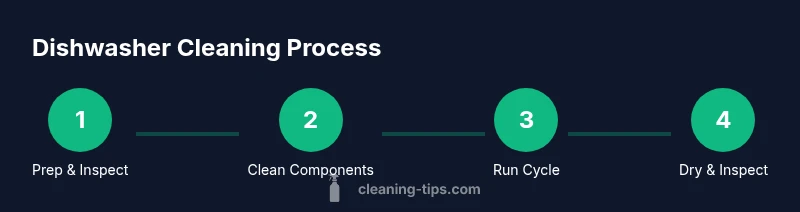
Maintaining a clean dishwasher doesn't need to be complicated. Use this routine to prevent buildup and keep dishes sparkling.
- Empty and inspect: Remove dishes, pull out racks, and quickly inspect the filter and spray arms for visible debris.
- Wipe seals and edges: Use a damp microfiber cloth to wipe the door gasket and edges to eliminate hidden grime.
- Clean the filter: Rinse or brush the filter under warm water until clear.
- Run a hot cycle with cleaner: Place a dishwasher cleaner tablet or cup of white vinegar on the upper rack and run a hot cycle without dishes.
- Scrub spray arms: If you notice clogged holes, remove spray arms and scrub with a toothbrush.
- Dry and inspect: Wipe dry interior; check that no residues remain on surfaces.
- Reassemble and test: Reinsert racks, place a dirty cup in the detergent well, and run a short cycle to confirm proper operation.
Deep Clean Techniques for Stubborn Buildup
For a deeper clean, target areas that tend to harbor grease, mold, and mineral scale. Use a dishwasher cleaner tablet in an empty cycle to dissolve buildup on interior surfaces, then follow with deodorizing methods like baking soda on the bottom rack before a hot rinse. If mineral deposits persist on spray holes or the filter, remove the spray arms and clean each tiny outlet with a soft brush or a pin. Always rinse thoroughly and dry after cleaning to prevent new residue from forming. According to Cleaning Tips, a quarterly deep clean helps maintain performance and extend the life of seals and pumps.
Maintenance Schedule: Monthly, Quarterly, and Seasonal
A practical cleaning calendar keeps your dishwasher performing at its best. Monthly: quick wipe of the door seal, spray arm surfaces, and gasket, followed by a short hot-rinse with cleaner. Quarterly: full filter removal, spray arm inspection, and a deeper interior wipe. Seasonal: inspect hoses and connections for leaks, and consider a professional service if you notice unusual noises or performance changes. Keep a log of when you cleaned and what you found to track patterns over time. Cleaning Tips suggests pairing these tasks with general kitchen routines to build consistency.
Common Mistakes and Safety Warnings
Common mistakes include using too much cleaner, mixing products (bleach with ammonia or vinegar in large quantities), and ignoring the door gasket. Such errors can damage components or create harmful fumes. Safety first: unplug the unit before any disassembly, wear gloves, and avoid overload. Finally, never use abrasive scrubbers on stainless steel surfaces to avoid scratches.
Troubleshooting Quick Fixes for Odors and Drain Issues
If your dishwasher smells, run a hot cycle with a cleaner or a cup of white vinegar, then wipe the gasket and door edges. Odors often come from trapped food and mold in the filter and seals. For drainage issues, inspect the filter and ensure the drain hose is free of kinks. A clogged spray arm or filter can also cause standing water; clear the holes with a non-metal tool and rinse thoroughly. If problems persist, consult the manufacturer’s manual or a professional service.
Tools & Materials
- Dishwasher-safe cleaner tablets or liquid(Follow label directions; use only dishwasher-safe products)
- White vinegar(Use in a cup on the top rack during a hot cycle; avoid mixing with bleach)
- Baking soda(Deodorize; not a substitute for deep cleaning)
- Old toothbrush or soft brush(Scrub tight corners and spray arm outlets)
- Microfiber cloth(Wipe seals, gaskets, and exterior surfaces)
- Sponge(General interior cleaning)
- Small bucket or bowl(Catch drips and transport water)
- Dish gloves(Protect hands during cleaning)
- Towel or mat(Protect floor from spills)
- Long-tipped tweezers or pin(Clear spray arm holes if needed)
Steps
Estimated time: 30-60 minutes
- 1
Power down and prep
Unplug or switch off the circuit, then remove the lower rack to access the interior. Clear loose food debris from the bottom and around the door so you can clean safely.
Tip: Wear gloves and keep the area dry to avoid slips. - 2
Inspect and clean the filter
Take out the filter assembly, rinse under warm water, and brush away debris. Reinsert securely and verify it sits flat.
Tip: Check for cracks; replace if damaged. - 3
Clear spray-arm outlets
Remove spray arms if possible and examine each hole for clogs. Use a pin or toothbrush to loosen mineral buildup, then rinse thoroughly.
Tip: Be gentle to avoid bending or breaking nozzles. - 4
Apply cleaning solution
Place a dishwasher cleaner tablet in the detergent cup or set a cup of white vinegar on the top rack. Do not mix cleaners.
Tip: Follow manufacturer guidelines and avoid mixing cleaners. - 5
Run a hot cycle
Run an empty hot cycle to flush residues and dissolve grease. If your water is very hard, consider an extra rinse.
Tip: Ensure no dishes remain in the cavity during this cycle. - 6
Wipe seals and door edges
Wipe the door gasket and outer edges with a damp microfiber cloth to remove soap scum and mold.
Tip: Dry surfaces with a clean cloth to prevent moisture buildup. - 7
Deep-clean spray arms and interior
Reattach spray arms and wipe all interior surfaces with a microfiber cloth. Check corners and the float assembly for residue.
Tip: Make sure spray arms rotate freely after cleaning. - 8
Dry, reassemble, and test
Dry the interior, reinsert racks, and run a short cycle to confirm there are no leaks and that everything seals properly.
Tip: Leave the door slightly ajar after cycles to prevent moisture buildup.
Questions & Answers
How often should I clean my dishwasher?
A light monthly wipe and deodorize; a deep clean every 3-6 months is enough for most homes. Increase frequency if you have hard water or notice odors or reduced performance.
Clean monthly and perform a deeper clean every few months.
Can I use vinegar in my dishwasher?
Yes, in moderation, by placing a cup on the upper rack during a hot cycle; avoid mixing with bleach or ammonia. Vinegar helps deodorize but should not be the sole cleaning method for buildup.
Place a cup of vinegar on the top rack during a hot cycle and don’t mix with bleach.
Is baking soda safe for deodorizing?
Baking soda can deodorize when sprinkled on the bottom or used with a hot cycle, but it isn’t a substitute for a proper cleaning with dishwasher cleaner.
Baking soda helps deodorize but isn’t a replacement for a full clean.
Why do dishes come out wet?
It often comes from the drying settings and rinse aid. Check that you’re using rinse aid if needed and that the door seal isn’t degraded, which can trap moisture.
Dishes may stay wet if the drying aids aren’t set or if the seal is compromised.
What if the filter is damaged?
Replace with an approved filter from the manufacturer. A damaged filter reduces cleaning efficiency and can allow debris back into the pump.
Replace the damaged filter with an approved part.
My dishwasher smells moldy; how do I fix it?
Run a hot cycle with cleaner, wipe the gasket, and leave the door open after cycles to air out. Regular drying helps prevent mold growth.
Run a hot cycle, wipe the gasket, and air out after use.
Watch Video
The Essentials
- Schedule monthly cleanings
- Clean filter weekly
- Use vinegar cautiously
- Keep seals dry
- Avoid mixing cleaners