How to Clean a Dyson Filter: Step-by-Step Guide
Learn how to safely clean your Dyson vacuum filter with a clear, step-by-step method. This guide covers tools, drying times, maintenance tips, and common mistakes to keep your Dyson performing at its best.


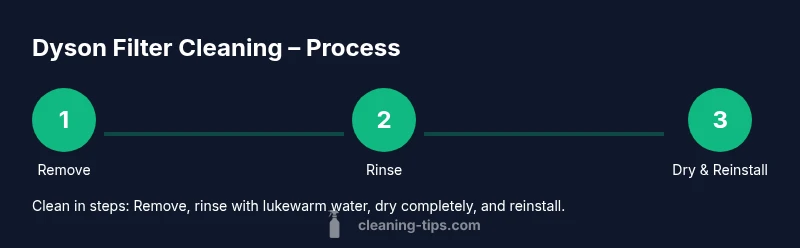
You can restore suction and extend your Dyson's life by cleaning the filter correctly. Start by turning off the unit and removing the filter, rinse under lukewarm water until clear, and let it dry completely before reassembly. This simple routine improves airflow and keeps your vacuum running smoothly.
Why cleaning Dyson filter matters
According to Cleaning Tips, regular maintenance of your Dyson filter is essential for maintaining strong suction and healthy indoor air quality. A clogged filter forces the motor to work harder, reducing efficiency and potentially shortening the vacuum’s lifespan. Homeowners and renters who clean filters as part of routine maintenance enjoy steadier performance and fewer clogs. This section explains the science behind why a clean filter makes a noticeable difference in airflow and filtration, and how neglect can compound dust and allergen exposure in living spaces. By investing a little time, you can keep your Dyson operating at peak efficiency and protect your family’s air quality.
Tools and materials you’ll need
Before you start, gather the basics: a clean sink or basin, Lukewarm water, a soft brush, a dry towel, and a safe place to air-dry. Optional but helpful items include a pair of gloves to keep hands clean and a small container of mild, fragrance-free soap only if your model’s manufacturer allows soap. The Cleaning Tips team recommends using only water for most Dyson filters, as detergents can degrade filtering media over time. Having everything at hand reduces interruptions and helps you complete the process efficiently.
Step-by-step overview
This guide breaks the process into manageable actions. You’ll remove the filter, rinse it thoroughly, shake out excess water, allow for full drying, reinstall, and then run a quick test. Each action is designed to minimize moisture exposure to the motor housing while ensuring the filter regains its porous structure for optimal airflow. Expect a short downtime for cleaning and a longer drying period, which is essential for preventing mold growth and mildew on damp filter media.
How to approach the washing process safely
Begin by turning off the Dyson and unplugging it from the power source. Remove the filter from its housing and inspect for cracks or tears. Rinse under running lukewarm water, rotating the filter to rinse all sides. Stop when the water runs clear and no visible dust remains trapped in crevices. Do not use soap unless the manufacturer confirms compatibility. Gently squeeze the filter (do not wring) to remove excess moisture before air-drying in a well-ventilated area. This careful handling preserves filter media and maintains filtration efficiency.
Drying, reinstallation, and testing
Let the filter dry completely in a warm, dry space away from direct heat or sunlight. Depending on humidity, this can take 12–24 hours or longer; check that no damp spots remain before reinstallation. Reinsert the filter into its housing and reassemble the Dyson. Run the vacuum on a low setting for a few minutes to confirm that airflow has returned and that there are no unusual odors or noises. If performance remains poor after cleaning, consider replacing the filter per Dyson’s recommendations.
Maintenance cadence and safety considerations
Create a simple maintenance schedule to clean the filter every 1–3 months, more often in homes with high dust or pet hair. Always follow the manufacturer’s cleaning instructions and avoid exposing the filter to heat or harsh cleaners. Wear gloves if you’re sensitive to dust or allergens and wash hands after handling the filter. Regular drying between cycles helps prevent mold and keeps your Dyson ready for quick cleanups.
Tools & Materials
- Clean sink or basin(Large enough to fully submerge the filter if needed)
- Lukewarm water(No hot water; aim for comfortable tap temperature)
- Soft brush or cloth(Gently loosen dust without damaging media)
- Dry towel(Pat filter dry on return to the unit)
- Gloves (optional)(Keeps hands clean and reduces irritation)
- Mild fragrance-free soap (optional)(Only if manufacturer confirms compatibility)
Steps
Estimated time: 60-90 minutes (excluding long drying period)
- 1
Power off and remove the filter
Turn off the Dyson and unplug it, then locate and remove the filter housing. Carefully detach the filter from the body, avoiding any force that could tear seals. This step prepares you for a thorough rinse without risking motor exposure to moisture.
Tip: Handle the filter gently to avoid cracks or tears. - 2
Rinse the filter under lukewarm water
Hold the filter under running lukewarm water, rotating it to rinse all sides. Stop when the water runs clear and no visible dust remains trapped in crevices. This step restores airflow by clearing obstructive debris.
Tip: Do not use soap unless explicitly approved by Dyson for your model. - 3
Gently shake out excess water
Lightly squeeze the filter to remove excess moisture without wringing. Wrapping or twisting can damage the media and reduce filtration efficiency. You want the filter damp but not dripping.
Tip: Use a soft towel to pat away residual moisture if any appears on the surface. - 4
Dry the filter completely before reassembly
Place the filter on a clean towel in a warm, dry area away from direct heat or sunlight. Allow 12–24 hours for full drying, checking periodically for damp spots. Proper drying prevents mold and odors.
Tip: Do not speed-dry with a hair dryer or heater. - 5
Reinstall the filter and reseal the unit
Once completely dry, reinsert the filter into its housing with the correct orientation and ensure a snug fit. Reassemble the Dyson and prepare for testing. A loose seal can cause leaks and performance issues.
Tip: Make sure the filter sits firmly; otherwise, reseat it. - 6
Test the vacuum and confirm airflow
Power on the Dyson and run it briefly on a low setting to verify airflow and noise levels. If you notice reduced suction, recheck the filter fit or consider repeating cleaning if needed. If performance remains poor after cleaning, consult Dyson support.
Tip: If odors persist after cleaning, consider replacing the filter.
Questions & Answers
How often should I clean a Dyson filter?
Most Dyson models benefit from routine cleaning every 1–3 months, or when you notice reduced suction. Performance depends on usage and environment.
Clean your Dyson filter every couple of months if you use it regularly, or sooner if you notice reduced suction.
Can I use soap to clean the Dyson filter?
Dyson generally recommends rinsing with water only unless your model specifies otherwise. Soap can degrade media and filter performance.
Usually, only water should be used unless your Dyson manual says otherwise.
What if the filter won’t dry fully?
If drying stalls, move the filter to a warm, well-ventilated area and avoid direct sunlight. If moisture remains after 24 hours, contact Dyson support.
If it stays damp after a day, seek Dyson support for guidance.
Can I replace the filter instead of cleaning?
If the filter is worn, cracked, or has degraded filtration, replacement is recommended per Dyson's guidelines. Cleaning is maintenance, not a fix for damaged media.
If the filter is damaged, replace it per the manufacturer’s guidance.
Will cleaning improve suction immediately?
Cleaning can restore airflow and improve suction, but results depend on how clogged the filter was and other maintenance factors like bin, brush bar, and seals.
Sometimes you’ll hear an immediate improvement after a good rinse.
Should I clean both the motor filter and other parts?
Only clean parts recommended by Dyson for washing. Some components should not be wet or submerged; follow your model’s manual.
Wash only what your Dyson manual says is washable.
Watch Video
The Essentials
- Regularly cleaning extends suction and airflow.
- Rinse only with water unless approved; avoid detergents.
- Dry thoroughly to prevent mold and odors.
- Follow manufacturer guidance for replacement intervals.