How to Clean a Gearbox: A Practical Step-by-Step Guide
Learn safe, practical steps to clean a gearbox exterior, with tools, safety tips, and maintenance guidance from Cleaning Tips. This comprehensive guide covers degreasing, wiping, drying, inspection, and long-term care to extend gearbox life.


This guide shows a safe, practical method to clean a gearbox, focusing on exterior cleaning, degreasing, and inspection without deep disassembly. You’ll learn the right tools, safe practices, and maintenance tips to keep the gearbox running smoothly. Always unplug power and follow the manufacturer’s guidelines for your model.
Why cleaning gearbox matters
Keeping a gearbox clean isn't just about appearance. When you learn how to clean gearbox exterior surfaces, you help prevent dirt, dust, and old lubricant from creeping into seals and cooling fins. Contaminants can increase friction, reduce efficiency, cause overheating, and accelerate wear on gears and bearings. A cleaner exterior also makes it easier to spot leaks or corrosion early, before they become costly problems. For homeowners and hobbyists, routine exterior cleaning of gearboxes—from power tools to washing machine components—can extend service life and maintain safer operation. In short, regular cleaning supports reliability, reduces maintenance surprises, and preserves resale value. The Cleaning Tips team often notes that a simple wipe down coupled with an occasional degrease step goes a long way toward keeping a gearbox performing at its best. If you follow these steps, you’ll avoid the most common buildup that leads to drift, noise, and inefficiency.
Gearbox types and what you can safely clean externally
Gearboxes vary widely in design and sealing. In most consumer equipment and DIY projects, the exterior housing, cooling fins, and accessible vent openings can be cleaned without opening the unit. Internal components such as gears, bearings, seals, and lubrication pathways require disassembly and professional service. Before you begin, consult the manufacturer manual to confirm what is safe to clean externally and which parts are considered serviceable. If the unit is still under warranty, external cleaning is typically safe and won't void coverage, but internal inspection could. When in doubt, contact a licensed technician. With the right approach, you can remove surface grime and oil residue safely while preserving critical seals and lubrication.
Safety, PPE, and when to pause
Before touching any gearbox, power must be off and the machine disconnected. Use a lockout tagout procedure if available and verify there is no residual energy in the system. Wear safety goggles, nitrile gloves, and a breathable respirator if you are using solvent degreasers. Work in a well ventilated area and protect floors with a drop cloth or plastic sheeting. If you notice strong fumes, a strong dye smell, or heat that seems abnormal, pause and reassess. Do not spray water directly into vents or openings, especially on sealed gearboxes. If you have any doubts about the integrity of seals or the risk of oil leaks, stop and consult a professional.
Tools and materials for cleaning a gearbox
You will need a basic set of tools and cleaning supplies. Essential items include: safety goggles, nitrile gloves, lint-free rags, a mild degreasing agent, a spray bottle, a soft brush, a plastic scraper, a bucket, and a dry drop cloth. Optional but helpful: isopropyl alcohol for a final wipe, citrus-based cleaners for sensitive surfaces, and a small hand vacuum for dry debris. Keep a sealable bag for small parts if you temporarily remove covers. For workspace protection, place a disposable or washable protective mat on the workbench.
The cleaning process: external degrease and wipe
Begin by removing loose dust with a dry brush or microfiber cloth. Apply a light mist of degreaser to exterior surfaces and allow it to dwell for 2–4 minutes; avoid soaking seals or openings. Gently scrub with a soft brush to lift grime without scratching metal surfaces. Wipe away loosened residue with clean rags, then repeat with fresh cloths. Rinse with a damp cloth if appropriate, ensuring no moisture enters seals or vent openings. Finish with a dry wipe to remove moisture and inspect for remaining grime.
Drying, inspection, and preventative checks
After cleaning, let the gearbox air dry for several minutes or use a clean cloth to speed evaporation. Inspect the exterior for signs of oil leaks, cracks, corrosion, or loose fasteners. Check seals around openings and ensure vent caps are in place. If you notice leaks or damaged seals, document and plan professional service. Apply a light protective coating or latch-lubricant if recommended by the manufacturer. Finally, wipe down the surrounding area to avoid slip hazards from any residual oil.
Maintenance schedule and long-term care tips
Create a simple maintenance calendar that fits your usage pattern. For high use gearboxes, a monthly exterior wipe and quarterly a deeper clean may be appropriate. For low-use gearboxes, a biannual wipe can suffice. Always reset your inspection notes after cleaning and note any changes in noise, temperature, or oil levels. Store cleaning supplies away from heat sources and dispose of used solvents according to local regulations. Regular external cleaning helps you detect issues early and keeps the machine both efficient and safe.
Tools & Materials
- Safety goggles(Impact-resistant if possible)
- Nitrile gloves(Protect hands from solvents)
- Lint-free rags(Use multiple fresh cloths for best results)
- Mild degreasing agent(Choose a non-caustic cleaner suitable for metal)
- Spray bottle(Dilute cleaner as needed per label instructions)
- Soft brush(Non-abrasive nylon brush, soft bristles)
- Plastic scraper(For stubborn grime, avoid metal scrapers)
- Bucket(Contain rinse water or degreaser solution)
- Drop cloth or protective mat(Protect work surface from spills)
- Isopropyl alcohol(Final wipe on metal surfaces (optional)”)
- Citrus-based cleaner(Use on sensitive plastics or seals (optional))
- Sealable bag for small parts(For temporarily removed covers)
Steps
Estimated time: 60-90 minutes
- 1
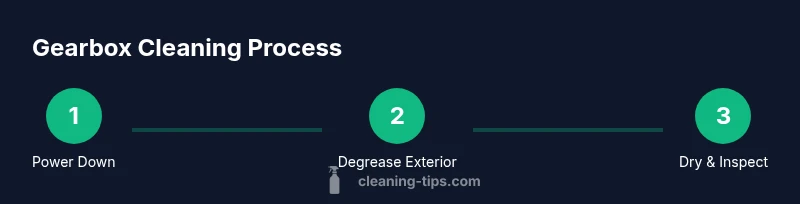
Power down and prepare safety
Shut off the machine, unplug the power source, and verify there is no residual energy in the system. If the equipment has a locked controls, engage lockout while you work. Ensure you have stable footing and a clear workspace before proceeding.
Tip: Use lockout/tagout procedures to prevent accidental startup. - 2
Assess exterior access and清
Inspect the gearbox exterior to determine accessible clean surfaces. Remove loose dirt with a dry brush and wipe away surface dust with a microfiber cloth so you can see grime clearly before applying cleaner.
Tip: Do not splash solvent into seals or openings. - 3
Protect workspace and pre-clean
Lay down a drop cloth or plastic sheeting. If your gearbox sits on metal, place a thin mat to prevent scratching. Remove any nearby items that could be damaged by solvents or drips.
Tip: Keep a trash bag handy for used wipes and paper towels. - 4
Apply degreaser and scrub exterior
Mist the exterior lightly with the chosen degreaser and let it dwell for 2–4 minutes. Use a soft brush to lift grime from crevices, then wipe with clean rags until surface looks uniform.
Tip: Avoid saturating seals; excessive moisture can seep into bearing passages. - 5
Rinse off residue and dry
Wipe away cleaner residue with a damp cloth and then dry thoroughly with a clean, dry cloth. If the manufacturer allows, you may use a light mist of isopropyl alcohol to speed evaporation and leave a dry surface.
Tip: Do not leave any damp spots near vents or openings. - 6
Final inspection and notes
Check for any remaining grease, oil leaks, or signs of wear after cleaning. If you removed any covers, reassemble securely and try a no-load test run if safe. Document any issues or unusual findings for future maintenance.
Tip: Record the date and what you cleaned for easy reference.
Questions & Answers
What is a gearbox and why would I clean it?
A gearbox is a housing that contains gears and bearings for transmitting mechanical power. Regular exterior cleaning removes dirt that can cause overheating and wear, helps you spot leaks, and supports overall performance. Internal cleaning should be left to professionals.
A gearbox is a gear housing. Cleaning the outside helps keep it cool and running smoothly; internal parts usually need a pro.
Can I clean a gearbox without disassembling it?
Yes, for many consumer gearboxes you can safely clean the exterior without opening the case. Avoid touching seals or lubrication paths. If you need to access the internals, consult the manual or a technician.
You can usually clean the outside without taking it apart; if you must open it, get expert help.
What cleaners are safest for gearboxes?
Choose a mild degreaser or soap with low-toxicity and avoid caustic or corrosive products. Test on a small area first and ensure the cleaner is compatible with the housing material. Rinse and dry thoroughly.
Use a mild degreaser and test first; avoid harsh chemicals near seals.
How often should I clean a gearbox exterior?
Frequency depends on usage and environment. For high-use gearboxes, a monthly exterior wipe and quarterly deep clean can help; for low-use gearboxes, a biannual wipe may suffice.
Clean as part of regular maintenance based on usage.
Is water safe to use when cleaning gearboxes?
Water can be risky, especially for electrified or sealed gearboxes. Use damp cloths rather than jets of water, and never saturate seals. If you must rinse, ensure power is off and moisture cannot reach electrical components.
Avoid direct water spray; use damp cloths and ensure power is off.
When should I call a professional?
If you notice active leaks, damaged seals, unusual noises, or if disassembly is required, stop and contact a technician. A professional can reseal, reseal, or replace parts as needed.
Call a professional if leaks or damage are present or disassembly is required.
Watch Video
The Essentials
- Unplug before cleaning and protect energy sources
- Focus on exterior surfaces; internal components require professional service
- Choose mild, compatible degreasers to avoid damage
- Dry thoroughly to prevent corrosion and rust
- Maintain a simple routine to catch issues early