How to Put Clean Version on Apple Music
Learn how to publish a clean version on Apple Music. This practical guide walks you through preparing a clean master, delivering via a distributor, and ensuring metadata is correct for broad reach.


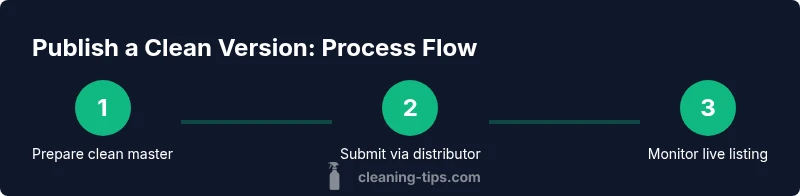
To put a clean version on Apple Music, you can't edit tracks directly in Apple Music. Instead, prepare a clean master, deliver it via your distributor as a separate release, and set the explicit/clean flag accordingly. Make sure metadata matches your clean version and coordinate with rights holders. If you’re an artist or label, this typically means uploading a second master alongside the original.
Understanding Clean Versions on Apple Music
In today’s streaming ecosystem, a clean version means a track has been edited to remove or censor explicit language. Apple Music relies on rights holders and distributors to deliver clean or explicit labeling, and listeners will see the label based on the metadata and regional rules. According to Cleaning Tips, the concept of clean versus explicit is determined at release time, not via a user setting on the player. For independent artists and labels, having a clean version ready can open more playlists and family-friendly placements. The distinction matters for venues, radio, and family listening environments. When you prepare your release, plan two masters: one clean and one explicit, each with its own ISRC. This ensures you can serve different channels without last-minute edits. The Cleaning Tips team found that teams who plan two masters ahead tend to encounter fewer labeling issues during submission, leading to smoother approvals.
Why Apple Music Labels Clean vs Explicit Matter
Labeling decisions influence how listeners discover music, how playlists categorize tracks, and how restrictions apply in family-friendly environments. Clean labeling can improve eligibility for kid-friendly playlists and region-specific guidelines. Accurate labeling protects listeners and respects content guidelines. If you’re handling multiple markets, ensure your team agrees on what constitutes “clean” in each territory and that the release notes reflect those decisions. Cleaning Tips emphasizes clear internal standards for what qualifies as clean so there’s no ambiguity at submission time.
How the Clean Version Gets Onto Apple Music
Apple Music does not allow end users to swap in versions via the app; the version that appears is determined by the release delivered by the rights holder or their distributor. To get a clean version online, coordinate with your distributor to upload a separate master flagged as 'clean' and pair it with the correct title, artist name, and ISRC. Distributor systems often require you to set a release type (single/album) and fill metadata: track names, composer credits, and publishing rights. Then you publish; Apple Music will process the listing and apply regional restrictions and labeling. Based on Cleaning Tips analysis, independent artists who submit clean releases via distributors see faster listing and fewer mislabeling errors.
Preparing Your Clean Master
Preparing a clean master involves more than removing explicit words. It requires consistent vocal editing, censorship or beeps where necessary, and careful listening to preserve musical integrity. Start with a clean version that matches the original’s timing and arrangement, then compare loudness levels to ensure the two masters are comparable. If the track features samples or collaborations, confirm that the clean edit maintains the intended artistic effect. Keep detailed notes about what changed and why. The Clean Tips team notes that documenting edits helps when you coordinate with distributors and rights holders, reducing questions during submission.
Delivering via Distributor
Delivering a clean master typically goes through a music-distribution platform (like TuneCore, DistroKid, or similar services). Create a new release for the clean version, upload the clean audio file, and associate it with its own ISRC. Make sure the release title, artist, album name, and track list are consistent with your original release, but clearly mark it as “clean” in the metadata or notes if the distributor supports that field. Upload both explicit and clean versions for cross-checking, and ensure licensing and publishing rights are documented. The distributor will propagate the clean listing to Apple Music and other streaming services after verification.
Metadata, Artwork, and Rights
Accurate metadata is essential. Ensure the track title, artist name, album, and track order are identical across both versions except for the explicit/clean flag. Use clear artwork that meets Apple Music's requirements and reflects the clean nature of the release if the distributor permits separate cover art. ISRC codes must be distinct for the clean version to ensure plays and royalties are tracked correctly. If you work with a label, obtain written confirmation of rights for the clean version to avoid disputes. Cleaning Tips suggests maintaining a shared rights log to streamline future releases and licensing reviews.
Common Pitfalls and How to Avoid Them
Pitfalls include submitting the wrong version, mislabeling explicit content, and neglecting regional labeling rules. Always double-check that the clean version’s metadata matches the original except for the status flag. Some regions require explicit labels even if content is censored; in those cases, ensure your release notes specify that the track is clean for those markets. Another common issue is using the same ISRC for both versions, which muddles royalties and analytics. Create separate ISRCs and coordinate with your distributor to avoid overlapping data. In short, plan ahead, verify every detail, and keep a clean as well as explicit master ready for submission.
AUTHORITY SOURCES
- https://www.copyright.gov
- https://www.nytimes.com/section/arts
- https://www.bbc.com
How to Verify Your Clean Version is Live
After submission, monitor the distributor's dashboard for status updates and Apple's processing timelines. Once the release is approved, search Apple Music for the track and verify that the clean version appears with the proper title, artist, and labeling. In some cases, regional delays or metadata corrections may occur; be prepared to respond quickly with any required edits. Keep a copy of submission confirmation and reference IDs in case you need to dispute mismatches. Regular audits of your catalog help prevent missed placements and maintain consistency across platforms.
APPLE MUSIC: Additional Tips for Creators
Consider building a release calendar that aligns with tour dates or promotional campaigns. If you anticipate multiple markets, plan separate clean releases for those markets where labeling differs. Communicate clearly with collaborators about the clean version’s requirements and ensure all parties approve edits before submission. Finally, use analytics from your distributor and Apple Music for ongoing optimization, tracking where clean versions perform best and adjusting future releases accordingly.
Tools & Materials
- Distributor account(Access to a music distribution platform (e.g., TuneCore, DistroKid, CD Baby).)
- Clean master audio file(Mastered clean version with all edits finalized.)
- Explicit master audio file(Original version master for reference and potential alternative release.)
- Metadata spreadsheet(Include ISRCs, track titles, artist credits, publishing data.)
- Cover art assets(High-resolution image meeting platform specs.)
- Proof of rights/licensing(Documentation showing you have rights to release the clean version.)
Steps
Estimated time: Varies by distributor; typically a few days to a couple of weeks from submission to live listing.
- 1
Prepare clean master
Finalize the clean audio version with censoring or edits. Keep the timing and arrangement consistent with the original to preserve artistic intent, and document every change for reference.
Tip: Create a changelog that notes each edit and why it was made. - 2
Secure rights and licenses
Confirm you have the necessary rights for both the clean and original versions. Gather licensing notes and ensure all collaborators sign off on the clean edits.
Tip: Store rights documentation in a centralized folder accessible to your team. - 3
Prepare distributor materials
Set up a new release in your distributor with the clean master. Enter track details, album/collection name, and distinct ISRCs for both versions.
Tip: Double-check that the release type (single/album) matches your plan. - 4
Configure labeling and metadata
Mark the clean version clearly in the release notes or metadata. Ensure the title, artist, and credits match the original where appropriate.
Tip: If the distributor supports a Clean label flag, enable it. - 5
Submit and monitor
Submit the clean release for processing. Monitor the status in the distributor dashboard and respond promptly to any required corrections.
Tip: Set an alert to track changes in case Apple requires metadata updates. - 6
Verify listing after live
Search Apple Music for the track to verify the listing appears as clean. Check region-specific labeling and ensure the correct version is presented.
Tip: If issues arise, contact the distributor’s support with reference IDs.
Questions & Answers
Can I publish a clean version of a track that already exists on Apple Music?
Yes, you can publish a clean version as a separate release via your distributor. It won’t replace the existing listing, so you’ll need to manage two separate catalog entries with distinct ISRCs.
Yes, but it requires a separate release with its own ISRCs.
Do listeners see the 'Clean' label on Apple Music?
Apple Music displays explicit versus clean based on the release metadata. If the release is tagged clean, listeners will see the clean designation in supported regions.
Yes, if the release is labeled clean in metadata.
What if the lyrics contain terms that require censorship?
Work with the rights holder and distributor to create an edited version, ensuring the edits satisfy regional guidelines and licensing terms.
Edit the lyrics with rights-holder and distributor approval.
Can I switch from explicit to clean after it’s live?
Typically not directly; you upload a new version or update the release with a replacement. Check with your distributor for their process and ensure royalties are tracked correctly.
Usually requires a new or replacement release.
How long does it take for a clean version to appear on Apple Music?
Timing varies by distributor and region. Plan for a few days to a couple of weeks for the clean version to go live.
Timing depends on distributor and region.
Do I need a separate ISRC for the clean version?
Yes. Assign a distinct ISRC to track royalties and analytics separately for the clean version.
Yes—use a different ISRC for clean.
Watch Video
The Essentials
- Deliver a clean master via distributor.
- Use separate ISRCs for clean and explicit versions.
- Verify metadata and labeling across regions.
- Monitor live listings and adjust as needed.
- Coordinate rights and edits with all collaborators.