Is Cleaning the Same as Descaling? A Practical Guide
Explore the difference between cleaning and descaling, why each matters for appliances, and how to apply safe, effective methods with practical guidance from Cleaning Tips.


The answer is no: cleaning and descaling are related but distinct tasks. Cleaning removes surface grime, while descaling targets mineral buildup and equipment efficiency. Descaling is typically necessary for appliances that use water at scale-prone temperatures, whereas routine cleaning maintains hygiene and appearance. In practice, many homes perform both at different times, depending on the appliance and water hardness.
Is cleaning the same as descaling? Core Definitions
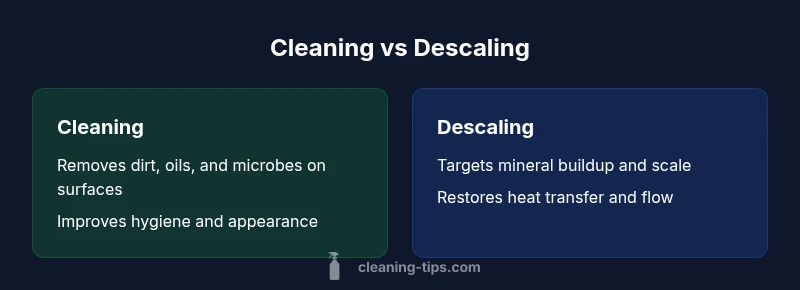
At its core, the question is is cleaning the same as descaling? Cleaning refers to removing dirt, oils, and microbes from surfaces using soap, water, and mechanical action. Descaling, by contrast, targets mineral buildup—scale that forms in kettles, boilers, heating elements, and water pathways. The distinction matters because each process addresses different failure modes: hygiene versus efficiency. While both can improve performance, they are not interchangeable. In practice, homeowners often perform both, but not in the same situation. is cleaning the same as descaling should be understood as two complementary maintenance tasks rather than a single procedure.
Key takeaway: recognize the problem to decide the method, then apply the appropriate approach.
Why this distinction matters for home appliances
Different appliances experience different kinds of wear. A kettle or coffee maker encounters mineral-rich water that can leave scale on heating surfaces, reducing heat transfer and speed. Dishwashers and washing machines can also accumulate mineral deposits in hoses and valves, which may impair flow and efficiency. Descaling is not a replacement for cleaning; it targets what cleaning cannot remove. Conversely, cleaning removes organic residue that descaling agents may not address. In short, the two tasks support each other and should be scheduled based on the appliance type and water quality. Cleaning tips and descaling methods should be aligned with manufacturer guidance to prevent damage.
When you should clean: Routine hygiene and maintenance
Regular cleaning focuses on removing dirt, grease, soap scum, and microbial buildup from surfaces that come into contact with food, water, or air. This includes kitchen counters, appliance exteriors, drip trays, and accessible components. Use mild detergents, non-abrasive sponges, and proper rinsing to prevent residue that can harbor microbes. Stress hygiene over aesthetics when needed, but remember that a clean surface does not always mean the interior is free of mineral deposits. The two approaches serve different cleanliness goals, and misapplying one as a substitute for the other can diminish appliance performance over time.
When you should descale: mineral buildup and efficiency
Descaling focuses on mineral deposits—primarily calcium and magnesium salts—that accumulate in heating elements, pipes, and water pathways. Scale acts like an insulating layer, reducing heating efficiency and increasing energy use. Descalers dissolve or soften mineral buildup, restoring flow and heat transfer. This is especially relevant for appliances that heat or infuse water, such as kettles, coffee makers, steam irons, and some espresso machines. Always verify that the descaling agent is compatible with the appliance’s materials to avoid corrosion or coating damage.
How to decide between cleaning and descaling: a step-by-step approach
- Identify the problem: Is the issue surface grime, odor, or mineral scale? 2) Check the appliance manual: Some devices warn against certain descalers or require special steps. 3) Choose safe agents: Use products approved for the material, or choose benign options like citric acid or baking soda when permitted. 4) Test on a small area: Before a full procedure, test in an inconspicuous spot or follow official guidance. 5) Rinse and dry thoroughly: Residual cleaners or descalers can cause damage if left in contact with components. 6) Schedule maintenance: Create a simple calendar that blends cleaning and descaling at appropriate intervals.
Methods, tools, and safe practices
For cleaning, gather mild detergents, soft cloths, and non-abrasive brushes. For descaling, common options include citric acid or dedicated descalers designed for the appliance. Always read labels and follow dilution instructions. Never mix cleaning agents with bleach or ammonia, and ensure adequate ventilation when using stronger descalers. Wear gloves to protect skin and avoid inhaling any fine residues. When in doubt, contact the manufacturer for approved products.
Real-world scenarios: quick comparisons by appliance type
- Kettle: surface cleaning for hygiene; descaling to remove mineral buildup on the heating element.
- Coffee maker: regular cleaning of carafe and seals; descaling to prevent scale from affecting flavor and extraction.
- Dishwasher: monthly surface cleanings of seals and filters; descaling if mineral deposits appear in spray arms or piping.
- Humidifier: exterior cleaning to prevent mold; descaling if mineral residue affects performance.
Integrating cleaning and descaling into a home maintenance schedule
A simple approach is to alternate tasks by season: spring cleaning for interiors and exteriors, and a fall descaling session for appliances exposed to hard water during winter usage. Keep a log to remember what was done and when. This habit not only preserves appliance performance but also extends their lifespan while maintaining safe, healthy indoor air quality.
Emerging considerations: water quality and materials
Water quality is a major driver of descaling frequency. Homes with hard water will experience mineral buildup more quickly, necessitating more frequent descaling. Material compatibility matters as well; some plastics, seals, and metal finishes react to certain descalers. When products or materials are uncertain, consult manufacturer guidance and opt for gentler solutions that are explicitly approved for the appliance. A thoughtful combination of cleaning and descaling reduces the risk of damage and keeps appliances performing optimally.
blockDataTypeRepetitionCountingPhraseEndIfNeededNotApplicableForJsonWithoutContextHasNoImpact
Comparison
| Feature | Cleaning | Descaling |
|---|---|---|
| Purpose | Removes dirt, grease, and microbes from surfaces; supports hygiene | Removes mineral buildup (scale) to restore heat transfer, flow, and efficiency |
| What it targets | Organic soils, biofilms, and surface residues | Calcium, magnesium, and other mineral scales in water-facing parts |
| Best use case | Daily maintenance and hygiene; exterior cleaning | Appliances exposed to hard water or scale-prone components |
| Typical tools | Detergents, brushes, cloths | Descalers (citric acid, vinegar where safe, or commercial descalers) |
| Time and effort | Short sessions for each area; may be combined in a routine | Variable; depends on appliance and amount of scale |
Strengths
- Clarifies maintenance goals for household appliances
- Extends appliance lifespan by preventing mineral buildup
- Improves cleaning effectiveness and efficiency
- Can be cost-effective with simple, home-safe agents
Weaknesses
- Descaling may require special products and careful handling
- Some descalers can damage certain materials if misused
- Frequent descaling can feel time-consuming
- Not all appliances require descaling
Descaling and cleaning are complementary; neither is universally superior, but proper use depends on the problem you’re solving.
Use cleaning for everyday hygiene and appearance, and reserve descaling for mineral buildup that impairs performance. A combined, appliance-specific approach maintains efficiency and cleanliness over time.
Questions & Answers
What is the difference between cleaning and descaling?
Cleaning removes dirt, oils, and microbes from surfaces. Descaling targets mineral buildup that reduces efficiency. They serve different purposes and are not interchangeable.
Cleaning removes dirt and microbes from surfaces, while descaling tackles mineral buildup that hurts efficiency.
Which appliances typically need descaling?
Kettles, coffee makers, espresso machines, and some humidifiers or boilers that handle hard water are common candidates for descaling. Always follow the manufacturer’s guidance.
Kettles and coffee makers often need descaling, especially with hard water.
Can I use vinegar for descaling?
Vinegar can work for some appliances but may not be safe for all materials. Check the manual and test a small area before applying broadly.
Vinegar can work, but make sure your appliance can handle it first.
How often should I descale my dishwasher?
Descaling frequency depends on water hardness and usage. Use the appliance’s guidance and avoid over-descaling, which can cause wear on seals and components.
Check your dishwasher manual for descaling recommendations based on your water quality.
Is there a risk in combining cleaning and descaling?
Combining cleaning and descaling is possible if you carefully separate steps and rinse thoroughly between tasks. Never mix cleaning agents with descalers.
Don’t mix cleaners and descalers together—keep them separate and rinse well.
The Essentials
- Define the goal: hygiene and appearance vs mineral removal.
- Schedule routine cleaning for daily maintenance.
- Reserve descaling for mineral buildup and efficiency loss.
- Always follow appliance-specific guidelines before descaling.
- Create a maintenance calendar that blends cleaning and descaling.