Oven Cleaning: A Step-by-Step Guide
A comprehensive, practical guide on how to clean your oven safely and effectively, covering DIY methods, self-cleaning modes, racks, and maintenance tips from Cleaning Tips.


In this guide, you will learn how to clean an oven safely, whether you use DIY methods or self-cleaning settings. The key is to remove burnt-on residue, wipe racks, and protect surfaces. This article covers prep, methods for different oven types, safety tips, and a simple maintenance routine. Whether you own a conventional range, a convection model, or a microwave oven with a convection option, the core steps are similar. Avoid common mistakes to keep your appliance in top shape.
Why Cleaning Your Oven Matters
According to Cleaning Tips, a clean oven improves heat distribution, reduces smoky odors, and helps keep your kitchen healthier. A well-maintained oven also extends the appliance’s life and improves cooking results. In this section, you’ll learn why grime buildup happens, what types of residue are most problematic (carbonized bits, grease splatter, and baked-on sauces), and how neglect can affect efficiency. Beyond aesthetics, a clean oven reduces energy usage because the heating elements work more consistently when grime is absent. The goal is not perfection, but a practical routine that fits real-life schedules. As you read, note how different residue types require slightly different approaches, and how pre-clean planning can save time later. Remember that consistent maintenance is cheaper than frequent deep cleans.
- Regular wipe-down after cooking prevents buildup.
- A quick weekly pass with a damp cloth reduces acute grime.
- Address spills promptly to avoid crusting and flavor transfer.
The Cleaning Tips team emphasizes that establishing a simple routine is more effective than intense, one-off scrubs. A small, repeatable process eliminates surprise cleanups and safeguards your oven’s performance.
Types of Ovens and How Cleaning Differs
Ovens come in several configurations, and the cleaning approach shifts with design. Conventional gas or electric ovens usually respond well to baking soda pastes and light scrubbing. Convection ovens distribute heat more evenly, which means hotter hotspots can bake on residues more persistently. Microwave ovens with convection also benefit from gentle cleaning to avoid damaging the interior coating or the fan. Double ovens and wall-mounted units add complexity because of multiple cavities and seals.
Key takeaways:
- Do not confuse self-cleaning cycles with DIY scrubbing; cycles can blast residue loose but may stress seals.
- Glass doors require extra care to avoid scratching and streaks.
- Racks and trays should be cleaned separately to prevent exhaust blockages and ensure even heat.
If you’re unsure about your model’s cleaning instructions, consult the user manual or the manufacturer’s site. The goal is to tailor your approach to the oven’s interior surfaces and coatings while maintaining safety margins.
Safe Prep and Safety Gear
Preparation sets the stage for a successful clean. Gather your supplies, unplug the oven if you’re doing DIY cleaning, and work in a well-ventilated area. Wear gloves to protect skin and use eye protection if you’re using steam or chemical cleaners. Start by removing racks, trays, and any foil or protective guards. Place a protective cloth or mat beneath the work area to catch drips. If you have a glass door that’s visibly scratched or damaged, proceed with extra care—cleaning can intensify existing flaws. Reading the manual for your specific model reduces the risk of damage and fumes.
Helpful tip: keep a damp cloth nearby to wipe away cleaner spills before they dry. A small spray bottle of water helps dilute stronger cleaners if you overshoot the application. Pro tip: test any cleaner on a small, inconspicuous area first to avoid discoloration or etching.
DIY Cleaning with Baking Soda Paste (Grease and Burnt-On Residue)
Baking soda paste is a classic, gentle method for removing baked-on grime. Mix baking soda with water to form a thick paste, then apply it to the interior surfaces that have crusted grime. Let it sit for 15–20 minutes to soften the buildup. Use a non-abrasive sponge or nylon scrubber to work the paste into crevices. Wipe clean with a damp microfiber cloth, followed by a dry cloth to prevent streaks. For stubborn spots, reapply and re-scrub in small, circular motions. This method minimizes harsh chemical use and is safe for most enamel-coated interiors.
Pro tips:
- Apply paste evenly; avoid pooling on hinges or seals.
- Use a plastic scraper for tough deposits, never metal tools that could scratch surfaces.
- If odors linger, place a damp cloth with a splash of white vinegar in the oven for 15 minutes to neutralize smells.
Steam Cleaning with Vinegar and Water (Light Cleaning and Freshness)
Steam cleaning leverages heat to loosen grime, especially in corners and crevices. Place a shallow pan of water with a few tablespoons of white vinegar inside the oven and run a low-heat cycle (or the self-clean option if your model supports it). The steam helps lift residue so it can be wiped away with a cloth afterward. Carefully monitor to avoid overheating; steam can fog the glass, but it cleans effectively.
Tips:
- Use a heat-proof glass dish for the water and vinegar mixture.
- Open windows or run an exhaust fan to manage vapor.
- After the cycle, wipe interior surfaces with a damp microfiber cloth and dry thoroughly.
This method is especially helpful for light soils and for refreshing a recently used oven without harsh chemical cleaners.
Degreasers and Alternatives (Lemon, Dish Soap, and Commercial Cleaners)
When heavier grease is present, a mild degreaser or dish soap can help. Mix a small amount of dish soap with warm water and apply with a sponge. For stubborn spots, a spray bottle with a diluted degreasing cleaner can be used—spray lightly and wipe after a few minutes. For a natural option, lemon juice not only smells fresh but also helps cut grease on exterior surfaces. Avoid abrasive pads on enamel interiors and stainless steel surfaces unless you know they won’t scratch. Always rinse with a clean damp cloth after using any cleaner to remove residue.
Important caution: never mix cleaners that contain ammonia with bleach or chlorine-based products, as this can create dangerous gases. Always ventilate the kitchen and wear gloves.
Self-Cleaning Mode: When It’s Worth It and What to Expect
Self-cleaning cycles can save time by burning off residues at very high temperatures. However, they are not suitable for all ovens and can stress seals and insulation if used frequently or improperly. Check your user manual before initiating a self-clean cycle. Remove racks and any aluminum foil, as they can melt or off-gas during the process. Ensure the area is well-ventilated, as the cycle can produce strong odors. After the cycle, wipe away ash with a damp cloth and wipe dry.
Important notes:
- Self-cleaning isn’t a substitute for routine wipe-downs after every use.
- Do not use abrasive tools inside the oven during or after the cycle.
- If your oven has glass doors, avoid thermal shock by not placing hot glass directly into cold water.
Cleaning Racks, Trays, and Accessories
Racks, trays, and wire racks collect grime differently than the oven interior. Soak racks in warm, soapy water for 15–30 minutes to loosen baked-on grime, then scrub with a non-abrasive brush. Rinse thoroughly and dry before placing back in the oven. For chrome or stainless-steel racks, a gentle polish with a microfiber cloth prevents tarnish. If racks have stubborn buildup, a paste of baking soda and water left to sit can be effective. Avoid using metal-bristled brushes that can scratch metal surfaces.
Storage and organization tip: clean and dry all components before reassembly to prevent rust and odors.
Maintenance Habits to Prevent Buildup (Long-Term Care)
The simplest path to an easy oven clean is prevention. Implement a light weekly wipe-down of interior surfaces with a damp microfiber cloth, focusing on splatters and spills. Cover trays with parchment or aluminum foil to reduce direct contact and staining. After cooking, pull out racks and wipe away moisture and food bits promptly. If you notice recurring spots, address them with a quick paste application rather than waiting for a full deep clean. A small routine can significantly lower the effort of a future deep cleanse.
- Schedule a monthly quick wipe-down.
- Use protective mats for heavy spill-prone foods.
- Make a habit of venting the kitchen during high-heat cycles.
Conclusion (Optional Quick Recap and Safety Reminder)
To keep your oven performing well and looking clean, combine the methods that fit your model with regular maintenance. Use baking soda paste for most grime, steam for light soils, and reserve self-cleaning cycles for heavy, infrequent buildup. Always prioritize safety: turn off power when cleaning, ventilate the kitchen, and wear gloves. The aim is a practical, repeatable routine that minimizes headaches and protects your appliance. Remember that a clean oven contributes to better cooking results and a healthier kitchen environment.
Tools & Materials
- Gloves(Protect hands from cleaners and heat; use kitchen gloves or rubber gloves.)
- Microfiber cloths(Use multiple cloths for dry, damp, and drying stages.)
- Non-abrasive sponge(Avoid scratching enamel with abrasive pads.)
- Baking soda(For paste; mix with water to a thick consistency.)
- White vinegar(Dilute for steam cleaning or use in spray bottle with water.)
- Spray bottle(For applying vinegar or diluted degreasers.)
- Dish soap(Mild degreasing action for light soils.)
- Old towels or rags(Dry surfaces and prevent drips on floors.)
- Plastic scraper(Gently lift crusted residue without scratching enamel.)
- Bucket(Optional container for soaking racks.)
- Lemon juice (optional)(Natural degreaser and fresh scent.)
Steps
Estimated time: 60-90 minutes
- 1
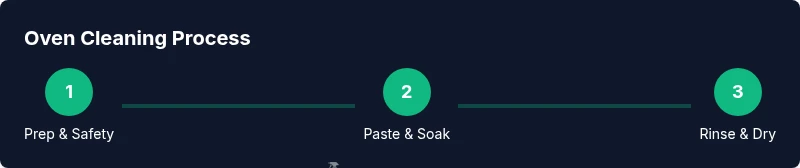
Prepare and safety check
Power down the oven and remove racks, trays, and foil. Ventilate the area and wear gloves. Lay protective towels to catch drips and prevent floor staining.
Tip: Wipe the interior first with a dry cloth to remove loose debris before applying cleaners. - 2
Remove racks and trays
Take out all removable parts. Soak metal racks in warm, soapy water if they’re heavily soiled. This preparation makes the interior cleaning easier.
Tip: Keep the soaking water warm but not hot to prevent warping plastic components. - 3
Make and apply baking soda paste
Mix baking soda with water to form a thick paste. Apply to crusted areas with a sponge, focusing on corners and under racks.
Tip: Avoid applying paste to heating elements or areas where heat is generated. - 4
Let paste sit and loosen grime
Allow 15–20 minutes for the paste to break down grease. During this time, prepare a damp microfiber cloth for wipe-downs.
Tip: Use a timer to ensure you don’t forget the paste; longer dwell time doesn’t always mean better results. - 5
Steam cleaning with vinegar
Pour a shallow amount of water with a splash of white vinegar into a heat-safe dish. Run a low-heat cycle to generate steam and loosen residue.
Tip: Keep a window open or fan on to manage fumes; do not leave unattended during the steam cycle. - 6
Wipe and scrub interior surfaces
Wipe away loosened grime with a damp microfiber cloth. Use a non-abrasive sponge on stubborn spots, reapplying cleaner if needed.
Tip: Rinse cloth frequently to avoid redepositing grime. - 7
Clean racks and accessories
Scrub racks with warm soapy water, then rinse and dry completely before reassembling. For tough spots, use baking soda paste and a soft brush.
Tip: Dry completely to prevent rusting when reinstalled. - 8
Final wipe and reseal
Wipe the interior with a clean damp cloth, then dry with a new towel. Reinsert racks and trays, aligning seals and gaskets.
Tip: A quick finish wipe prevents water spots on glass doors. - 9
Establish ongoing maintenance
Schedule a 10–15 minute weekly wipe-down after cooking and a deeper clean every 1–3 months depending on use.
Tip: Keep a dedicated cleaning kit accessible near the oven for convenience.
Questions & Answers
Is it safe to use self-cleaning mode on all ovens?
Self-cleaning cycles are effective for heavy buildup but can put stress on seals and insulation. Check your model’s manual to confirm suitability and avoid frequent use if the seal shows wear.
Self-cleaning cycles work for intense grime but may wear seals; consult your manual before using.
Can I use baking soda on a glass oven door?
Yes, baking soda paste is generally safe for glass doors when used gently. Avoid scrubbing with abrasive pads that can scratch the glass; wipe with a damp cloth and dry.
Baking soda is usually safe for glass doors if you scrub softly and rinse well.
How often should I clean the oven interior?
For typical use, a light clean every 1–2 months and a deeper clean every 3–6 months works well. Adjust frequency based on how often you cook and the types of foods you prepare.
Most homes deep-clean every few months, with light cleaning weekly or monthly.
What’s the best way to clean oven racks without damage?
Soak racks in warm, soapy water and scrub with a non-abrasive brush. Dry thoroughly before reinstalling to prevent rust and ensure smooth operation.
Soak and scrub racks gently, then dry completely before putting them back.
Can I use commercial oven cleaners on stainless steel parts?
Some commercial cleaners can be harsh on stainless steel; check the label and test in a small area. Prefer milder degreasers or natural options to avoid dulling finishes.
Test first on a small spot; milder cleaners help preserve stainless steel shine.
Watch Video
The Essentials
- Develop a simple, repeatable cleaning routine.
- Choose baking soda paste for most grime; reserve steams and cycles for heavy soils.
- Racks and trays need separate treatment from interior panels.
- The Cleaning Tips team recommends regular maintenance to minimize deep cleans.
- Use proper ventilation and safety gear throughout the process.