Steam Clean Vacuum Cleaner: Step-by-Step Guide for a Healthier Home
Learn how to use a steam clean vacuum cleaner to sanitize floors, carpets, and upholstery without chemicals. Step-by-step usage, safety tips, and maintenance for long-lasting performance.


Using a steam clean vacuum cleaner lets you deep-clean floors, carpets, and fabrics without detergents. This quick overview highlights how to choose a suitable model, prepare surfaces, operate safely, and maintain your device for lasting results. You’ll learn surface-specific techniques, best-practice workflows, and common mistakes to avoid for a healthier home.
What is a steam clean vacuum cleaner and how it works
A steam clean vacuum cleaner is a dual-purpose appliance that combines high-temperature steam with suction to lift dirt. The steam helps loosen grime and sanitize surfaces, while the vacuum pulls away the moisture and debris. Most models heat water to temperatures near boiling and channel it through attachments designed for carpets, hard floors, upholstery, and grout. The result is deeper cleaning with fewer chemicals and shorter dry times, which is especially helpful for households with kids, pets, or allergies. Cleaning Tips notes that the best results come from matching the machine to your cleaning targets and using the right tool for each surface. Also, always follow manufacturer guidelines for water quality, attachment use, and safety to prevent damage to delicate fabrics or floors.
Benefits of steam cleaning with a vacuum vs traditional methods
Steam cleaning with a vacuum offers several advantages over conventional cleaning with detergents and a dry vacuum. The steam helps loosen embedded dirt and neutralize some odors, while suction removes moisture and debris in one pass. You can reduce chemical exposure, which is beneficial for households with young children or pets. Properly used, a steam clean vacuum cleaner can refresh fabrics, grout lines, high-traffic areas, and sealed hard floors without leaving behind sticky residues. Cleaning Tips emphasizes selecting a model with strong heat output and reliable attachments, as well as consistent maintenance to prevent mineral buildup. Remember that steam cleaning is most effective when combined with routine vacuuming to remove loose debris first, then steam for a deeper clean.
Choosing the right steam clean vacuum cleaner for your home
Look for a model that matches your cleaning targets: carpets, hard floors, upholstery, or grout. Check the steam temperature and pressure capabilities, attachment options, and cord length or battery life. If you have mixed surfaces, consider a versatile unit with a carpet glider, a brush tool, and a grout tool. Pay attention to water quality features and any required descaling maintenance. Compare models based on run time and weight to avoid fatigue during longer sessions. As Cleaning Tips recommends, read user reviews and manufacturer guidelines to verify compatibility with your surfaces and to understand warranty coverage.
Surface-specific strategies: floors, carpets, upholstery, and grout
For sealed tile or stone, lightly mist and sweep with a microfiber cloth to capture loose dirt; then pass with the steam head on a low setting. For carpets, use the carpet attachment and make slow, steady passes, overlapping strokes to lift dirt from fibers. Upholstery beams require a gentle touch and a smaller attachment; always test on an inconspicuous spot first. Grout lines benefit from a narrow nozzle and a perpendicular motion to dislodge mineral deposits. In all cases, avoid over-wetting and monitor surface dampness so you do not promote mold growth. Allow 15-60 minutes for drying depending on room temperature and airflow.
Maintenance and safety considerations
Always fill the reservoir with distilled water to minimize mineral buildup in the steam system. After use, empty and rinse tanks, detach attachments, and dry components completely before storage. Replace or clean filters as recommended by the manufacturer. Keep electrical cords away from standing water, unplug before refilling, and never use the appliance on damaged surfaces. If your water is hard, descale the unit regularly using the manufacturer's approved method. Cleaning Tips notes that consistent maintenance extends the lifespan of the device and keeps performance reliable.
Common mistakes and troubleshooting
Common mistakes include using too much water, moving too quickly, or skipping a surface patch test. Always start with a dry vacuum to remove loose debris, then steam the area slowly in overlapping motions. If you notice insufficient steam output, check the water reservoir and heater element, and ensure the nozzle is not clogged. If a surface remains damp for too long, switch to a lower temperature setting or shorter passes and increase air flow with an open door or fan. For persistent odors, revisit cleaning patterns and consider repeating a cycle on high-traffic zones. Keeping your unit clean helps avoid clogs and improves results.
Tools & Materials
- Steam clean vacuum cleaner(Essential appliance; ensure model supports steam cleaning and proper attachments)
- Distilled water(Mineral-free to reduce scale buildup)
- Replacement microfiber pads or cloths(For drying and finishing)
- Vacuum attachments set (nozzle, scrub brush, grout tool)(Appropriate for different surfaces)
- Mild cleaning solution recommended by manufacturer(Only if your unit supports detergent cartridges)
- Storage bag or case(Keep attachments organized and dry)
Steps
Estimated time: 60-90 minutes
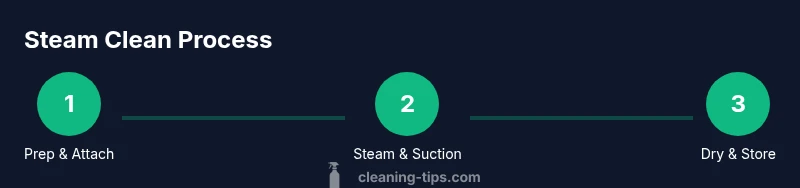
- 1
Prepare the machine and workspace
Ensure the unit is unplugged, the reservoir is clean, and the area to clean is clear of obstacles. Fill the reservoir with distilled water and attach the appropriate head for the surface you’ll treat. Perform a quick test on a discreet spot to confirm no adverse reaction.
Tip: Check water level and seal the reservoir lid; a loose cap can cause leaks during operation. - 2
Attach the correct tool for the surface
Choose the surface tool that matches your job: carpet glider for floors and carpets, brush or scrub head for grout, and a soft nozzle for upholstery. Attach securely to avoid detachment during use.
Tip: Using the right tool improves dirt pickup and prevents surface damage. - 3
Test patch and adjust settings
Test on a small, inconspicuous area. If the surface darkens or shows adverse effects, switch to a gentler setting or different attachment. This protects delicate finishes and prevents over-wetting.
Tip: A quick test save you from larger issues later. - 4
Begin cleaning with controlled passes
Make slow, overlapping passes across the surface. Let the steam do the work while the vacuum collects damp dirt. Avoid staying too long on one spot to prevent moisture buildup.
Tip: Keep the nozzle a few inches from the surface for balanced steam and suction. - 5
Overlap and repeat for embedded grime
For stubborn grime, go over the area again with slightly more pressure or a slightly longer pass. Work from top to bottom or from the outer edge inward to prevent recontamination.
Tip: Consistency matters more than force; slow, steady motion yields better results. - 6
Allow surfaces to dry completely
Open windows or use a fan to accelerate drying. Do not walk on treated surfaces until fully dry to avoid resoiling or slipping hazards.
Tip: Ventilation speeds up drying and reduces mold risk. - 7
Clean up and store the unit
Empty and rinse the reservoir, detach and clean attachments, and dry all components before storage. Reassemble and store in a dry place to prevent mildew.
Tip: A quick rinse now prevents buildup later.
Questions & Answers
Can a steam clean vacuum cleaner be used on all floor types?
Most steam cleaners work on sealed floors like tile, laminate, and sealed hardwood when you use the correct attachment. Avoid unsealed wood and distressed surfaces. Always test a hidden patch before treating the entire area.
Most steam cleaners work on sealed floors with the right attachment, but test a small patch first.
Do I need to use any cleaning chemicals with steam cleaning?
Steam cleaning relies on high heat and pressure with water. Detergents are optional only if your manufacturer specifically supports them; otherwise, stick to water to avoid residue and damage.
Steam cleaning uses hot water; chemicals are only needed if your machine says so.
How often should I descale a steam cleaner with hard water?
Descale according to the manufacturer’s guidelines. Distilled water minimizes buildup, and you may need to descale more often if your water is hard.
Descale as the manufacturer recommends, especially if you have hard water.
Can steam cleaning replace traditional vacuuming?
Steam cleaning and suction serve different roles. Vacuuming removes loose debris; steam cleans and sanitizes. Use both in tandem for best results.
Use steam cleaning alongside traditional vacuuming for best results.
What safety steps should I follow?
Unplug before refilling, avoid damaged surfaces, and ensure good ventilation. Use protective gear if needed and never immerse electrical parts in water.
Always unplug before refilling and ventilate the area.
Watch Video
The Essentials
- Choose attachments that match surfaces for better dirt removal
- Prep surfaces and use distilled water to protect the unit
- Test a discreet area before full cleaning
- Allow adequate drying time to prevent mold
- Maintain and descale regularly for best performance