Deep Carpet Clean: Step-By-Step Guide for a Healthier Home
Learn how to achieve a deep carpet clean with step-by-step instructions, tool lists, and safety tips for a healthier, fresher home.


With a deep carpet clean, you remove embedded dirt, stains, and odors using hot water extraction or thorough pretreatment. This guide covers prep, method choice, and a safe, step-by-step process you can follow in most homes, plus drying tips and common pitfalls to avoid. It also explains when to hire a pro and how to test for colorfastness.
What deep carpet clean means for your home
The deep carpet clean process uses hot water extraction or thorough pretreatment to lift deeply embedded dirt and odors from carpet fibers. According to Cleaning Tips, this method not only revives color but also improves indoor air quality by removing trapped allergens. In many homes, a single thorough cleaning can extend carpet life and reduce the need for frequent touch-ups. This block explains what makes a deep clean different from routine vacuuming and why it matters for high-traffic areas, pets, and homes with allergies. It also covers fiber safety: always identify carpet type (nylon, wool, polyester) and choose a cleaner that matches fiber needs. A well-executed deep clean uses heat, dwell time, and controlled suction to pull contaminants from the base of the pile. For best results, plan to perform this in a sparsely furnished room, protect wood floors with mats, and ventilate the space to help fast drying.
When and why to schedule a deep clean
Carpets accumulate dirt and oils over time, especially in high-traffic zones, entryways, and rooms with pets or small children. A deep carpet clean is recommended at least every 6-12 months for typical households, and more often in commercial spaces or homes with allergy sufferers. Scheduling before stains become set helps preserve fiber integrity and color. After major remodeling, moving into a new home, or after seasonal allergy spikes, a thorough cleaning can refresh the entire space. The Cleaning Tips team notes that deep cleaning also reduces odor buildup and helps maintain contract cleanliness in living areas, bedrooms, and family rooms. Remember to factor in furniture moving, pet access, and drying time, as these affect scheduling and outcomes.
Choosing a cleaning method: steam vs dry cleaning
There are two main approaches to deep carpet cleaning: hot water extraction (steam cleaning) and dry-cleaning methods. Steam cleaning uses water heated to a high temperature combined with cleaning solution and strong suction to extract dirt. Dry cleaning relies on powders or low-moisture systems that absorb oils and soils, then are vacuumed away. For most homes, hot water extraction delivers the most thorough removal of embedded dirt and is compatible with common stain types. Dry-cleaning products can be faster to dry but may leave residues if not applied correctly. Always test on a hidden area first and follow carpet manufacturer recommendations. The choice depends on carpet fiber, backing, and whether you prioritize drying speed or maximum soil removal.
Pretreatment and stain handling: strategies for common stains
Pretreatment is the most important step for a successful deep carpet clean. Apply a stain remover suited to the stain type (protein-based, oily, or dye-based) and allow dwell time per product instructions. For organic stains like coffee or wine, enzyme-based pretreatments can be effective. For oily soils, use solvents or emulsifiers designed for carpets. Lightly blot stains—avoid rubbing, which can push stains deeper. Work from the outside toward the center of the stain to prevent spreading. After pretreatment, least-toxic cleaning options are ideal; avoid high-sudsing formulations that leave residues or encourage re-soiling.
The core step-by-step workflow (overview)
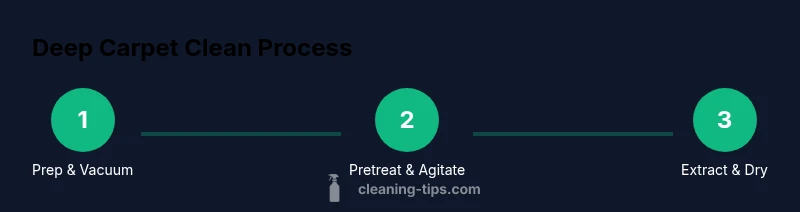
This section provides a high-level workflow you will implement in the step-by-step instructions. Start with room preparation: remove obstacles, protect flooring, and ensure you have ventilation. Then move to pretreatment and agitation: apply cleaning solution, scrub gently, and allow soil to loosen. The extraction phase uses a carpet cleaning machine with clean water, ensuring you do not oversaturate. Finally, rinse, neutralize if needed, and perform a careful drying process with fans or a dehumidifier. The goal is to remove as much moisture as possible while preventing color bleed or fiber damage. Regular grooming with a carpet rake after drying helps restore pile direction. If you have sensitive indoor air quality concerns, consider running air purifiers and keeping windows open for several hours.
Finishing touches: drying, vacuuming, and maintenance
Drying is a critical phase of a deep carpet clean. A well-ventilated room and fans speed up moisture evaporation and help prevent mold growth. Once dry, vacuum again to lift flattened fibers and even out appearance. Schedule a follow-up quick vacuum in 48 hours to remove any remaining loose soil. Regular maintenance, such as weekly vacuuming and quarterly deep cleans, can extend carpet life and preserve color. For odor control, sprinkle baking soda on dry carpet after cleaning, leave for 15-20 minutes, then vacuum thoroughly. Store cleaners properly and test new products on a hidden patch first to avoid color changes. With proper technique and patience, you’ll enjoy a fresher, cleaner home.
Tools & Materials
- Carpet cleaning machine (hot water extraction)(Rent or own; ensure clean, working; check hoses.)
- Stain pre-treat or enzyme-based cleaner(Choose enzyme-based for organic stains.)
- White terry towels or microfiber cloths(For blotting and spot checks.)
- Soft-bristled brush(Gently agitate pretreatment.)
- Vacuum cleaner(Pre-clean and post-clean vacuum.)
- Carpet-safe cleaner (pH-balanced)(Follow label directions.)
- Baking soda (optional)(Odor control after cleaning.)
- Drop cloths or old towels(Protect furniture and floors.)
Steps
Estimated time: Estimated total time: 60-120 minutes per room
- 1
Prep the room and clear the area
Move furniture to create a clear cleaning zone. Vacuum the carpet to remove surface debris and test a small hidden patch with your cleaner to ensure colorfastness. If possible, open windows or turn on ventilation to start the drying process early.
Tip: Take photos of stains before cleaning to track progress. - 2
Vacuum thoroughly and assess stains
Run a thorough vacuum over all carpeted areas, including edges and corners. Identify stubborn stains and note their locations so pretreatment can target them effectively. Use a clean brush to loosen soils in heavy-traffic paths.
Tip: Work in sections to avoid drying unevenly. - 3
Pretreat stains and prepare cleaning solution
Apply an appropriate pretreatment on stains and allow it to dwell per product directions. Prepare the carpet cleaner with the recommended cleaning solution, ensuring you do not mix products that could create harmful fumes or residue.
Tip: Test on a hidden patch before full application. - 4
Extract with machine and monitor saturation
Run the cleaning machine with clean water and cleaning solution, overlapping passes to lift soil. Avoid over-wetting the carpet; use slow, steady strokes and monitor moisture levels to prevent soaking the backing or padding.
Tip: Keep the nozzle a consistent distance from the carpet surface. - 5
Rinse/extract and neutralize if needed
If your system requires a rinse phase, perform it with clean water to remove residue. Some fibers benefit from a pH-balanced neutralizer after cleaning to prevent residue buildup that attracts soil.
Tip: Do not leave detergents in the carpet; residues attract new dirt. - 6
Dry, groom, and verify completion
Use fans or a dehumidifier to speed drying. Once surface moisture is gone, lightly groom the pile with a rake or comb to restore its natural direction. Check for damp spots and re-clean any missed areas if needed.
Tip: Avoid foot traffic on damp carpet for at least several hours.
Questions & Answers
How often should I deep clean carpets?
Most homes benefit from a deep carpet clean every 6-12 months, depending on traffic, pets, and allergies. If stains persist or odors linger, consider cleaning sooner.
Most homes benefit from a deep clean every 6 to 12 months, depending on traffic and pets.
Is DIY carpet cleaning safe for all carpet fibers?
DIY methods work for many fibers, but some materials like wool or delicate blends require gentle cleaners or professional equipment. Always check the carpet label and test on a hidden area before full cleaning.
DIY can work for many carpets, but test first and follow the label.
What is the difference between steam cleaning and dry cleaning for carpets?
Steam cleaning uses moisture and heat to lift dirt, while dry cleaning uses powders or low-moisture methods. Steam tends to remove more deeply embedded soils, but drying times can vary.
Steam cleaning uses moisture, dry cleaning uses powders; steam often cleans deeper but may take longer to dry.
Can I use vinegar on carpets during a deep clean?
Vinegar can be used sparingly as a rinse aid or spot treatment, but it should be diluted and tested first. Some fibers and dyes may react, so rely on manufacturer recommendations.
Vinegar is sometimes okay if diluted and tested first, but check the fiber guidelines.
How can I speed up drying after a deep clean?
Use high airflow with fans, open windows if weather permits, and avoid walking on the carpet until fully dry. Dehumidifiers help reduce moisture in the air.
Open windows, use fans, and a dehumidifier to speed drying.
Will deep cleaning remove all stains?
Deep cleaning reduces many stains and soils but may not remove set-in or dye-reacted stains completely. For stubborn stains, re-treat or seek professional help.
Deep cleaning helps a lot but may not remove all aged stains.
Watch Video
The Essentials
- Plan room-by-room to manage moisture and drying.
- Vacuum thoroughly before applying cleaners for best soil removal.
- Test colorfastness and patch test cleaners first.
- Allow ample drying time to prevent resoiling and mold.
- Choose methods compatible with carpet fiber and lifestyle.