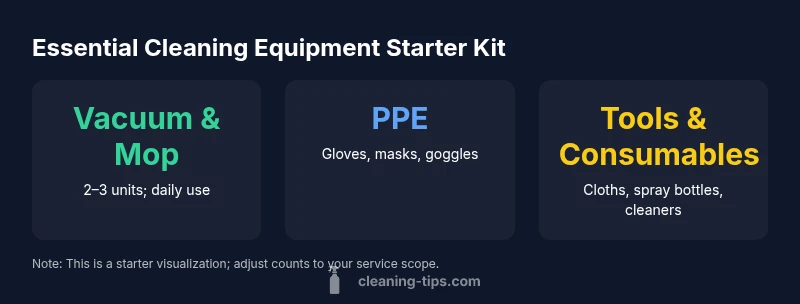
What Equipment Is Needed for a Cleaning Business
Discover the essential equipment for launching a cleaning business, including starter kits, budget ranges, and gear categories to maximize safety and efficiency.


Starting a cleaning business hinges on the right equipment. Core gear includes reliable vacuum cleaners, microfiber cloths, mops and buckets, two sturdy carts, basic PPE, a steamer or extractor, and a portable toolkit of spray bottles and brushes. Budget for two starter kits (residential and commercial) and plan for replacements. Typical initial setup costs range from $500 to $2,000, depending on service scope and quality.
Why equipment matters for a cleaning business
In determining what equipment is needed for a cleaning business, the answer isn't just 'more gear'—it's about consistency, safety, and revenue. According to Cleaning Tips, the baseline kit you assemble shapes your service scope, scheduling, and ability to scale as client demand grows. Start with a modular approach: invest in sturdy, reliable tools you can trust daily, then expand as you win new contracts. The core principle is standardization: color-coded handles, consistent brands, and familiar workflows. This reduces errors, lowers training time, and improves client satisfaction.
Key drivers of equipment choice include efficacy (does the tool clean well?), durability (will it survive daily use and transport?), versatility (can one item handle multiple tasks?), and total cost of ownership (purchase price plus maintenance, supplies, and replacements over time). For a home cleaning crew, a compact bag of supplies can be enough, but commercial cleaning often demands larger gear, different power needs, and more robust safety features. As you plan your initial investment, map out typical tasks—dusting, floor care, restroom sanitation, kitchen degreasing—and pair each task with a recommended tool category. This upfront planning saves money and prevents impulse buys that sit unused in a closet.
Core gear categories you should own
A well-rounded cleaning business kit balances durability, efficiency, and coverage across job types. Start with three broad categories: floor care, surface cleaning, and sanitation. Floor care includes vacuums or floor machines suitable for carpet and hard floors; surface cleaning covers mops, brushes, and microfiber cloths; sanitation encompasses reliable sprays, disinfectants, and PPE. Within each category, choose models with common attachment systems to simplify training and replacements. Many pros advocate color-coding by task area to prevent cross-contamination, and a simple inventory system helps you track wear and tear. In practice, an operator might rotate between a compact backpack vacuum for tight apartments and a larger upright for homes with open layouts. For commercial spaces, expect larger, more powerful machines and extra safety features such as grounded plugs or surge protection. Remember, the goal is interoperability: tools that can handle multiple tasks reduce the number of items you must transport to every job.
How to choose the right vacuum and floor care kit
Vacuum selection is one of the most impactful decisions for a cleaning business. Upright vacuums are quick for small spaces, while canister models offer strong suction and versatility for stairs and tight corners. For carpeted areas, a machine with adjustable height and a robust motor will extend life. For hard floors, consider a model with brush roll shutoff and easy filter access. Corded options tend to be more affordable and reliable, while cordless models boost productivity on ladders or high-rise work—but they require careful battery management and perhaps extra batteries. When budgeting, target a primary cleaner, one secondary backup, and a dedicated floor-care tool set (e.g., a steam cleaner or extractor) for tougher jobs. Evaluate maintenance costs, warranty terms, and service availability in your region. With the right vacuum and floor care kit, you can cut cleanup time, improve dust capture, and deliver consistent results across clients—key differentiators for a growing business.
Cleaning chemicals, cloths, and consumables: what to stock
Stocking the right consumables is as important as the machines you buy. Microfiber cloths outperform cotton for most surfaces and are reusable, reducing waste. Maintain a color-coded system for cloths, brushes, and bottles to prevent cross-contamination in kitchens, bathrooms, and classrooms. Build a basic chemistry kit: all-purpose cleaner, disinfectant, glass cleaner, and degreaser. Keep specialty products for tough jobs, such as grout cleaners or lime-scale removers, but avoid stocking too many products that sit unused. Sourcing: prefer concentrated formulas to reduce shipping weight and cost per job. Replace worn-out spray bottles and mops regularly, and train staff to rinse and reuse where possible. Finally, consider a portable tote or caddy that fits your typical route—organization boosts speed and reduces the chance of missing spots during a clean.
Tools to increase efficiency: carts, organizers, and safety gear
A sturdy cleaning cart with modular shelves can dramatically improve your workflow. Look for wheels that roll smoothly, a locking drawer for small items, and a detachable tote for spot-sprays and cloths. Invest in organizers that sit inside the cart for easy access to brushes, scrubbers, and squeegees. Energy-efficient tools minimize power draw during long days on the road, and a compact steamer or extractor can be a game-changer for stubborn stains. Safety gear is non-negotiable: gloves, eye protection, masks, and aprons protect workers from chemicals and debris. Provide training on proper lifting techniques and safe chemical handling. Finally, think mobility: the lighter the kit, the more jobs you can complete on time, and the fewer trips you need to carry gear to and from the vehicle.
Starter kit budgeting and staged purchasing
Many cleaning businesses grow by purchasing in stages. Start with a lean core kit focused on frequent residential jobs, then add commercial-grade machines as you win larger contracts. A practical staged plan might begin with a vacuum, mop system, a small cart, microfiber cloths, basic cleaners, and PPE. After 90 days, you can invest in a backup vacuum, a second cart, and more durable tools to handle increased workloads. Track utilization metrics: what gets used most often, what fails, and what takes the longest to complete. This data informs future purchases and helps avoid wasted spend. By prioritizing essential tools first and then expanding, you can maintain cash flow while building capacity.
Maintenance, warranties, and replacements
Effective maintenance extends the life of your equipment and reduces downtime. Clean tools after each job—wash microfiber, wipe down handles, and inspect cords for wear. Schedule routine maintenance for vacuums and floor machines, and replace filters as recommended by manufacturers. Warranties protect against early failures and can justify higher upfront costs if they cover routine repairs. Keep a simple replacement calendar and budget for periodic refreshes, especially for high-use items like vacuums and cloths. Short replacement cycles may increase upfront cost, but they prevent productivity losses and ensure consistent outcomes across clients. A well-maintained kit also communicates professionalism to customers, reinforcing trust in your brand.
Safety, compliance, and future-proofing your kit
Safety compliance protects staff and customers and provides a platform for growth. Train workers on chemical safety, PPE usage, and safe lifting practices. Ensure you have appropriate eyewear, gloves, masks, and aprons, and maintain a spill kit for emergencies. Fire safety training, hazard communication, and proper labeling of chemicals meet general workplace standards often required for small businesses. Plan for future growth by selecting modular equipment with interchangeability across lines and suppliers. Invest in a simple digital inventory system to track supplies, colors, and replacements. Finally, stay aware of evolving regulations and product innovations; the right gear today sets you up for seamless updates tomorrow.
Starter equipment overview for a cleaning business
| Equipment Category | Starter Kit Item | Estimated Cost (range) | Notes |
|---|---|---|---|
| Floor Cleaning | Vacuum cleaner, mop, bucket | $200-$800 | Heavy-use residential/commercial mix |
| Surface Cleaning & Disinfecting | Microfiber cloths (10-20), spray bottles, surface cleaners | $40-$120 | Color-coded set recommended |
| Safety & PPE | Gloves, masks, goggles, apron | $20-$60 | Stock in multiple sizes |
Questions & Answers
What is the minimum equipment needed to start a cleaning business?
At minimum, you need a vacuum, basic cleaning cloths, mops, buckets, PPE, and basic cleaners. A compact kit can handle small residential jobs; as you win contracts, you’ll add a dedicated cart and backup tools to keep up with demand. The exact mix depends on your service scope and client types.
Start with a vacuum, microfiber cloths, mops, buckets, PPE, and basic cleaners; expand as you win contracts.
How should I budget for starter cleaning equipment?
Begin with a lean core kit that covers most residential jobs. Plan a staged purchase schedule: complete essential gear first, then add commercial-grade items as you win larger contracts. Track usage to inform future buys.
Start lean, then expand as contracts grow.
Are cordless vacuums worth it for a cleaning business?
Cordless vacuums offer mobility and speed on small jobs but require careful battery planning and higher upfront costs. Use them for tight spaces or stairs, and maintain a reliable corded backup for larger tasks.
Cordless vacuums are great for tight spaces if you have spare batteries and backups.
What safety gear is essential for workers?
Essential PPE includes gloves, eye protection, masks, and an apron. Provide training on chemical safety and proper lifting techniques to reduce injuries and liability.
Gloves, eye protection, masks, and aprons are essential PPE for cleaning crews.
How often should I replace cleaning tools?
Replace high-use tools on a schedule based on wear and performance. Mops, cloths, and brushes typically need replacement every 2–6 months, while vacuums and floor machines may last 3–5 years with proper maintenance.
Replace worn tools on a regular schedule to maintain quality.
Should I buy brand-new equipment or refurbished?
Starting with a mix of new and refurbished items can balance cost and reliability. Prioritize essential equipment with warranties, and purchase refurbished options from reputable sellers for non-critical items.
Choose a mix of new and refurbished based on risk and budget.
“The right equipment isn't optional—it's the foundation of reliable service, safety, and scalable growth.”
The Essentials
- Define your service scope before buying gear
- Prioritize durable, scalable equipment
- Use color-coded systems to prevent cross-contamination
- Adopt a staged purchasing plan to manage cash flow
- Maintain equipment and train staff for safety