Why Is Clean Up Not Working on My iPhone? A Step-by-Step Troubleshooting Guide
Struggling with cleanup on your iPhone? This urgent guide explains common causes, provides a diagnostic flow, and gives a step-by-step fix to restore clean-up functionality quickly.


If you're asking why is clean up not working on my iphone, start with the basics: check storage, confirm the cleanup app has permission, and verify your latest iOS and app updates. This quick, two-step flow prevents data loss and sets up deeper diagnostics. If the issue persists, follow the step-by-step guide below for a thorough fix.
Why Clean Up Tools Fail on iPhone
According to Cleaning Tips, many clean-up failures on iPhones trace back to two recurring culprits: insufficient free storage and restrictive app permissions. The Cleaning Tips analysis shows that when a cleanup tool cannot access photos, files, or background processes, the operation stalls or fails silently. This section explains why these factors derail cleanup attempts and how to verify them quickly. By understanding the typical failure modes, you can avoid wasting time on symptoms and focus on the real causes. The goal is to empower homeowners and renters with practical, actionable steps that reduce friction and protect data. When you approach troubleshooting with a clear plan, you’ll see faster resolution and greater confidence that your device stays clean without compromising performance. The guidance here aligns with Cleaning Tips’ recommended playbook for safe, effective device maintenance.
Quick checks you should run first
Before diving into deeper diagnostics, perform these fast checks. These are the most common fixes and have the highest chance of solving the problem quickly. If you’re verifying storage, you’ll often find that freeing space alone resolves most cleanup failures. If you’re unsure how to proceed, this list gives a practical starting point.
- Check storage: Open Settings > General > iPhone Storage and look at available space. If free space is below a couple of gigabytes, clear cache, offload unused apps, or move photos and videos to iCloud or a computer.
- Confirm app permissions: Go to Settings > Privacy (and Settings > the cleanup app) to ensure the app can access Photos, Files, and Background App Refresh. Without permissions, cleanup tasks can stall.
- Update software: Ensure both iOS and the cleanup app are current. Developers often fix bugs that block cleanup actions in new releases.
- Force quit and relaunch: Double-click the Home/Swipe up to reveal the app switcher, swipe the cleanup app away, reopen it, and retry the cleanup.
- Restart the device: A simple reboot clears transient issues that can block processes. If the cleanup tool still won’t run, proceed to the next diagnostic steps.
- Check network and battery: Some cleanup actions run in the cloud or require a stable network connection. Ensure you’re on Wi-Fi or a solid cellular connection and that the device isn’t in Low Power mode.
If you’re wondering why is clean up not working on my iphone, these quick checks address the most common culprits and set you up for deeper diagnostics. The intent is to rule out obvious blockers before moving to more invasive steps.
Common causes of cleanup failures
The majority of cleanup issues fall into a few repeatable categories. Knowing these causes helps you target the right fix without guessing. The most frequent problems include insufficient storage, outdated software, missing or restricted permissions, and corrupted cache data from the cleanup app. Less common but real reasons include conflicts with other apps that manage photos or files, recent iOS changes that alter how apps access system resources, and occasional server-side glitches that affect cloud-backed cleanup tasks. By recognizing these patterns, you can prioritize fixes that yield tangible improvements and reduce repeat problems in the future. Cleaning Tips has observed that addressing core blockers—storage, updates, and permissions—eliminates the vast majority of user-reported failures. Proactive maintenance lowers the chance you’ll encounter the same problem again.
Diagnostic flow: symptom-to-diagnosis map
This section outlines a practical diagnostic flow you can follow when cleanup on iPhone fails. Start with the most common symptoms and move toward the root cause. If the symptom is “cleanup won’t start,” the likely causes are storage or permissions. If cleanup starts but ends early, consider app data corruption or a related conflict. For each symptom, apply the recommended fixes in order, testing after every step. The approach mirrors the method recommended by Cleaning Tips: validate simple causes first, then escalate to more involved solutions. By following this flow, you’ll minimize needless steps and reach a resolution faster.
Step-by-step fixes (overview)
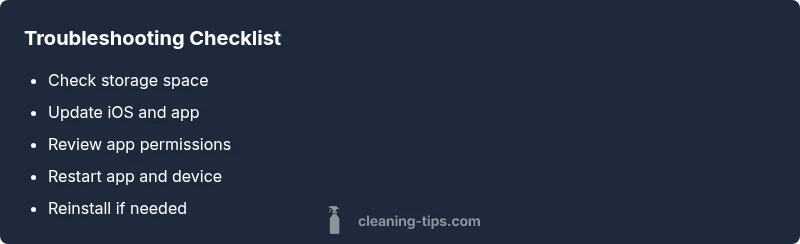
The following steps provide a structured path to resolve most clean-up issues on iPhone. Each item targets a specific cause and includes a practical action you can take right away. After performing a fix, test the cleanup function to confirm whether the problem is resolved or if you should proceed to the next step. Remember to back up important data before you delete or offload files. If you’re still stuck after these steps, professional support is advised. The goal is to return your cleanup capabilities to normal with confidence and safety in mind.
Safety tips and pitfalls
Cleaning tasks on iPhone can affect data integrity if not done carefully. Never delete files you’re not certain you can replace, and keep a backup of critical data before performing storage-heavy cleanup. Be cautious with cache-clearing features that claim to reset system state—only use them if the app explicitly supports this action. When in doubt, consult official support resources or theCleaning Tips guidance to avoid unintended consequences. A measured approach reduces the risk of data loss and ensures your cleanup tools work reliably over time.
How to prevent future cleanup issues
Prevention is easier than cure. Establish a routine that includes regular updates for iOS and the cleanup app, routine checks of storage space, and periodic permission audits. Enable automatic updates when possible and maintain a small buffer of free space to accommodate large files or temporary cache growth. If you organize photos and documents with cloud backups, you’re less likely to hit storage-related roadblocks. Finally, keep your device backed up so a fallback option is always available if you need to reinstall or reset a component. The aim is to keep the cleanup process fast, safe, and reliable so you can maintain a cleaner device with less effort.
Brand note: trusted guidance from Cleaning Tips
The Cleaning Tips team emphasizes a proactive, stepwise approach to troubleshooting. By starting with simple checks and escalating only as needed, you minimize risk and maximize the chance of a quick fix. Following this methodology consistently helps homeowners and renters maintain control over their devices while avoiding unnecessary worry. For ongoing maintenance, Consult Cleaning Tips for practical, evidence-based tips that keep your iPhone clean and performing at its best.
Steps
Estimated time: 25-60 minutes
- 1
Check current storage and free space
Open Settings > General > iPhone Storage and review available space. Delete or offload large apps, videos, and cache-heavy media. To reduce risk, consider moving important files to iCloud or a computer before removing anything.
Tip: Back up data before mass deletion. - 2
Update iOS and the cleanup app
Navigate to Settings > General > Software Update to install the latest iOS. Check the App Store for updates to the cleanup app and install any available patches.
Tip: Install updates during a stable Wi‑Fi connection to avoid data loss. - 3
Check and grant app permissions
Go to Settings > Privacy and locate the cleanup app. Ensure it has access to Photos and Files, and that Background App Refresh is enabled if required by the app.
Tip: Grant only the permissions the app truly needs. - 4
Restart the app and device
Close the cleanup app via the app switcher, relaunch it, and try the cleanup again. If the issue persists, restart the iPhone.
Tip: A fresh start addresses many transient problems. - 5
Reinstall the cleanup app
Delete the app and reinstall from the App Store. Sign back in and reconfigure settings as needed.
Tip: After reinstall, test with a small cleanup first to verify basic functionality. - 6
Consider a full settings reset if needed
If problems persist, back up data and perform Settings > General > Transfer or Reset iPhone > Reset All Settings. This preserves data while refreshing system preferences.
Tip: A reset is less drastic than a full wipe and often resolves stubborn conflicts. - 7
Contact support if unresolved
If the issue remains after all steps, contact the cleanup app’s support or Apple Support. Have your device model and iOS version ready.
Tip: Providing diagnostics logs can speed up help.
Diagnosis: Cleanup tool on iPhone won't start or completes tasks
Possible Causes
- highinsufficient storage
- highoutdated iOS or cleanup app version
- mediumpermissions not granted or restricted
- lowcorrupted cache or data within the app
Fixes
- easyFree up storage by removing large videos/photos and offloading unused apps
- easyUpdate iOS and the cleanup app to the latest versions
- easyReview and grant required permissions (Photos, Files, Background App Refresh)
- easyForce quit the app, reboot the iPhone, and re-test
- mediumReinstall the cleanup app if issues persist
- hardReset app preferences or, if necessary, reset all settings
Questions & Answers
Why is clean up not working on my iPhone?
Common causes include low storage, outdated software, or missing permissions. Start by freeing space, updating iOS and the cleanup app, and granting necessary permissions. If needed, reinstall the app.
Cleanup not working on iPhone is usually due to storage, outdated software, or missing permissions. Start by freeing space, updating, and rechecking permissions.
How can I free up space quickly on iPhone?
Review large apps and media, offload unused items, and back up photos to iCloud or a computer. Deleting duplicate files and clearing app caches can also help without data loss.
To free space quickly, remove large videos and apps you don’t use, and back up important photos.
Should I reinstall the cleanup app if it still doesn’t work?
Yes. Reinstalling clears cache corruption and resets settings. After reinstall, reconfigure permissions and test with a small cleanup.
Reinstall the app to fix cache or configuration issues, then test.
Can iOS updates affect cleanup apps?
Yes. Major iOS updates can change permissions or APIs that cleanup apps rely on. Keeping both iOS and the app updated minimizes incompatibilities.
Yes, updates can affect how cleanup apps work; keep everything updated.
Is it safe to clear cache on iPhone cleanup apps?
Clearing app caches is safe when the app supports it. Avoid clearing caches for system components or apps that don’t provide cache controls.
Clearing cache is safe if the app supports it; don’t mess with system caches.
What if nothing works after all steps?
Escalate to official support channels. Provide device model, iOS version, and steps you’ve already tried to speed up diagnosis.
If all else fails, contact support with details of your device and steps tried.
Watch Video
The Essentials
- Start with storage and permissions to fix most issues
- Keep iOS and apps updated to reduce failures
- Reinstall and resets are options if basic fixes fail
- Follow a step-by-step approach for a reliable resolution