Can You Clean Ear with Hydrogen Peroxide? A Practical Guide
Learn when hydrogen peroxide is safe for earwax removal, how to dilute properly, and steps to minimize risk. Cleaning Tips provides practical, safety-focused guidance for homeowners and renters.


Yes, hydrogen peroxide can help soften earwax when used correctly, but only in healthy ears. Do not use if you have ear pain, discharge, a perforated eardrum, or tubes. Use 3% hydrogen peroxide diluted 1:1 with clean water, and limit applications to once or twice per week.
How earwax works and why hydrogen peroxide can help in some cases
According to Cleaning Tips, earwax (cerumen) serves as a protective barrier for the ear canal, trapping dust and microorganisms. In healthy ears, a small amount of earwax naturally migrates outward and is washed away during routine cleaning. Hydrogen peroxide can help in some situations by releasing oxygen when it contacts moisture. That oxygen helps to foaming action loosen and soften compacted earwax, making it easier to remove. However, peroxide is not a universal remedy. If the ear canal is irritated, inflamed, or damaged, peroxide can worsen symptoms rather than improve them. This is why self-treatment should be approached with caution and aligned with your ears’ current health. The Cleaning Tips team emphasizes conservative care: avoid aggressive scraping, overuse, or DIY approaches when you notice pain, fever, or discharge. When used thoughtfully and at the right concentration, hydrogen peroxide is a tool in a broader ear-care routine, not a blanket solution for all ear issues.
How earwax behaves and why it matters
Earwax production varies by person and can change with age, environment, and allergies. A small amount collected at the entrance of the ear canal is normal and generally harmless. Problems arise when there is excessive buildup, especially in people who wear hearing aids, use headphones regularly, or have narrow ear canals. In those cases, softening the wax can help reduce discomfort and improve hearing, but only if no infection or damage is present. Hydrogen peroxide should be used sparingly and with attention to any signs of irritation. If symptoms worsen, a clinician should be consulted. Cleaners and professionals advise that peroxide is not a substitute for medical evaluation when you suspect an ear infection or blockage that causes pain, drainage, or sudden hearing loss.
Tools & Materials
- 3% hydrogen peroxide(Use literally 3% hydrogen peroxide; higher concentrations are hazardous for the ear canal.)
- sterile saline or clean water(For dilution to a safer concentration; mix with peroxide 1:1.)
- dropper bottle or medicine dropper(Used to apply drops gently into the ear.)
- soft towel or clean cloth(Have on hand to catch drips and keep the area dry.)
- non-lint tissue or cotton balls (for exterior drying only)(Do not insert into the ear; use only for exterior drying.)
Steps
Estimated time: 10-15 minutes
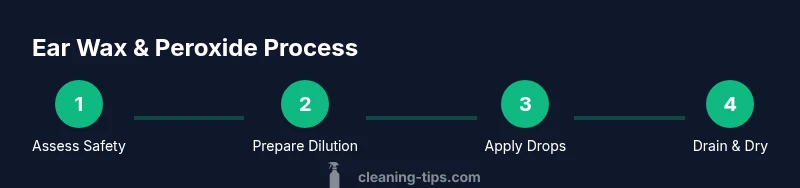
- 1
Check safety and health status
Before starting, review current ear health. Do not proceed if you have ear pain, fever, discharge, a history of ear infections, a perforated eardrum, tubes, or recent ear surgery. If any of these are present, consult a clinician first. This step reduces the risk of worsening an underlying condition.
Tip: If you’re unsure, skip the procedure and seek medical advice. - 2
Prepare the solution
Mix equal parts of 3% hydrogen peroxide and clean water to achieve a safer dilution. Use a clean dropper to measure and transfer the solution. Allow the mixture to reach body temperature for comfort and to minimize dizziness.
Tip: Test a few drops on your forearm first to ensure you don’t react to the solution. - 3
Position your head and apply drops
Tilt your head with the ear you’re treating facing upward. Gently place 5–6 drops into the ear canal using the dropper, avoiding contact with the ear opening. Do not force the solution in or insert anything deep into the canal.
Tip: If you feel a clog or pressure, pause and reorient rather than forcing drops. - 4
Let it work and observe
Keep your head tilted for several minutes to allow the solution to bubble and loosen wax. If you notice persistent burning, dizziness, or worsening pain, stop immediately and remove the solution.
Tip: A fizzing sensation is normal but should not be painful. - 5
Drain and dry the outer ear
Tilt your head toward the treated side to drain the liquid. Wipe away any excess from the outer ear and surrounding skin with a clean towel. Do not insert cotton swabs or other objects into the ear canal to dry it.
Tip: Pat the area dry instead of rubbing to avoid irritation. - 6
Assess outcomes and repeat if needed
If symptoms improve and there is no irritation, you may consider repeating once more after a few days if recommended by a clinician. Do not exceed the advised frequency, and stop if symptoms recur.
Tip: Keep a simple ear-care log to track frequency and any reactions.
Questions & Answers
Can I use hydrogen peroxide every day to clean my ears?
No. Daily use can irritate the ear canal and disrupt natural ear-wax balance. Use only when advised and with appropriate dilution, and avoid long-term or repeated daily use without medical guidance.
Avoid daily use; hydrogen peroxide can irritate the ear canal if overused.
Is hydrogen peroxide safe for children to use on their ears?
Children should not use hydrogen peroxide for ear cleaning without a clinician’s guidance. Pediatric ears are more sensitive, and improper use can cause irritation or injury. Seek professional advice for kids.
Kids should only use peroxide under a doctor's guidance.
What should I do if peroxide causes irritation or dizziness?
If irritation, dizziness, or increased pain occurs, stop immediately. Rinse the outer ear with clean water and seek medical advice if symptoms persist. Do not continue treatment.
If irritation or dizziness occurs, stop and consult a clinician if needed.
Are there safer alternatives to peroxide for earwax removal?
Safer alternatives include using saline irrigation under professional supervision or relying on the ear’s natural cleaning process. Over-the-counter ear drops other than peroxide can be recommended by a clinician depending on your ears’ health.
Consult a clinician for safer alternatives suited to your ears.
What signs indicate I should see a doctor rather than attempt DIY cleaning?
Seek medical care if you have severe ear pain, sudden hearing loss, fever, drainage, a history of ear surgery, or a perforated eardrum. These signs warrant professional assessment.
See a doctor if you have severe symptoms or a history of ear surgery.
How often is it safe to perform earwax softening at home?
Safe frequency varies by individual health and symptoms. In general, limit DIY peroxide use to occasional sessions and avoid routine, regular cleaning unless directed by a clinician.
Only do occasional sessions unless advised otherwise by a clinician.
Watch Video
The Essentials
- Consult a clinician if in doubt before using peroxide.
- Use 3% peroxide diluted 1:1 with water and apply sparingly.
- Stop immediately if irritation or pain occurs.
- Do not insert objects into the ear canal.
- Hydrogen peroxide is a wax-softening aid, not a cure for infections.