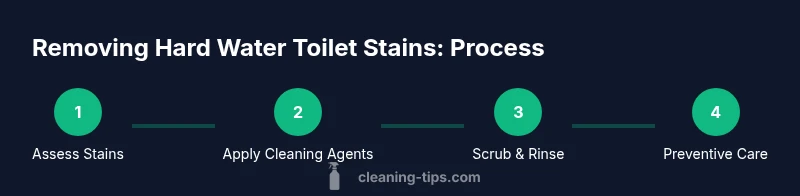
How to Clean Hard Water Toilet Stains: A Complete How-To
Learn proven, safe methods to remove hard water toilet stains using vinegar, baking soda, and gentle scrubbing. This guide covers identification, methods, safety, and prevention for a spotless toilet.


By the end of this guide you will know how to clean hard water toilet stains effectively using safe, common methods. You’ll learn step-by-step techniques with vinegar, baking soda, and gentle scrubs, plus when to use specialized cleaners. The goal is simple: restore a bright, stain-free toilet bowl while protecting porcelain and plumbing. We emphasize safety, avoid bleach on enamel, and show prevention tips.
What causes hard water toilet stains
Mineral deposits from hard water, especially calcium, magnesium, and iron, cling to ceramic surfaces and fixtures. Over time these minerals form stubborn rings around the bowl and along the water line. According to Cleaning Tips, these mineral buildups are slow to remove with everyday rinsing alone. If your water is particularly hard, you may notice more pronounced staining near the waterline and under the rim, where water sits and minerals settle. Understanding the chemistry helps you pick the right approach: milder acid cleaners for light buildup and non-abrasive scrubbing for delicate enamel. By starting with a clear diagnosis, you can avoid wasting time on ineffective products and protect the glaze of your porcelain.
Brand mention: According to Cleaning Tips, mineral deposits from hard water cling to ceramic surfaces and fixtures, forming stubborn rings that resist standard rinsing.
Assessing stain types in your toilet
Not all toilet stains are created equal. Mineral scale from hard water appears as chalky white or light beige rings around the water line. Rust stains, caused by iron in some water supplies or pipes, show reddish-brown coloration. Organic residue or mold can create blackish spots near the rim or under the water edge. To identify the stain type, observe color, texture, and where the stain sits: mineral deposits cling to the porcelain, while rust often starts near metal fixtures. Cleaning Tips suggests testing a small area with a gentle cleaner first to confirm compatibility and prevent unintended damage. This quick diagnosis guides the method you choose for removal.
Safety and prep: what you need before you start
Before you begin, put on rubber gloves and ensure good ventilation. Read product labels on any cleaners you plan to use, and never mix acids with bleach or ammonia. Move any towels or items away from the toilet to avoid splashes. Make sure the toilet is empty of water as needed for certain treatments (e.g., applying paste). Keep a brush and cloth handy for quick cleanup if splashes occur. This prep step protects your skin, lungs, and surfaces while you work.
DIY method: Vinegar and baking soda
Vinegar dissolves mineral deposits by acetic acid; baking soda provides gentle abrasion and helps lift residue. Start by pouring about a cup of vinegar into the bowl and swishing it around the sides. Sprinkle baking soda along the stained areas to create fizz that loosens buildup. Let sit 10–20 minutes, then scrub with a toilet brush, paying attention to the water line. When finished, flush to rinse. For heavier buildup, repeat the cycle once or twice, allowing more contact time between applications. This routine balances efficacy with surface safety.
When to use a pumice stone and other abrasives
For stubborn mineral rings that resist liquid cleaners, a pumice stone can be effective if used carefully. Wet the stone and gently rub the stained area in small circular motions, keeping the stone and bowl surface lubricated with water to avoid scratching. Avoid using a pumice stone on glossy porcelain finishes or around metal fittings. If you observe any dulling or scratches, stop immediately and switch back to gentler methods. Nylon scrub pads are a safer alternative for delicate areas.
Pro tip: test any abrasive on a hidden spot first and keep the surface well-lubricated during treatment.
Using commercial cleaners responsibly
Commercial cleaners can boost stain removal when DIY methods fall short. Choose products labeled for mineral buildup and follow the label directions exactly. Apply the cleaner to the stained ring, let it dwell for the recommended time, then scrub with your toilet brush. Rinse thoroughly by flushing several times. Never mix commercial cleaners with acidic solutions or bleach, as dangerous gases can form. Use in a well-ventilated space and wear gloves to protect skin.
Removing mineral rings around the water line
Mineral rings at or just above the water line are common and stubborn. Start with a vinegar-based soak as described, then use a nylon pad or a soft-bristled brush to lift the ring with careful, even pressure. If the ring persists, apply a small amount of paste made from baking soda and water and let it sit for 5–10 minutes before scrubbing again. Rinse thoroughly with clean water. Persistent rings may require repeating the soak and scrub cycle or moving to a mild abrasive as a last resort.
Preventing future hard water stains for the long term
Prevention is easier than aggressive removal. Wipe down the bowl with a mild cleaner or vinegar solution weekly to prevent mineral buildup. Consider installing a water-softening system if your home has very hard water. Regular maintenance reduces the time needed for future cleanings and preserves porcelain glaze. Keep mineral deposits at bay by drying the surface after use and addressing leaks that prolong mineral exposure.
Quick maintenance routine to keep toilets clean
Establish a light weekly routine: flush, apply a vinegary spray to the bowl rim and water line, scrub gently, and rinse. After heavy use periods, perform a deeper clean with baking soda paste and a scrub brush. Record the outcomes so you know what methods work best for your water hardness level and toilet model. Regular attention prevents severe buildup and saves time later.
Tools & Materials
- Toilet bowl brush(Long handle; keeps hands away from cleaner and stains)
- White distilled vinegar(Use undiluted for direct application to stains)
- Baking soda(Powder or paste form; helps lift residue)
- Rubber gloves(Nitrile recommended; protects skin from cleaners)
- Pumice stone (optional)(Gently rubs mineral rings; keep stone wet to prevent scratches)
- Old toothbrush or small scrub brush(For corners under the rim and tight spots)
- Lemon juice (optional)(Additional acid; use with caution if sensitive skin)
- Commercial toilet cleaner with acid (optional)(Follow label; ensure good ventilation)
Steps
Estimated time: 45-60 minutes
- 1
Inspect and gather materials
Survey stain type, identify any sensitive areas, and lay out all tools before starting. This minimizes interruptions and ensures you have everything you need at hand.
Tip: Organize items by task area: cleaning agents together, brushes together, and protective gear ready. - 2
Flush and prep the bowl
Flush the toilet to clear loose debris. If water is high, use a cup or container to remove excess water so you can apply cleaners directly to the stain rings.
Tip: Ventilate the room and wear gloves to protect skin from splashes. - 3
Apply vinegar to stained areas
Swirl a cup of vinegar around the bowl, focusing on the water line and any discolored rings. Let the vinegar sit for a few minutes to begin mineral dissolution.
Tip: Keep vinegar away from metal fixtures to avoid potential corrosion. - 4
Sprinkle baking soda for fizz
Dust baking soda over the vinegar-coated areas to create fizzing action that helps lift mineral deposits. Allow 10–20 minutes for the reaction and softening of stains.
Tip: Do not mix with bleach; this can release harmful gases. - 5
Scrub with a toilet brush
Scrub in circular motions, paying particular attention to the water line and the inside of the bowl rim. Target the stained rings without aggressive scrubbing that could scratch enamel.
Tip: Use steady, even pressure; harsh scrubbing can damage glaze. - 6
Use pumice stone if stubborn
Dampen the pumice stone and gently rub the stubborn ring with light pressure. Move across the surface in small circles and rinse frequently to monitor progress.
Tip: Test on a hidden area first; stop if you notice dulling or scratches. - 7
Rinse and re-evaluate
Flush and inspect the bowl. If stains persist, repeat the vinegar–baking soda cycle or consider a mild abrasive as a last resort.
Tip: Limit repetition to avoid over-aggressive cleaning that harms glaze. - 8
Preventive maintenance
Conclude with a preventive routine: weekly wipe-downs, and consider water treatment if mineral buildup recurs quickly.
Tip: Establish a schedule you can maintain; consistency reduces heavy cleaning sessions.
Questions & Answers
What causes hard water stains in toilets?
Hard water stains come from mineral deposits like calcium, magnesium, and iron that cling to porcelain over time. These minerals form rings and lines around the bowl and water line.
Hard water minerals leave rings on the toilet bowl that build up over time, especially where water sits.
Is it safe to use vinegar and baking soda together?
Yes, vinegar and baking soda can be used together for cleaning, but never mix them with bleach or ammonia. They can help dissolve mineral buildup when used in sequence.
Vinegar and baking soda can work together, but don’t mix them with bleach.
Can pumice stone damage porcelain?
Pumice stone can scratch porcelain if used aggressively or dry. Use it damp and test on a hidden area first; if you see dulling, stop and switch methods.
Pumice can scratch porcelain if you scrub hard or dry it, so test first and be gentle.
How long does a typical cleaning take?
Most cleanings take about 30 to 60 minutes, depending on stain severity and cleaning method used.
Most cleanings take about half an hour to an hour.
Should I use commercial cleaners?
Commercial cleaners can help, but follow label directions and ventilation guidelines. Avoid mixing with acids or bleach.
Yes, you can use commercial cleaners if you follow the label and keep the area ventilated.
How can I prevent hard water stains in the future?
Preventive care includes weekly wipe-downs, addressing water hardness, and considering a water-softener if mineral buildup is persistent.
Regular cleaning and a water-softener option can prevent future buildup.
Watch Video
The Essentials
- Identify stain type to choose the right method
- Vinegar and baking soda are effective starting cleaners
- Avoid harsh abrasives that can scratch porcelain
- Prevent mineral buildup with weekly maintenance