Clean Toilet Bowl with Vinegar and Baking Soda: A Step-by-Step Guide
Eco-friendly guide to clean a toilet bowl with vinegar and baking soda—lift stains, reduce odors, and avoid harsh chemicals with a simple, step-by-step routine.


Goal: Clean toilet bowl with vinegar and baking soda using a simple, eco-friendly method. You’ll activate fizz to lift stains, avoid harsh chemicals, and minimize odors. Start by applying white vinegar around the bowl, sprinkle baking soda for a fizzing action, scrub with a toilet brush, let sit 5-10 minutes, then flush. Optional finish with hot water.
Why vinegar and baking soda work together for cleaning
Vinegar is an acidic cleaner that helps dissolve mineral deposits and soap scum from porcelain surfaces. Baking soda is a mild abrasive that lifts grime without scratching. When used in sequence, they produce a harmless fizz that can lift stuck particles and brighten the toilet bowl. This combination is a staple in Cleaning Tips routines because it's inexpensive, widely available, and gentler than many commercial cleaners. For most bathrooms, the main benefit is removing waterline stains and mineral buildup around the rim and water jet. A staged approach—apply vinegar first, then sprinkle baking soda—lets each ingredient do its job without neutralizing in a single splash. If you let the mix sit briefly, you’ll see more fizz and better contact with tough deposits. Remember: the goal is to lift grime, not to mask odors with aerosols. Regular use can keep the bowl looking bright between deeper cleanings, especially in areas with hard water or mineral-rich tap water. This method also helps you clean toilet bowl with vinegar and baking soda without resorting to harsh chemical cleaners.
Safety and prep considerations
Before you start, ensure the bathroom is well-ventilated by opening a window or turning on the exhaust fan. Wear gloves to protect your hands from splashes and wear eye protection if you’re concerned about spray. Do not mix vinegar with bleach, ammonia, or other cleaners; the reaction can release harmful gases. If you have a septic system, the mixture is generally safe, but avoid dumping large quantities at once. For toilets with enamel or delicate finishes, test the cleaner first in a hidden area under the rim or inside the tank. If you notice any dulling or discoloration, stop using this method and switch to a milder cleaner. After cleaning, flush thoroughly and wipe the exterior with a damp cloth to remove any splashes. The Cleaning Tips team emphasizes that routine maintenance—short, regular cleanings—prevents the buildup that requires heavier scrubbing later. If you follow with a quick rinse using hot water, you’ll reduce the chance of new mineral deposits forming on contact surfaces.
How to maximize results with proper tools and surfaces
Choosing the right tools makes a big difference. A standard toilet brush with stiff bristles provides effective scrubbing without scratching the porcelain. Keep a dedicated bottle of white vinegar and a separate jar for baking soda, so you don’t cross-contaminate. Use an old towel or paper towels for quick cleanup of drips around the base. For reaching under the rim and inside the water jet, a small scrub brush or an old toothbrush helps you reach stubborn areas. If your toilet has persistent mineral buildup, a pumice stone designed for porcelain can be used gently on tough stains away from glossier surfaces; test on a small area first. The goal is even contact between cleaner and surface, so adjust your approach to the bowl’s geometry. Cleaning Tips recommends starting with vinegar applied to the interior first to wet the porcelain, then applying baking soda to generate fizz that helps lift grime. Always rinse with clean water after scrubbing to prevent residues that can cause additional staining. With the proper tools, you’ll complete most cleanings in 10-15 minutes rather than spending an hour scrubbing.
Variations and alternatives for tough stains
Paste method for stubborn stains: Mix baking soda with a small amount of water to form a paste. Apply to mineral stains around the rim using a toothbrush. Let sit 5-10 minutes, then scrub and rinse. For rust stains, lemon juice can be combined with baking soda for a stronger paste, but test first. If you prefer a ready-to-use cleaner, a commercial toilet cleaner can be used after the vinegar-baking soda approach, especially for very persistent buildup. Do not mix vinegar with bleach or ammonia, even in small amounts; the fizz can intensify releasing chlorine gas. Another variation is to use white vinegar as a soaking rinse: pour into the bowl, sprinkle baking soda, and let it fizz before scrubbing. You can also apply vinegar to a sponge and wipe the exterior around the rim for a fresh scent. The key is to limit acidic contact with metallic parts and avoid damaging the rubber seals. Cleaning Tips notes that consistent weekly upkeep reduces the frequency of heavy cleanings and helps prevent mineral scaling.
Common issues and troubleshooting
Hard water stains sometimes resist basic fizz. If waterline staining remains after a standard cleaning, apply a paste of baking soda and water and leave for 10 minutes, then scrub with a circular motion. For very stubborn deposits, repeat the cycle or switch to a more abrasive but toilet-safe brush. If the bowl develops a dull finish after repeated use of acidic cleaners, alternate with a non-acidic routine to restore gloss. Avoid using metal scrubbers that could scratch porcelain. If your flush mechanism or seals seem affected by cleaning, pause and inspect for leaks rather than continuing. If you notice a strong odor or unusual fumes when you use vinegar, ventilate more or open a window while cleaning. For septic systems, avoid pouring large volumes of wastewater down one drain; distribute across multiple flushes. The Cleaning Tips team suggests pairing this method with a gentle daily wipe of the exterior with a damp cloth to maintain sanitation between deeper cleanings.
Authority sources
- https://www.epa.gov/saferchoice
- https://extension.illinois.edu
- https://www.cdc.gov/healthyhomes
Tools & Materials
- White distilled vinegar(Use 5-8% acidity, about 2 cups (500 ml))
- Baking soda(Granulated baking soda, not baking powder)
- Toilet brush(Stiff bristles, use a dedicated bathroom brush)
- Rubber gloves(Protect hands from splashes)
- Old towel or cloth(For quick cleanup around the base)
- Measuring cup(Optional for precise vinegar amounts (e.g., 1 cup))
Steps
Estimated time: 15-25 minutes
- 1
Gather supplies
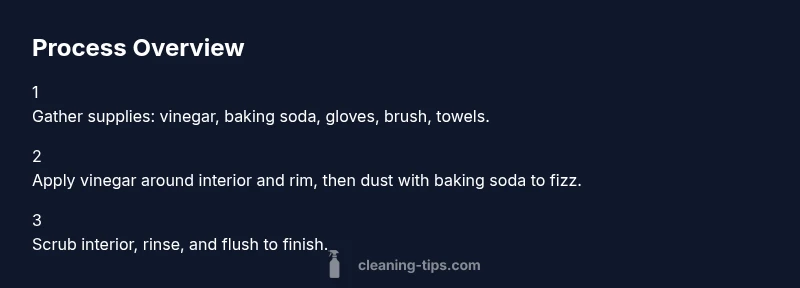
Collect vinegar, baking soda, gloves, brush, towels, and a clear work area near the toilet. Set out a separate container for dry baking soda to avoid moisture clumping. This ensures a smooth cleaning flow.
Tip: Keep everything within arm's reach to reduce trips in and out of the bathroom. - 2
Ventilate and prep area
Open a window or run the exhaust fan to disperse fumes. Put on gloves and, if desired, safety glasses. Clear the area of rugs or items that could get splashed.
Tip: Ventilation reduces odor buildup and improves comfort during cleaning. - 3
Apply vinegar around interior
Pour or spray white vinegar around the inside of the bowl, especially under the rim where deposits accumulate. The acid starts dissolving mineral buildup. Avoid over-wetting the exterior.
Tip: Aim under the rim to reach hard-to-reach mineral deposits. - 4
Sprinkle baking soda
Sprinkle baking soda over the vinegar-treated areas to create fizz. The fizz helps lift grime and neutralize odors. This step primes the surface for effective scrubbing.
Tip: Even distribution yields consistent cleaning; use a shaker if possible. - 5
Scrub interior with brush
Scrub the bowl’s interior using firm, circular motions, paying attention to waterline and under the rim. Don’t scrub too aggressively on delicate finishes. Move across all surfaces for even cleaning.
Tip: Concentrate on hard-water lines that resist simple rinsing. - 6
Let it fizz and dwell
Allow the vinegar and baking soda mixture to fizz and sit for 5–10 minutes. This dwell time helps loosen deposits without requiring aggressive scrubbing. Keep the brush nearby for a quick re-scrub.
Tip: Dwell time improves mineral-lift without extra effort. - 7
Scrub again and flush
Give the interior a final scrub, then flush to rinse away loosened grime and residues. If stains persist, repeat the fizz cycle or try a paste on stubborn spots. Ensure the water level returns to normal.
Tip: A second pass can finish most stubborn deposits. - 8
Finish with rinse and exterior wipe
Rinse the bowl with clean water and wipe the exterior with a damp cloth. Dry surfaces to prevent watermarks. Store cleaning tools in a dry area to prevent mildew.
Tip: Don’t forget the exterior around the rim; bacteria can collect there. - 9
Optional deep-dive stage
For persistent buildup, repeat the steps on a different day or use a baking soda paste in small patches, avoiding metal parts. This keeps maintenance manageable over time.
Tip: Reserve this for stubborn stains; not a daily step.
Questions & Answers
Can I clean a toilet bowl with vinegar and baking soda?
Yes. This eco-friendly method lifts mineral deposits and stains without harsh chemicals when used as directed. Avoid mixing with bleach or ammonia.
Yes, this eco-friendly method lifts stains without harsh chemicals, as long as you avoid mixing with bleach or ammonia.
Will vinegar damage porcelain or seals?
Generally safe for porcelain when used in moderate amounts and rinsed well. Avoid prolonged contact with rubber seals and metal parts; test first on small areas.
Vinegar is usually safe for porcelain if you rinse well and avoid prolonged exposure to seals.
How long should the cleaner sit?
Let the vinegar and baking soda fizz for 5-10 minutes before scrubbing again. For tougher stains, repeat the dwell cycle once.
Let it fizz for about five to ten minutes, then scrub again; repeat if needed.
Can I add essential oils for fragrance?
You can add a few drops of essential oil after cleaning for fragrance, but avoid adding oils before scrubbing, as they can leave residue.
A few drops of essential oil after cleaning can add fragrance, but don't add before scrubbing.
What if stains persist after using vinegar and baking soda?
If stains persist, repeat the process or apply a baking soda paste to targeted spots, allowing it to sit longer before scrubbing and flushing.
If stains persist, repeat the process or use a baking soda paste on stubborn spots.
Is this method septic-safe?
Yes, in typical household use, vinegar and baking soda are septic-friendly. Don’t overdo quantities—stick to moderate amounts.
Yes, it's generally septic-friendly when used in moderate amounts.
Watch Video
The Essentials
- Use vinegar first, then baking soda for fizz and cleaning power.
- Avoid mixing cleaners to prevent hazardous gases.
- Ventilate and wear gloves for safe, comfortable cleaning.
- Regular brief cleanings reduce the need for heavy scrubbing.