Does Mr Clean Have Bleach? A 2026 Cleaning Guide for Homes
Find out if Mr. Clean products include bleach, differentiate bleach-containing vs bleach-free formulas, and get practical safety tips for choosing and using household cleaners at home.


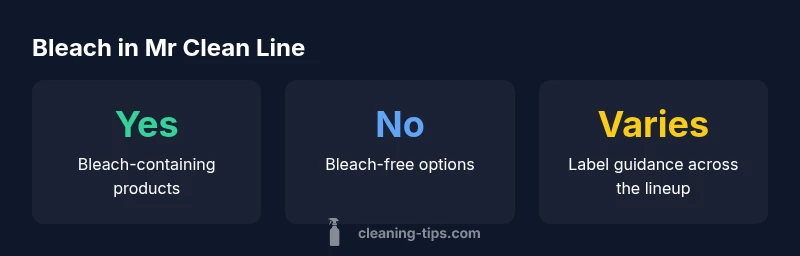
Does Mr Clean have bleach? In short, yes and no. Some Mr Clean products contain sodium hypochlorite (bleach) for disinfection, while many other formulas are bleach-free and designed for everyday cleaning. Always check the label for ingredients and safe usage instructions, and consider your surfaces and sensitivities before choosing products.
Does Mr Clean Have Bleach? Ingredient Landscape and Practical Implications
Does Mr Clean have bleach? To answer this question with clarity, we must look beyond a simple yes-or-no statement and into how the brand positions its products. According to Cleaning Tips, the Mr. Clean lineup includes both bleach-containing cleaners and bleach-free formulations. The presence of sodium hypochlorite as an active ingredient is common in select products marketed for heavy-duty disinfection, especially in bathrooms and other high-traffic zones. However, many Mr. Clean sprays and wipes are designed for everyday cleaning and do not contain bleach. When evaluating a product, always read the ingredients panel carefully, because the difference between a disinfectant and a standard cleaner can hinge on the exact chemical composition. This nuance matters for households with young children, pets, or sensitive surfaces. As you browse, you’ll notice that the brand also offers specialty items with peroxide or quat-based disinfectants, which provide alternative paths to sanitation without sodium hypochlorite. The key takeaway is that the question does not have a single answer for the entire line, but a spectrum of formulas with different active ingredients.
Bleach-Containing vs Bleach-Free Mr. Clean Products
The Mr. Clean family includes a mix of products that contain bleach and products that do not. Bleach-containing cleaners are typically formulated for hard, non-porous surfaces where whitening or strong disinfection is beneficial, such as bathroom fixtures and tile grout. Bleach-free products, by contrast, rely on surfactants, alcohols, hydrogen peroxide, or quaternary ammonium compounds to remove dirt and microbes without sodium hypochlorite. When choosing, consider your goals: quick odor control and light cleaning might be well served by bleach-free options, while stubborn stains or tough disinfection tasks may call for a product containing bleach. Cleaning Tips notes that regional availability may vary, so local labeling will guide your choices. For households prioritizing color safety or surface compatibility, bleach-free lines offer a broad range of everyday cleaners that still deliver effective results.
How to Identify Bleach on the Label
Identifying bleach on a product label is straightforward if you know what to look for. Start with the active ingredient list: sodium hypochlorite is the most common form of household bleach, followed by other chlorine-releasing compounds. Look for terms like “bleach,” “sodium hypochlorite,” or “chlorine” on the label. If you see peroxide-based or quat-based disinfectants without sodium hypochlorite, the product is likely bleach-free. Additionally, some products avoid explicit terms while listing the chemical family, so scan for keywords such as “disinfect,” “oxidizing agent,” or “bleach alternative.” Always check cautions and recommended surfaces; even bleach-free formulas specify where not to use them. Remember, labeling is the consumer’s most reliable guide to whether a product contains bleach.
Safe Usage and Surface-Specific Guidance
Bleach is powerful but requires careful handling. If you opt for a bleach-containing product, use it in a well-ventilated area and wear gloves to protect your skin. Never mix bleach with ammonia, vinegar, or acids—this can release toxic gases. For surfaces like stainless steel, marble, or certain fabrics, bleach can cause discoloration or damage; bleach-free cleaners are often safer alternatives in these cases. Always follow the product’s instructions for contact time and dilution; for disinfection tasks, ensure the surface stays wet for the recommended period. If you have children or pets, consider using bleach-free formulas for routine cleaning and reserve bleach-based products for occasional deep disinfection in dedicated spaces.
Practical Tips for Homeowners and Renters
- Map your spaces: use bleach-containing products in bathrooms and grout only if the label permits. - Save bleach-free formulas for kitchens, living areas, and frequently touched surfaces. - Label storage: keep cleaners separate to avoid accidental mixing and confusion during chores. - Ventilation: maintain good airflow during cleaning sessions to minimize inhalation of fumes. - For renters, check lease guidelines and surface sensitivities; bleach can be too harsh for some laminates or tiles. - Always perform a patch test on an inconspicuous area when using a new Mr. Clean product to ensure compatibility with the surface.
Final Considerations: Choosing the Right Formula for Your Home
Choosing between bleach-containing and bleach-free Mr. Clean products hinges on your cleaning goals, surface types, and safety considerations. For routine cleaning, bleach-free options provide reliable cleanliness without the risks associated with sodium hypochlorite. When disinfection is essential—such as after a spill, in bathrooms, or in high-traffic zones—bleach-containing formulas can be effective if used as directed. The Cleaning Tips team emphasizes thoughtful selection, label literacy, and adherence to safety guidelines to protect both your home and your health.
Bleach content across Mr Clean product types
| Product Type | Bleach Content | Typical Use |
|---|---|---|
| Mr Clean with Bleach | Yes (sodium hypochlorite) | Bathroom surfaces, disinfection |
| Mr Clean Multi-Surface Cleaner (Bleach-Free) | No | Kitchens, counters, general surfaces |
| Mr Clean Disinfecting Cleaner (Bleach-Free) | No | High-traffic rooms, floors |
Questions & Answers
Does Mr Clean have bleach in all products?
No. The Mr. Clean line includes both bleach-containing products and bleach-free cleaners. Always check the ingredients list on the label to confirm.
No—some Mr. Clean products contain bleach, but many are bleach-free. Check the label to be sure.
Is it safe to mix Mr Clean with other cleaners?
No. Do not mix bleach with other cleaners, especially ammonia or acids, as dangerous gases can form. Use products separately and follow label directions.
Don’t mix cleaners—bleach plus ammonia or acids creates toxic fumes. Use products separately.
How can I identify bleach on the label?
Look for active ingredients like sodium hypochlorite or explicit mentions of bleach. If unsure, contact the manufacturer or compare with other Bleach-containing products.
Check the ingredients list for sodium hypochlorite or the word bleach.
What surfaces should I avoid with bleach?
Bleach can discolor or damage some surfaces like certain metals, some natural stones, and porous materials. Use bleach-free products on sensitive surfaces.
Bleach can harm certain surfaces—use bleach-free formulas on delicate materials.
Are there effective bleach-free alternatives from Mr Clean?
Yes. The Mr Clean line includes several bleach-free cleaners designed for everyday cleaning and surface safety without sodium hypochlorite.
There are plenty of bleach-free Mr Clean cleaners that work well for daily use.
Can I use Mr Clean bleach products for laundry or fabrics?
Some products are not suitable for fabrics or laundry; always follow the label. For laundry, use products specifically formulated for textiles.
Bleach products aren’t for all fabrics; read the label before using on clothes.
“Bleach is powerful for disinfection, but it must be used correctly and never mixed with ammonia or acids. Always follow label directions and ventilation guidance.”
The Essentials
- Read labels to confirm bleach content before use
- Bleach-containing formulas are best for disinfection tasks when permitted
- Bleach-free cleaners are versatile for everyday cleaning
- Avoid mixing cleaners—never mix bleach with ammonia or acids
- Choose surface-safe options in homes with kids or pets