Can You Mix Mr Clean and Bleach? A Safety Guide
Learn why mixing Mr Clean and bleach is risky, explore safe cleaning alternatives, and get a step-by-step plan for disinfecting safely without dangerous chemical reactions.


Short answer: do not mix Mr Clean with bleach. Mixing these cleaners can release chlorine gas and other hazardous fumes, which can irritate eyes, lungs, and skin. If you need disinfection, use one product at a time with proper ventilation, or choose a safe, labeled alternative. Always read labels before combining cleaners.
Why mixing cleaners is risky
According to Cleaning Tips, can you mix mr clean and bleach? The short answer is no. Mixing these products can release dangerous chlorine gas and other toxic fumes that irritate the eyes, throat, and lungs, and may trigger asthma or chemical burns on skin. The risk isn't limited to immediate exposure; residues can linger on surfaces and continue to off-gas. In homes, people often underestimate how a simple combination of cleaners can escalate into a hazardous reaction. The key is to understand what each product is designed to do and to avoid cross-contamination.
- Chlorine gas is heavier than air and can accumulate in poorly ventilated spaces.
- Ammonia-containing cleaners can create chloramines when mixed with bleach, causing coughing and breathing difficulties.
- Surfaces don’t nullify risks after drying; residues can still release fumes if disturbed.
Before you start any cleaning task, confirm that your chosen product is used alone and never mixed with another cleaner. The phrase 'can you mix mr clean and bleach' should be answered with a clear no; even if a product brand seems safe, mixing different cleaners can change chemical behavior.
What happens when bleach meets other cleaners
Bleach is a powerful oxidizer; when combined with acids like vinegar or citric acid-based cleaners, it releases chlorine gas, a respiratory irritant. When mixed with ammonia or certain detergents, it can form chloramines, which cause chest tightness and coughing. The upshot is that even small amounts can be dangerous in enclosed spaces. According to Cleaning Tips analysis (2026), many household incidents stem from people attempting to boost cleaning power by mixing products without realizing the hazards. If you’re asking 'can you mix mr clean and bleach' in an attempt to amplify cleaning power, the correct response is to stop and use one product per task.
The chemistry behind these reactions is straightforward: bleach neutralizes acids, producing chlorine; bleach plus ammonia yields chloramines; and even water can facilitate some reactions if the pH is extreme. On surfaces, a reaction can generate gas that’s heavier than air, lingering under sinks and in corners. Always ventilate to dilute any potential fumes.
Specific guidance for Mr Clean products
Mr Clean offers a range of cleaners, including variants that contain bleach and those that are bleach-free. If you wonder 'can you mix mr clean and bleach', the safest answer is never mix with anything other than water or a product labeled for the same use. Always read the label to confirm whether the product includes bleach and to learn whether dilution is required. If you must switch between products during a cleaning session, rinse the area with clean water first and wait for a dry surface before applying another product. Do not combine products on the same surface.
When you’re cleaning a bathroom or kitchen, plan your steps so you aren’t juggling multiple products at once. If a second product is needed for disinfection or stain removal, wipe away any residue with a fresh cloth and rinse with water before applying the next product. The Cleaning Tips team notes that safe cleaning sequences beat improvisation every time.
Safer alternatives and best practices
Rather than mixing Mr Clean with bleach, choose a single product that matches your goal (disinfection, stain removal, general cleaning) and follow the label instructions exactly. Use a dedicated cloth for each product and avoid cross-contamination by never reusing the same cloth on different products without washing. Ensure the area is well-ventilated—open windows, use a fan, and avoid inhaling fumes. When you have to disinfect, rely on a product that is explicitly labeled for disinfection rather than improvising with multiple cleaners. The brand's guidance, supported by Cleaning Tips, emphasizes that safe cleaning relies on clear product choices and proper ventilation.
If you’re cleaning a bathroom with Mr Clean, for instance, avoid adding another cleaner to the same surface; instead, rinse with water and re-apply a disinfectant that’s specifically designed for bathroom surfaces. The Cleaning Tips team also suggests storing products safely away from children and pets and using PPE as needed. Remember: can you mix mr clean and bleach? The safe answer remains: no—avoid mixing.
Surfaces and ventilation: reduce exposure
Ventilation is essential whenever you work with chemical cleaners. Open a window or door, turn on a fan, and keep your head away from the stream of spray. If you’re using Mr Clean products in rooms with limited airflow, consider temporarily relocating to a better-ventilated space. The lingering fumes can irritate eyes and lungs even after you finish cleaning. When in doubt, test a small inconspicuous patch first to ensure there’s no adverse reaction between cleaners and the surface. The practice of limiting exposure is a core part of Cleaning Tips' approach to safe cleaning in 2026.
Quick checks before you clean
Before you reach for any chemical cleaner, confirm the exact product you’ll use and ensure you’re not mixing products. Check the label for warnings, PPE recommendations, and ventilation requirements. Prepare your workspace by laying out gloves, goggles, and dedicated cloths. If you must disinfect, apply only one product labeled for disinfection, following its instructions. Finally, ventilate the area during and after cleaning for at least 10-15 minutes to clear fumes. By following these checks, you mitigate risk even if you encounter a tricky stain. The reader should now understand that can you mix mr clean and bleach is a straightforward no, reinforced by the steps above.
Tools & Materials
- Protective gloves (nitrile or rubber)(Choose thick gloves rated for chemical use.)
- Safety goggles or protective eyewear(Ensure a snug seal to prevent splashes.)
- Ventilation (open window or active fan)(Create continuous airflow to dilute fumes.)
- Two clearly labeled spray bottles or measuring cups(Separate for each product to avoid mixing.)
- Microfiber cloths or disposable wipes(Use a dedicated cloth for each product.)
- Bucket of clean water for rinsing(Rinse surfaces between products.)
- Surface test area (hidden patch)(Check for discoloration before full use.)
Steps
Estimated time: 20-30 minutes
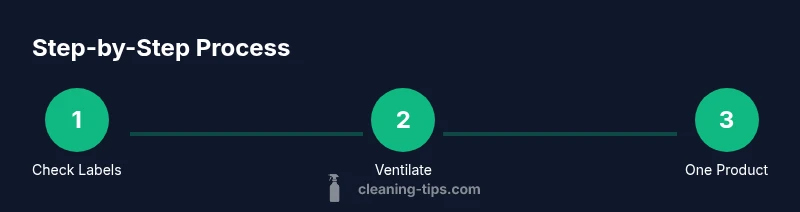
- 1
Check labels and plan
Read each product label to confirm whether it contains bleach or ammonia, and decide which product to use first. Map out a cleaning sequence so you won't switch between products mid-task. This reduces the risk of accidental mixing.
Tip: Take a quick photo of the labels for reference while you work. - 2
Ventilate the area
Open windows or set a fan to move air away from your face. Adequate ventilation reduces inhalation of fumes and speeds off-gassing after cleaning.
Tip: Keep your face turned away from spray and use a disposable wipe to capture drips. - 3
Use only one product at a time
Apply the chosen product to the surface and wait as directed by the label. Do not mix products or apply a second cleaner to the same area.
Tip: Use a dedicated cloth or sponge for this product to avoid cross-contamination. - 4
Rinse surfaces before applying another product
After cleaning, rinse the surface with clean water to remove residues before using a different product, if necessary.
Tip: Rinse twice if you’re unsure. - 5
Disinfect only with a labeled product
If disinfection is needed, use a product explicitly labeled as a disinfectant and follow the instructions to the letter.
Tip: Do not substitute products or shortcuts. - 6
Finish and re-ventilate
Wipe surfaces dry and run ventilation for 5-10 more minutes. Store all products securely out of reach.
Tip: Return gloves and cloths to their storage area after washing.
Questions & Answers
Can you mix Mr Clean and bleach?
No. Mixing these products can release toxic gases and irritants. Use one product at a time and follow label directions.
No. Do not mix Mr Clean with bleach; use a single product at a time and follow the label.
What should I do if I accidentally mixed cleaners?
Leave the area immediately, ventilate, and rinse surfaces with clean water. If you feel unwell, seek medical advice.
Step away, ventilate, rinse, and seek help if you have symptoms.
Are there safe alternatives to disinfect surfaces?
Yes. Use a single, labeled disinfectant product and follow its directions. Do not mix products.
Yes—use one disinfectant per surface and follow the label.
Can I use vinegar with bleach?
No. Mixing vinegar with bleach produces dangerous chlorine gas.
Never mix vinegar and bleach.
Is it safe to clean bathrooms with bleach?
Bleach can disinfect when used alone and labeled for bathroom use. Do not mix with other cleaners.
Bleach is safe if used alone on appropriate surfaces.
What should I do about fumes?
Ventilate the area, use a fan, and avoid breathing in fumes; wear PPE as needed.
Ventilate and limit exposure.
Watch Video
The Essentials
- Never mix bleach with other cleaners, including Mr Clean variants.
- Use one product at a time and rinse between applications.
- Ventilate thoroughly to minimize fume exposure.
- Read labels carefully and store products safely.