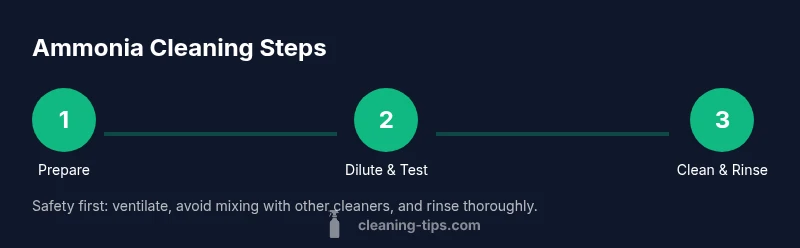
How to Clean with Ammonia: Safe and Effective Techniques
Discover a practical, safety-focused guide to cleaning with ammonia: proper dilution, ventilation, surface testing, and a clear step-by-step method for a healthier home.


Using ammonia can powerfully degrease tile grout, ovens, and bathroom surfaces when used correctly. Always ventilate, never mix with bleach, and use a diluted solution for most jobs. Rinse thoroughly and dry to prevent residue. Avoid skin contact; wear gloves and safety goggles for additional protection, especially on hot surfaces.
Why ammonia is a powerful cleaner for certain surfaces
According to Cleaning Tips, ammonia is a powerful degreaser for hard, non-porous surfaces when used with proper ventilation and protective gear. Ammonia molecules are effective at breaking down oils and mineral deposits, which makes it a go-to for shiny kitchen fixtures, glass, ceramic tile, and metal surfaces. When used correctly, ammonia can remove baked-on grime from ovens, soap scum from bathroom tiles, and residues from stainless steel appliances without leaving a harsh residue.
However, ammonia is a strong chemical and can irritate skin, eyes, and the respiratory system if misused. Always use it in a well-ventilated area, and never mix it with bleach or other cleaners. For routine maintenance, consider a sequence: dust first, then apply a damp cloth with ammonia for tough grime, then rinse with clean water and dry. This approach minimizes fumes while maximizing cleaning power. In the Cleaning Tips framework, prioritize surface compatibility tests and protective gear to keep your home healthier while using ammonia as a cleaning tool.
Safety first: ventilation, PPE, and handling ammonia
Because ammonia fumes can irritate airways, safety must come first. Work in a well-ventilated space—open windows and use a fan if possible. Put on protective gloves (nitrile or rubber) and safety goggles to shield eyes. If you have a moldy or mildew problem, ensure you wear a mask rated for chemical vapors. Keep ammonia away from children and pets and store it in its original container with the cap tightly closed when not in use. Never mix ammonia with bleach or acids; the resulting gases can cause coughing, chest tightness, and eye irritation. Use small amounts on a damp cloth to control evaporation, and avoid spraying ammonia directly onto porous surfaces. After cleaning, rinse the area with clean water and dry completely to remove any residue that could re-emit fumes. If irritation occurs, leave the area and seek medical advice.
Surface compatibility and testing
Not all surfaces react the same to ammonia. It works best on hard, non-porous materials like glazed ceramic, glass, chrome, and sealed metal finishes. Before treating a larger area, test a small, inconspicuous patch (for example behind a bathroom cabinet) by applying a small amount and waiting 5–10 minutes. If you see discoloration, dulling, or a change in texture, stop and rinse immediately. For enamel tubs or countertops, perform an edge test to ensure the finish remains intact. If you are cleaning wood, untreated stone, or unsealed grout, ammonia can cause damage or discoloration, so either avoid or proceed with extreme caution using diluted, minimal contact. Remember to always rinse thoroughly and dry after testing.
Common tasks and best practices
Ammonia is particularly effective for removing grease and soap scum on bathroom tiles, chrome hardware, and glass doors. Use a damp cloth or spray bottle to apply a light layer rather than soaking surfaces. Let it sit for a minute or two on tough grime, then scrub with a nonabrasive pad. Rinse with clean water and dry to prevent streaks. For ovens and grills, remove racks and scrub with a cloth dampened by ammonia; never apply to hot surfaces. After cleaning, wipe with a dry cloth to remove any remaining moisture. When in doubt, test first and work in small sections to avoid over-wetting. Do not mix with other cleaners; store upright away from sunlight; keep under 60°F (15°C) where possible. Also, consider alternatives like baking soda and vinegar only for non-chemical tasks.
Alternatives and cautions
If you prefer not to use ammonia, or want to tackle porous surfaces, there are safer alternatives: baking soda for scrubbing, vinegar for mineral deposits, and commercial cleaners designed for specific surfaces. Remember: ammonia is not compatible with bleach or acids; never mix and always ventilate. For routine cleaning, you may switch between mild cleaners and ammonia only when necessary, to reduce exposure. By following these guidelines, you can achieve clean, shiny surfaces without compromising your health.
Tools & Materials
- Household ammonia cleaner (3-10% concentration)(Use a product labeled for household cleaning; ensure ventilation)
- Water(For dilution and rinsing)
- Spray bottle(For applying diluted solution)
- Gloves (nitrile or rubber)(Protect skin)
- Safety goggles(Protect eyes)
- Non-porous cloths or microfiber towels(For applying and wiping)
- Soft-bristled scrub brush(For stubborn grime)
- Ventilation (windows or a fan)(Ensure airflow)
- Old towels or drop cloth(Protect surrounding areas)
Steps
Estimated time: 45-75 minutes
- 1
Prepare the workspace
Clear the area and remove items that could get wet or damaged. Set up a drop cloth if you’re cleaning high-friction or splatter-prone areas. Have all tools handy so you don’t need to cross-contaminate surfaces.
Tip: Lay a protective barrier on nearby surfaces to catch spills. - 2
Ventilate and protect yourself
Open windows and use a fan to move fumes away from you. Put on gloves and goggles before handling ammonia. If possible, wear a respirator rated for chemical vapors for extended tasks.
Tip: Keep pets out of the cleaning area during the job. - 3
Test a small patch first
Dampen a cloth with ammonia solution and apply to a hidden spot to check for color change or damage. Wait 5–10 minutes and inspect. If there’s no adverse reaction, proceed with caution.
Tip: Always start with the mildest area to gauge reaction. - 4
Apply ammonia with a damp cloth
Moisten a cloth or spray bottle nozzle with the cleaner. Wipe the surface with a light, even layer; avoid saturating porous materials. Apply to small sections to prevent excessive exposure.
Tip: Do not spray directly onto porous surfaces to limit absorption. - 5
Scrub and let it work
Gently scrub the area using a nonabrasive pad or brush for stubborn grime. Let the solution sit briefly on mineral deposits or soap scum, but avoid long contact times on sensitive finishes.
Tip: Use circular motions to lift grime rather than rubbing hard. - 6
Rinse with clean water
Wipe away ammonia with a cloth dampened in clean water. Rinse until no residue remains. Use a separate dry cloth to remove any remaining moisture from the surface.
Tip: Rinsing is essential to prevent odor and residue. - 7
Dry and inspect
Dry the surface completely and inspect for streaks or dull patches. If you see any damage, stop and re-evaluate the surface. Let the area ventilate and dry fully before reusing.
Tip: A dry, clean cloth helps prevent water spots. - 8
Store safely
Return ammonia to its original container, seal tightly, and store in a cool, well-ventilated place away from heat and direct sunlight. Keep it out of reach of children and pets.
Tip: Never transfer ammonia to another container without labeling it.
Questions & Answers
Is it safe to use ammonia indoors?
Yes, when used in a well-ventilated area with gloves and goggles, and never mixed with other cleaners like bleach or acids. Test surfaces first and follow with thorough rinsing.
Yes, indoors is okay with proper ventilation and PPE, and you should avoid mixing with other cleaners.
Can I mix ammonia with vinegar?
No. Ammonia should never be mixed with vinegar or bleach. Combining cleaners can release harmful gases and irritants.
Do not mix ammonia with vinegar or bleach; it can release dangerous gases.
What surfaces are safe to clean with ammonia?
Best on hard, non-porous surfaces like glazed ceramic, glass, chrome, and sealed metal finishes. Avoid unsealed wood, natural stone, or porous materials.
Good on non-porous surfaces; avoid porous materials.
How should I store ammonia safely?
Keep in the original container, tightly closed, away from heat and out of reach of children. Do not transfer to unlabelled containers.
Keep it in its original container, closed and away from children.
What if ammonia gets in my eyes or on my skin?
Rinse eyes or skin with plenty of running water for at least 15 minutes. If irritation persists, seek medical care promptly.
Rinse with water for 15 minutes and seek help if irritation lasts.
Can ammonia remove tough stains effectively?
It can help with grease and soap scum on non-porous surfaces, but avoid harsh scrubbing on delicate finishes and always rinse well.
It helps with greasy stains on non-porous surfaces after proper rinsing.
Watch Video
The Essentials
- Ventilate well and wear PPE before cleaning.
- Test on a hidden area first to avoid damage.
- Never mix ammonia with bleach or acids.
- Rinse and dry surfaces to prevent residue and fumes.