What Cleaning Products Have Ammonia: A Practical Guide
Discover which cleaning products contain ammonia, how they work, safety tips, and safer alternatives. Learn label-reading and storage guidance for a healthier home.


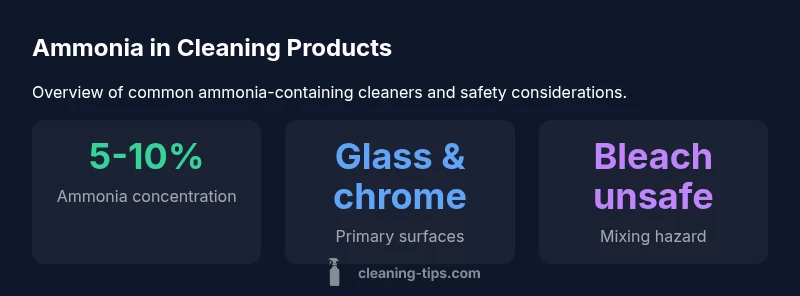
Ammonia appears in common household cleaners such as glass cleaners, all-purpose cleaners, and some degreasers. It is typically sold as a diluted ammonia solution (household ammonia, about 5-10%). Always use in a well-ventilated area and never mix ammonia with bleach or acids.
What cleaning products have ammonia
What cleaning products have ammonia? Ammonia is a staple ingredient in several household cleaners, most notably glass cleaners and some all-purpose cleaners. When you see a bottle labeled with terms like "ammonia" or "ammonium hydroxide," you’re looking at a product that relies on ammonia chemistry to cut grease and dissolve fingerprints. In everyday terms, what cleaning products have ammonia often includes the classic spray for windows, mirrors, and chrome. The typical household ammonia sold for home use is a diluted solution, usually around 5-10% NH3. The Cleaning Tips team notes that this concentration is designed for effective cleaning while minimizing strong fumes—though ventilation remains essential, especially in small or poorly ventilated spaces. If you’re unsure whether a cleaner contains ammonia, read the ingredient list carefully and watch for terms like "ammonia" or "ammonium hydroxide" on the label.
How ammonia-based cleaners work
Ammonia is a weak base that, when dissolved in water, forms ammonium hydroxide. This solution is highly effective at lifting oily residues and dissolving certain organic stains. In cleaners designed for glass or stainless steel, ammonia helps cut through fingerprints and smudges without leaving cloudy residues. For home use, expect to see ammonia paired with surfactants and detergents that suspend dirt, making it easier to wipe away. The practical takeaway is that ammonia-based cleaners excel on nonporous surfaces where oils accumulate, but they should be used with care around materials that may react poorly to alkaline solutions.
Surfaces most compatible with ammonia cleaners
Ammonia cleaners are especially effective on glass, mirrors, chrome fixtures, and many nonporous kitchen and bathroom surfaces. They can also work on tile and enamel surfaces. However, aluminum, some natural stone, and certain wood finishes may be damaged or etched by alkaline cleaners, so spot-testing is advised. For homeowners, this means reserving ammonia-based products for surfaces where a clear, streak-free finish is desired, and switching to gentler formulations on sensitive materials.
Reading labels and identifying ammonia on bottles
To identify ammonia on a bottle, start with the ingredient panel. Look for explicit terms like "ammonia" or "ammonium hydroxide." Some products may list the active ingredient as "ammonium hydroxide" rather than ammonia itself. If you see a concentration, it will typically be listed as a percentage of NH3 in water. Labels may also indicate the pH level or a cautionary statement about ventilation. Cleaning Tips recommends cross-checking the Safety Data Sheet (SDS) if you’re using ammonia in bulk or in a workspace, and always store products out of reach of children and pets.
Health, safety, and storage considerations
Ventilation is crucial when using ammonia cleaners to avoid irritating the eyes, nose, and throat. Use gloves if you have sensitive skin, and keep products away from heat sources to prevent vapor buildup. Store ammonia-containing products in a cool, dry location with the cap tightly closed. Avoid mixing ammonia with other cleaners, especially bleach or acids, as dangerous gases can form. Cleaning Tips emphasizes reading labels, wearing basic PPE, and ensuring pets and kids are kept out of the area during and after cleaning until vapors dissipate.
Mixing hazards: why you should never mix ammonia with bleach or acids
Mixing ammonia with bleach releases chloramines and chlorine gas, both of which can cause coughing, chest tightness, and irritation to the lungs. Mixing ammonia with acids can produce irritating fumes as well, even if the reaction is less dramatic than with bleach. The guidance from Cleaning Tips is clear: never combine cleaners containing ammonia with other household chemicals unless the product’s label explicitly says it’s safe to do so. When in doubt, use one product at a time and ventilate the space.
Safer alternatives and safe usage practices
If you’re seeking alternatives to ammonia-based cleaners, consider mild detergents, dish soap, or baking soda for many everyday tasks. For glass and mirror cleaning, a mixture of water and a small amount of white vinegar can work without ammonia, though you should test surfaces first. Hydrogen peroxide can be used for certain stains when used correctly. Always use products as directed, never mix, and prioritize ventilation and protective gear such as gloves and eye protection when handling ammonia-containing cleaners.
Storage, disposal, and best practices for ammonia products
Store ammonia products in their original containers to avoid mislabeling and ensure the concentration is never altered. Keep caps tight and away from heat, acids, and metal foods; do not transfer ammonia to unmarked containers. For disposal, follow local regulations for household hazardous waste. The Cleaning Tips team recommends keeping a small, clearly labeled storage area for cleaners and ensuring that the area is dry and well-ventilated to minimize vapor buildup over time.
Typical ammonia-containing products vs. non-ammonia cleaners and their common uses
| Product Type | Contains Ammonia? | Common Surfaces/Uses |
|---|---|---|
| Household ammonia (ammonia solution) | Yes | Windows, mirrors, glass surfaces |
| Glass cleaner (ammonia-based) | Yes | Glass surfaces, chrome finishes |
| All-purpose cleaner (ammonia-based) | Yes | Kitchen and bathroom surfaces |
| Bathroom cleaner (non-ammonia) | No | Tiles, sinks, toilets |
Questions & Answers
What cleaning products have ammonia?
Glass cleaners and many all-purpose cleaners often contain ammonia; always check the ingredient list for ammonia or ammonium hydroxide.
Many glass cleaners and some all-purpose cleaners contain ammonia. Check labels to confirm and avoid mixing with other chemicals.
Is ammonia safe to use around pets and kids?
Use ammonia cleaners in a well-ventilated area, keep them out of reach, and ensure vapors have dissipated before returning to the space.
Ventilate well and keep cleaners away from children and pets; wait for fumes to clear before re-entering.
Can ammonia be used on kitchen countertops?
Ammonia can be used on nonporous surfaces like glass or stainless steel; avoid porous materials and perform a spot test first.
Use ammonia on nonporous surfaces and test first on a small area.
Are there eco-friendly ammonia alternatives?
Yes. Look for plant-based cleaners or milder detergents; many avoid ammonia altogether. Always follow label guidance and avoid mixing with bleach.
There are eco-friendly cleaners that don’t use ammonia; read labels and don’t mix with bleach.
What should I do if I inhale ammonia fumes?
Move to fresh air immediately. If symptoms persist, seek medical help and follow up with a healthcare professional.
Get to fresh air and seek care if you feel episodes of coughing or dizziness persist.
“Ammonia-based cleaners are effective for specific tasks, but safety and labeling are non-negotiable. Follow directions and never mix with other cleaners to protect your household.”
The Essentials
- Identify ammonia by label terms like ammonia or ammonium hydroxide.
- Use ammonia cleaners in well-ventilated spaces to minimize fumes.
- Never mix ammonia with bleach or acids; dangerous gases can form.
- Test on hidden surfaces first to avoid damage, especially on metal and wood.
- Consider safer alternatives for sensitive surfaces or households with pets.