How to Clean Without a Bidet: A Practical Home Guide
Learn practical, hygienic methods to clean after using the toilet without a bidet. Step by step techniques, tools, and tips for a fresh, comfortable bathroom routine.


By following simple, water friendly steps, you can clean effectively without a bidet and stay fresh between bathroom visits. Start with a mild soap and a damp cloth, wipe front-to-back with controlled water, then pat dry and moisturize if needed. This guide covers supplies, technique, safety, and simple at home routines to maintain hygiene when a bidet is not available.
Why Clean Without a Bidet Really Matters
In homes where a bidet is not available, keeping the area clean after using the toilet remains essential for comfort, odor control, and skin health. According to Cleaning Tips, a water based approach can be gentler on skin than dry wiping and can reduce irritation over time. This principle is the foundation for a simple routine that uses a damp cloth or a small rinse cup, a mild soap if needed, and careful drying. By following a consistent, fragrance free sequence, homeowners and renters can stay fresh between visits, even in compact bathrooms or during travel. The goal is not to replace a bidet with a single trick but to build a reliable habit that works with everyday bathroom tools. Be patient while adapting your method to your own habits and your bathroom layout, and you will notice a noticeable improvement in freshness and comfort. How to clean without a bidet is a skill that combines water, gentle motion, and proper drying.
Core Principles of Cleanliness in Absence of Bidet
Without a bidet, core hygiene relies on three practices: front-to-back wiping to prevent contamination, using water with a gentle touch, and thorough drying. Start with a damp, clean cloth or a small rinse cup; keep soap mild and fragrance-free; move from front to back with light, smooth strokes. After cleansing, switch to a dry cloth or towel to pat dry rather than rub, which reduces skin irritation. Finally, wash your hands before and after the process to minimize germ spread. This section emphasizes consistent technique over harsh products and encourages small, repeatable actions that fit any bathroom size or layout.
Low-Water Rinsing Techniques That Work
A bidet-free routine benefits from controlled water use. Fill a cup with room-temperature water, and pour a gentle stream from front to back, avoiding splash back. Use your damp cloth to wipe with mild soap if needed, then rinse again with clean water to remove soap residue. Reuse a clean section of cloth for each pass, and keep the water flow calm to prevent skin irritation. These techniques minimize mess while delivering effective cleansing, and they align with practical habits for travelers or renters who move between bathrooms. This approach shows that you do not need a high water only method to achieve good hygiene.
Drying and Skin Care to Prevent Irritation
Patting dry with a clean towel creates less friction than rubbing. If you experience itchiness or redness, consider a fragrance-free moisturizer or barrier cream after drying. Keep the area dry for several minutes before dressing. Regularly launder cloths and towels in hot water to reduce bacteria buildup. If you have sensitive skin or chronic irritation, consult a healthcare professional for personalized care. Drying is as important as cleansing and helps prevent discomfort throughout the day.
Common Mistakes and How to Avoid Them
Avoid scented soaps and wipes, which can irritate sensitive skin. Don not scrub aggressively; instead use gentle, damp strokes. Do not reuse dirty cloths; launder them after each use. Avoid relying on dry toilet paper alone; combine with a damp cloth for better cleanliness. Lastly, never skip drying—moisture invites irritation and discomfort. These mistakes are common but easily corrected with a consistent routine.
Cleaning Protocols for Travelers and Small Bathrooms
On the go, keep a compact kit: a small damp cloth, a travel bottle of water, a tiny unscented wipe, and a towel. Use a hotel washroom's water carefully, and dry with a provided or personal towel. For shared bathrooms, establish a simple routine with minimal products to avoid cross-contamination. These practices translate well from home to hotel stays, dorm rooms, or RVs, ensuring you stay clean and comfortable wherever you are.
Tools & Materials
- Washcloth or soft towel(One per cleaning session; keep clean)
- Cup or squeeze bottle for water(Controls water flow; avoid splashing)
- Mild, unscented soap(Gentle formulas reduce irritation)
- Clean water(Tap water; room temperature)
- Clean, dry towels or disposable wipes(For drying; choose one)
- Moisturizer or barrier cream (optional)(If irritation occurs)
- Hand sanitizer (optional)(Wash hands after cleaning)
Steps
Estimated time: 12-20 minutes
- 1
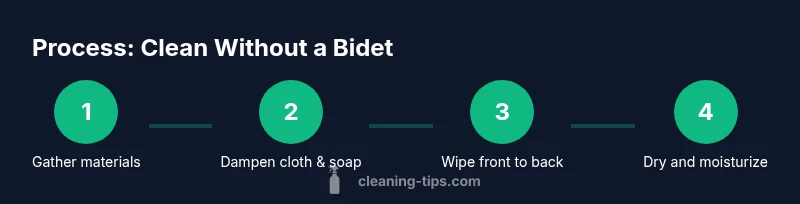
Gather the supplies
Place a damp cloth, a cup of water, mild soap, and a towel within easy reach. Set up a clean area so you do not cross contaminate while cleaning. This preparation reduces hesitation and speeds up the routine.
Tip: Keep the kit near the toilet for quick access during busy mornings. - 2
Wet cloth and apply a small amount of soap
Dampen a clean section of the cloth and apply a small amount of mild soap. Work up a light lather with gentle strokes; avoid heavy scrubbing. The aim is to lift residues without irritating the skin.
Tip: Use minimal soap to prevent residue that can irritate sensitive skin. - 3
Wipe front to back with gentle strokes
Start at the front and move toward the back with smooth, even strokes. Use fresh sections of the cloth as you go to avoid spreading germs. Do not press hard; let the moisture do the work.
Tip: Pause briefly if you feel friction; switch to a clean cloth section. - 4
Rinse away soap with a controlled water rinse
Pour a small amount of clean water over the area from front to back to remove soap residue. Use the cloth to wipe again if needed, ensuring the skin is clean and soap free.
Tip: Keep the water flow calm to prevent splashing or irritation. - 5
Dry thoroughly and check for irritation
Pat the area dry with a clean towel; do not rub. If the skin looks irritated, apply a fragrance-free moisturizer or barrier cream and let it absorb before dressing.
Tip: Allow a few minutes of air drying before putting on underwear. - 6
Wash hands and store materials
Wash your hands with soap and water after finishing. Rinse cloths if reusable and air dry; store your kit in a clean, dry place.
Tip: A quick end-of-routine hand wash reinforces hygiene.
Questions & Answers
Is it safe to use only toilet paper for cleaning?
Toilet paper alone may leave residue and cause irritation; using a damp cloth or water rinse improves cleanliness. If you must rely on TP, use a gentle, non-perfumed tissue and avoid harsh rubbing.
Toilet paper alone is not ideal for cleanliness; add a damp cloth for better results.
Can I use soap every time I clean?
A mild, unscented soap can be used when needed, but rinse thoroughly to remove soap residue; overuse can irritate skin.
Yes, use mild soap occasionally and rinse well.
What should I do if irritation develops?
Limit soap use, dry thoroughly, consider fragrance-free products; apply a barrier cream if recommended by a clinician.
If irritated, switch to milder products and dry well.
Is there a way to clean properly while traveling?
Carry a small kit with a damp cloth, unscented wipes, and a travel bottle of water; rinse with water when possible and dry thoroughly.
Travel with a compact cleaning kit for on the go hygiene.
How does this method compare to using a bidet?
A bidet can be more efficient, but careful technique with water and soap can achieve similar cleanliness; your routine may differ.
A bidet can be more efficient, but you can clean well without one.
Watch Video
The Essentials
- Use mild soap and water for gentle cleaning
- Wipe front-to-back with a damp cloth
- Dry thoroughly to prevent irritation
- Keep supplies accessible and clean
- Travel-friendly options exist for hotels and dorms