What Clean Nose Piercing With: Safe Cleaning Guide for Nose Piercings
Learn safe, practical steps to clean a nose piercing using saline solution or mild soap, avoid irritants, and maintain healing. Practical tips from Cleaning Tips for a healthier, infection-free nose piercing.


To clean a nose piercing, use isotonic saline solution or a mild fragrance-free soap with warm water. Avoid alcohol, hydrogen peroxide, or harsh irritants. Clean around the piercing 1–2 times daily during healing, after swimming, and after touching your face. Use clean hands and sterile tools, and never forcefully move the jewelry.
Cleaning fundamentals for nose piercings
During the healing period, consistent, gentle cleaning supports tissue health and reduces crust buildup. If you're asking what clean nose piercing with, the short answer is: use isotonic saline solution or a mild fragrance-free soap with warm water. Alcohol, hydrogen peroxide, and scented soaps can irritate the delicate nasal tissue and slow healing. The Cleaning Tips team emphasizes that simple, proven methods outperform gimmicky products. Begin by washing your hands, preparing a clean workspace, and avoiding any unnecessary touching of the piercing.
To perform a cleaning, you have two safe options: a pre-made sterile saline rinse or a gentle soap and water wash. If you choose saline, spray around the piercing and let it sit for a moment to loosen crusts, then pat dry with a clean tissue. If you choose soap and water, use a small dab of fragrance-free mild soap on a damp finger, wash around the outside of the jewelry, and rinse thoroughly with lukewarm water. Always dry the area gently with a clean disposable tissue; avoid rubbing the piercing, which can irritate tissue and delay healing.
Product choices and why saline is preferred
Several products are commonly recommended for nose piercing care. The safest general approach is to use either a sterile saline solution or a saline spray, both designed for piercing care. Saline is gentle and helps remove crusties without inflaming tissue. If you prefer soap, choose a fragrance-free, mild cleanser and use it sparingly around the piercing. Avoid alcohol-based cleaners and hydrogen peroxide, which can dry out the skin and irritate healing tissue. When selecting products, look for small, sealed bottles and avoid reusing containers that may have contaminated the tip. Many people also use sterile gauze or soft cotton pads to dab, rather than rubbing with cotton swabs that can shed fibers.
Note about DIY saline: you can make it at home using boiled water and salt, but only if you’re sure the salt is fully dissolved and the solution is cooled to body temperature. Commercial saline is usually more reliable for consistent, corrosion-free results. Trust reputable brands and discard any opened products after the recommended shelf life.
Hygiene setup and avoiding contamination
Set up a clean, distraction-free space. Keep pets away and ensure you have a mirror, clean towels, and a small tray to catch drips. Handwashing is critical; use soap and warm water for at least 20 seconds. Do not touch the piercing with dirty hands. If you must touch the area, sanitize after with saline. Do not share towels or cotton swabs. Keep jewelry in place while cleaning during healing unless advised by a professional; removing jewelry can allow the hole to close or introduce bacteria during reinsertion.
Signs of healing progress and when to seek care
Healthy healing shows decreasing crustiness, mild redness that fades, and little or no discharge. If you notice increasing swelling, spreading redness, warmth, fever, or pus that smells foul, contact a healthcare professional or a piercer. These can indicate infection or allergic reaction. Begin with a saline rinse and avoid applying any irritating products. Do not assume pain is normal; monitor your symptoms and adjust cleaning frequency accordingly.
Long-term maintenance and habits
After healing, continue a gentle cleaning routine a few times per week, especially if you wear makeup near the nose or engage in activities that cause salt exposure (sea air, swimming). Always wash hands before touching the piercing and avoid sleeping on the piercing. Clean pillowcases regularly. If you plan to remove the jewelry temporarily, do so only with professional advice and keep the hole clean.
Special scenarios: makeup, swimming, and cold weather
Makeup around the nose can cause irritation when it touches the piercing; apply makeup after cleaning and keep it away from the piercing. When swimming in pools or the ocean, rinse with fresh water after; salt and chlorine can irritate healing tissue. In cold weather, dry air can irritate skin, so consider humidifying your room and keeping the pierced area moisturized with a plain, fragrance-free ointment only if recommended by a professional. If you experience dryness or flaking around the piercing, stop applying products directly on the jewelry and consult.
Tools & Materials
- Sterile saline solution (pre-made)(Isotonic saline designed for piercing care; use as directed)
- Fragrance-free mild soap(Unscented, gentle cleanser for around-jewelry washing)
- Clean warm water(Rinsing rinse; avoid hot water)
- Clean towels or disposable tissues(Drying gently; avoid rubbing)
- Cotton pads or sterile gauze(For gentle dabbing; avoid fibers in the piercing)
- Disposable gloves (optional)(Keeps contamination risk low when hands are unclean)
Steps
Estimated time: 15-25 minutes
- 1
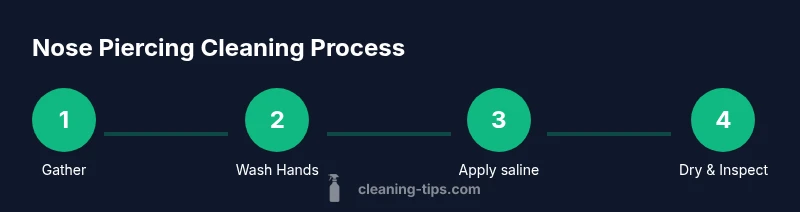
Gather supplies
Collect saline, mild soap, clean towels, and any tools you’ll use. Check expiration dates on solutions. Have a clean, well-lit workspace ready before starting.
Tip: Having everything within reach minimizes handling the pierced area. - 2
Wash hands and prepare area
Wash your hands thoroughly with soap and water for at least 20 seconds. Dry with a clean towel. Clear the surrounding area from makeup or irritants that could reach the piercing.
Tip: Clean hands dramatically reduce contamination risk. - 3
Apply saline around the piercing
Lightly spray or apply saline solution around the piercing. Let it sit for a moment to soften crusts, then gently dab away any crust with a clean tissue.
Tip: Avoid spraying directly into nostril; focus on the surrounding skin. - 4
Use mild soap if needed
If you’re using soap, apply a tiny amount to a damp finger and cleanse only the outside of the jewelry and surrounding skin. Rinse thoroughly with lukewarm water.
Tip: Do not scrub; circular motions around the jewelry are enough. - 5
Dry and inspect
Pat dry with a clean tissue or gauze. Do a quick inspection for redness, swelling, or discharge. If crusts persist, repeat saline rinse and avoid irritants.
Tip: Drying gently reduces moisture that bacteria thrive on. - 6
Return to a safe routine
If the piercing is still healing, keep jewelry in place and resume a gentle, regular cleaning plan. Avoid makeup, creams, or oils near the piercing unless advised by a professional.
Tip: Consistency prevents delays in healing.
Questions & Answers
Can I clean a nose piercing without removing the jewelry?
Yes. In most cases you can clean around the jewelry without removing it, especially during healing. If advised by a professional, you may remove it temporarily, but do not force the hole open.
You can usually clean around the jewelry without removing it. If a professional advises removal, follow their guidance.
Is hydrogen peroxide safe for cleaning nose piercings?
Hydrogen peroxide can be drying and irritating to healing tissue. It is generally not recommended for routine nose piercing cleaning.
Hydrogen peroxide is usually not recommended for nose piercings during healing because it can irritate the tissue.
How often should I clean my nose piercing during healing?
Clean the area 1–2 times daily during healing, and after swimming or sweating heavily. Increase frequency if crusts form, then reduce as healing progresses.
Clean it once or twice daily, plus after swimming. Don’t over-clean; let healing progress.
What should I do if signs of infection appear?
If you notice increasing redness, warmth, swelling, fever, or pus, contact a healthcare professional or your piercer promptly. Do not delay treatment.
If you see redness, swelling, or fever, seek medical advice quickly.
Are there products to avoid near nose piercings?
Avoid alcohol-based cleaners, hydrogen peroxide, and scented products near the piercing. These can irritate healing tissue and prolong recovery.
Stay away from alcohol and scented products around the piercing.
Is itching a normal part of healing?
Mild itching can occur as skin heals, but persistent itching with redness or swelling warrants professional advice.
Mild itching can happen, but persistent symptoms should be checked by a pro.
Watch Video
The Essentials
- Use saline or mild soap with warm water.
- Avoid irritants like alcohol and scented products.
- Keep hands clean and jewelry in place during healing.
- Monitor for infection signs and seek care if needed.