How to Clean Infected Ear Piercing: Safe Steps
Learn doctor-approved steps to clean an infected ear piercing safely, with saline solutions, care tips, and indicators for when to seek medical help.


Looking for practical guidance on how to clean infected ear piercing? This quick answer previews a doctor-approved routine, emphasizing saline cleanup, gentle handling, and when to seek medical help. The guide includes step-by-step instructions, safety tips, and signs that require professional care to prevent complications. This content emphasizes non-irritating practices and listening to your body's healing cues.
Understanding Infection Signs and Risks
An infected ear piercing can show a range of signs beyond normal tenderness. Redness that extends away from the piercing site, increasing warmth, swelling, or thick, colored discharge can indicate infection rather than simple irritation. Pain that worsens after cleaning, fever, or swollen lymph nodes nearby are red flags requiring medical evaluation. Even with persistence of mild symptoms, symptoms like persistent drainage beyond a few days, or a foul odor, warrant professional guidance. The goal of this guide is to help you recognize early warning signs while applying gentle, proven cleansing techniques that support the body's natural healing process. Always prioritize hand hygiene before touching the area, and avoid manipulating the jewelry aggressively, which can worsen tissue trauma and potentially introduce bacteria.
According to Cleaning Tips, informed, mindful care reduces the risk of complications and supports healing. By understanding public-health recommendations and the body’s healing cues, you can approach care with confidence while avoiding common mistakes that prolong recovery.
Causes, Risk Factors, and What Infection Really Means
Infections after ear piercing typically arise from bacteria entering the wound, contaminated equipment, or inadequate aftercare. Cartilage piercings may have a higher risk of slower healing due to thinner tissue and limited blood flow, making vigilant care even more important. Reusing dirty materials, sleeping with tight headgear, or repeatedly touching or twisting the jewelry can irritate healing tissue and pull bacteria into the wound. People with compromised skin barriers, diabetes, or poor hygiene may experience slower recovery. Gossip aside, assessing your own risk factors is an important step toward choosing the right care approach. If you notice persistent redness, a spreading area of warmth, or new swelling, seek clinical advice promptly.
As you review symptoms, remember that every piercing heals at its own pace. The presence of mild redness or soreness in the first few days is common, but sudden changes in discharge or color may indicate a developing infection. Cleaning should be gentle and focused on the surrounding skin, not aggressive scrubbing inside the piercing tract, which can damage tissue and prolong healing.
Safe Cleaning Principles and Antiseptics
Safe cleaning relies on simple, non-irritating methods. The backbone of care is a sterile saline rinse used 1–2 times daily or as directed by a clinician. Mild, fragrance-free soap can be used sparingly on the surrounding skin if needed, but avoid lathering the piercing itself. Antiseptics like chlorhexidine-based solutions may be recommended by a clinician, but do not substitute for saline unless advised. Hydrogen peroxide and rubbing alcohol are generally discouraged for piercing care because they can delay healing by drying and irritating tissue. When applying any liquid, use a clean cotton ball or gauze and avoid forcing solution through the piercing hole. Always dry the area by patting gently with a clean tissue, not rubbing.
The Cleaning Tips team emphasizes using products specifically designed for wound hygiene and following clinician guidance if symptoms are serious or not improving. A calm, steady routine is more effective than aggressive cleaning, which can cause micro-tears and increased discharge.
What to Avoid During Infection
Avoid irritants that can worsen inflammation. Do not twist, rotate, or forcibly move the jewelry during infection. Do not substitute with household products like toothpaste or essential oils, which can irritate skin and prolong healing. Refrain from soaking the ear in swimming pools, hot tubs, or untreated water, as these environments can introduce additional bacteria. If you must remove jewelry for inspection or if swelling makes removal necessary, do so only under medical guidance to prevent embedding or trapping bacteria inside the tract. If a clinician advises removal, do so with sterile gloves and in a clean setting to minimize contamination.
The goal is a clean, controlled environment that supports healing without excess trauma. Remember that every act of care carries risk if done incorrectly, so choose methods that have evidence behind them and avoid unverified home remedies.
Preparing the Area and Gentle Techniques
Before any cleaning, wash your hands thoroughly with soap and water, then dry them completely. Clean the surrounding skin with a saline wipe or a gentle soap solution if advised by a clinician. Use a sterile saline-soaked gauze to gently wipe away crusts around the piercing first, moving outward from the wound to reduce the chance of pushing debris into the tract. Do not scrub the piercing itself; instead, let the solution work for a moment before patting dry. If crusts are heavy, apply a warm compress for a few minutes to soften them before cleaning. Throughout the process, maintain a calm pace and avoid rushing cleanings, which can cause tissue trauma.
This step is about preparing a clean, controlled environment for care. Keeping the local environment stable reduces the risk of reinfection and supports a smoother healing trajectory. The Cleaning Tips team notes that consistency matters more than intensity in early post-infection care.
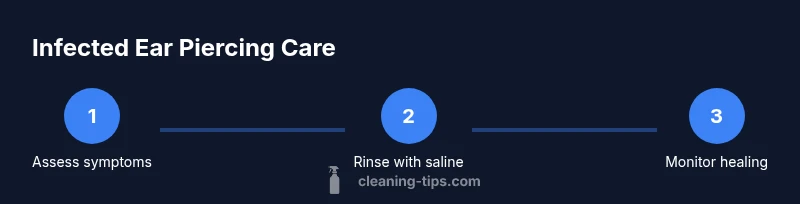
Step-by-Step Cleaning Routine (Overview)
No, this is not a prevention-only guide. This section provides an overview of the official cleaning routine before you dive into the detailed steps. Expect to perform a routine daily or as directed by a clinician until healing signs improve. Focus on consistent saline cleansing, careful drying, and avoiding irritants. The broader goal is to minimize bacteria in the wound area while avoiding tissue trauma. The guidance here aligns with general wound-care principles and emphasizes gentle technique, patient observation, and timely medical consultation when symptoms worsen or fail to improve in a few days.
Note: The detailed, numbered steps below are designed to be straightforward to follow and to support your healing process without introducing unnecessary risk. Always adjust the routine to your clinician’s advice and your body’s response.
Aftercare After Healing and Prevention Tips
Once healing progresses and symptoms lessen, you can gradually return to standard cleaning routines with less frequency. Keep the area clean and dry, avoid harsh products, and maintain good overall hygiene. When healing is complete, you can implement preventive measures such as keeping hair and cosmetics away from the piercing site, washing hands before handling the area, and avoiding trauma from tight jewelry or heavy sleeping activities. If you have chronic irritation or a history of infection with piercings, discuss longer-term care strategies with a clinician to reduce recurrence.
The aim is to protect the piercing in the long term and reduce the chance of future infections. Regular, gentle cleaning habits, paired with mindful care, support a healthy, irritation-free piercing journey.
When to Seek Urgent Medical Attention
Urgent medical care is needed if you experience fever, spreading redness, increasing pain, severe swelling, or pus that worsens despite at-home care. If redness travels beyond the immediate area of the piercing, or you notice red or purple streaks, seek help promptly. A clinician can assess for abscess formation or deeper tissue involvement and may prescribe antibiotics or other treatments. If you’re unsure whether your symptoms qualify as an infection, contact a healthcare professional for guidance. The safest approach is to err on the side of caution when systemic symptoms appear.
Final Note on Prevention and Safe Practices
Even after healing, maintain a routine of careful cleansing, avoid touching the piercing with dirty hands, and keep products away from the site to prevent irritation. If you’re prone to infections, consider discussing alternative jewelry materials and placement with a professional piercer. Staying consistent with safe practices reduces the likelihood of future issues and supports long-term comfort and function of your piercing.
Tools & Materials
- Sterile saline solution (0.9% saline)(Use pre-packaged saline or sterile two-bottle kits; avoid tap water.)
- Sterile cotton balls or gauze pads(For gentle cleansing; avoid shedding fibers.)
- Mild fragrance-free soap(For external skin cleaning only; avoid the piercing channel.)
- Disposable gloves(Optional for helper-assisted cleaning; maintain sterility.)
- Chlorhexidine-based antiseptic (as advised)(Consult clinician before use; some piercings may be sensitive.)
- Warm compress(Helps soften crusts and reduce swelling; use clean cloth.)
- Mirror and clean towel(For visibility and drying after cleaning.)
Steps
Estimated time: 15-25 minutes per session; monitor for 24–48 hours for signs of improvement
- 1
Wash hands and prepare space
Begin by thoroughly washing your hands with soap and water for at least 20 seconds. Dry them with a clean towel. Clear a small, clean workspace and gather your materials so you won't need to reach for dirty items mid-cleaning.
Tip: Clean hands prevent introducing new bacteria to the wound; keep a dedicated wiping cloth nearby to avoid cross-contamination. - 2
Inspect the piercing for signs of infection
Look for increased redness, warmth, swelling, or purulent discharge extending beyond the entry point. Assess whether tenderness worsens with touch or if fever or swollen lymph nodes accompany local symptoms. If any red flags appear, consider delaying deeper cleaning and seek medical advice.
Tip: Document changes with a quick photo so you can monitor progression over 24–48 hours. - 3
Rinse with sterile saline to soften crusts
Gently irrigate the area with sterile saline to loosen crusts and debris. Avoid forcing solution through the piercing hole, and let the liquid sit for a moment before wiping away crusts with a clean gauze.
Tip: Use a new gauze or cotton ball for each wipe to avoid cross-contamination. - 4
Clean around the piercing with saline-soaked gauze
Wipe around the surrounding skin with saline-soaked gauze, moving outward from the entry point. Do not scrub inside the tract or apply force to the jewelry. Pat dry gently after cleaning to remove moisture without friction.
Tip: If crusts persist, apply a warm compress for 3–5 minutes to soften them before another gentle wipe. - 5
Avoid irritants and don't twist jewelry
Do not attempt to rotate or move the jewelry during infection. Avoid hydrogen peroxide, rubbing alcohol, and harsh cleaners that can irritate tissue and delay healing. Allow the piercing to breathe and dry between cleanings.
Tip: If swelling makes jewelry hard to handle, pause cleans until swelling subsides. - 6
Apply a gentle, clinician-approved antiseptic if advised
If your clinician recommended an antiseptic, apply it as directed, using a clean applicator and avoiding contact with internal tissues. Do not double-dip or reuse applicators. Stop if burning or irritation occurs and rinse with saline.
Tip: Follow the clinician's exact product and contact-time recommendations for best results. - 7
Rinse again with saline and dry properly
Do a final saline rinse to remove any residual products, then pat the area dry with a clean tissue. Do not rub the piercing; keep the area as dry as possible without over-drying skin.
Tip: Ensure the area is completely dry before putting on clothing or bedding near the site. - 8
Monitor healing and know when to seek care
Observe improvement over 1–2 days. If redness spreads, discharge increases, fever develops, or pain worsens, seek medical care promptly. Persistent symptoms beyond a few days also warrant professional evaluation.
Tip: Keep a simple symptom diary to share with your clinician if you seek care.
Questions & Answers
What signs show an ear piercing is infected?
Infection signs include increasing redness, warmth, swelling, and discharge that worsens over time. If fever or spreading redness occurs, seek medical advice promptly.
Watch for redness, warmth, swelling, or pus. If symptoms worsen or fever appears, contact a clinician.
Can I clean an infected piercing with hydrogen peroxide?
Hydrogen peroxide can irritate healing tissue and slow recovery. Use sterile saline as the primary cleanser unless your clinician recommends something else.
Hydrogen peroxide is usually not recommended for infected piercings; saline is safer unless your doctor advises a different product.
Should I remove the jewelry if it is infected?
Do not remove jewelry unless a clinician advises you to. Removing can trap bacteria inside and cause embedding. If swelling makes removal necessary, seek professional help.
Keep the jewelry in place unless your clinician says to take it out; removing too soon can complicate healing.
How often should I clean an infected piercing?
Clean with saline as directed, typically with gentle cleansings once or twice daily, depending on symptoms. Avoid over-cleaning which can irritate tissue.
Clean regularly as advised, but don’t overdo it; twice daily is a common cadence unless told otherwise.
When should I seek urgent medical care?
Seek urgent care if you have fever, spreading redness, increasing pain, or a suspected abscess. These can indicate a deeper infection requiring antibiotics or other treatment.
Go to urgent care if you have fever or spreading redness; severe pain also warrants prompt evaluation.
Are topical antibiotics safe without a prescription?
Over-the-counter antibiotics can cause irritation or resistance if misused. Consult a clinician before applying topical antibiotics to an infected piercing.
Don’t rely on OTC antibiotic products without doctor guidance; misused antibiotics can cause problems.
Watch Video
The Essentials
- Wash hands before touching the piercing.
- Rinse with sterile saline; avoid alcohol-based products.
- Keep jewelry in place unless advised otherwise.
- Seek care for worsening symptoms or systemic signs.