How to Clean Carpet Cat Urine: A Complete Guide
Learn proven steps to remove cat urine from carpet, neutralize odors, and prevent recurrence with enzyme cleaners, proper drying, and routine maintenance.


Today you’ll learn how to clean cat urine from carpet effectively: blot, neutralize, and extract odor-causing compounds, then prevent repeats. We cover enzyme cleaners vs. DIY options, colorfast testing, drying strategies, and safe product choices for homes with pets. Whether the urine is fresh or set-in, this guide provides practical steps, clear timing, and safety tips to protect carpets and indoor air quality.
Why cat urine ends up in carpets
Cat urine ends up in carpets for several common reasons, including marking behavior, stress, scent trails, and improper litter box setup. For homeowners looking to clean carpet cat urine, understanding why urine penetrates fibers helps target the right cleaning approach. According to Cleaning Tips, odors cling to carpet fibers more than to hard surfaces, so prompt action matters. Fiber structure traps proteins and uric acid crystals, making even small spills stubborn. A successful cleaning plan also considers the padding underneath, since urine can wick down into the carpet cushion and subfloor if left untreated. This complex journey—from fiber to pad—explains why a routine, systemized approach works better than spot cleaning alone. The goal is a clean carpet cat urine solution that eliminates odor and restores color and texture without damaging the fabric.
Assessing the stain and odor
Before you begin, evaluate how long the urine has been there and how visible the stain is. Fresh spots are easier to treat than set-in odors, but older stains can still be resolved with the right method. Look for changes in color, texture, and pile distortion; smell for a sour or ammonia-like scent, which indicates odor-causing compounds embedded in fibers. Test a small, inconspicuous area of the carpet with your chosen cleaner to confirm colorfastness. This quick colorfast check helps prevent dye bleed or bleaching—an essential precaution when you’re dealing with clean carpet cat urine. Document the area so you can compare results after treatment, and plan for multiple treatments if necessary.
Immediate actions to minimize damage
Acting quickly reduces the damage from cat urine on carpet. Blot the area with clean, white towels to absorb as much liquid as possible—do not rub, as rubbing can push urine deeper and spread contamination. After blotting, rinse with a small amount of cold water and blot again. Wearing gloves, you can repeat this step several times until you see diminishing moisture. Avoid heat sources like hair dryers or steam cleaners, which can set odors and stains deeper into fibers. Instead, keep the room well-ventilated with fans to start the drying process. These steps form the foundation of removing clean carpet cat urine effectively and preparing the surface for deeper cleaning.
Enzyme cleaners vs DIY options
Enzyme-based cleaners are generally the most effective for neutralizing urine odor because they break down the organic compounds that feed odor. They work on both fresh and older spots, reducing the risk of lingering smells that invite repeats. DIY alternatives, such as vinegar or baking soda, can supplement cleaning but are not as reliable for long-lasting odor removal. When using enzyme cleaners, follow the label directions, apply generously, and allow sufficient dwell time for enzymes to work before rinsing and drying. For the best results in removing clean carpet cat urine, choose products designed specifically for pet stains and ensure they’re safe for your carpet type.
A proven cleaning protocol (two pathways)
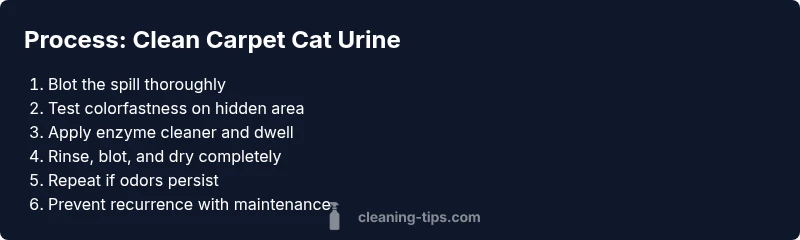
There are two practical pathways for removing clean carpet cat urine. Pathway A focuses on enzyme cleaners to maximize odor removal, while Pathway B offers a safe DIY approach for fresh stains when enzyme products aren’t readily available. Pathway A steps include blotting, applying enzyme cleaner, waiting the recommended dwell time, blotting again, and drying thoroughly. Pathway B uses cold water rinse, vinegar solution, baking soda, and a light scrub, followed by drying. Both paths require colorfast testing and thorough drying to avoid mold and mildew. The key is consistency: repeat the treatment if odors persist and confirm the carpet is completely dry before reoccupying the space.
Drying techniques for carpet and padding
Drying is often the most overlooked part of cleaning clean carpet cat urine. After treatment, remove excess moisture with towels, then use fans or a dehumidifier to expedite drying. If the stain extended into padding, consider lifting the carpet at the edges to improve airflow and inspect the padding for moisture. A dry environment prevents mold growth and reduces the risk of recurring odors. In many cases, a dedicated carpet dryer or dehumidifier speeds up the process and helps you achieve a thorough, lasting result when cleaning cat urine from carpet.
Handling set-in stains and odors
Set-in urine requires patience and multiple treatments. Start with a fresh application of enzyme cleaner, then re-treat after the recommended dwell time. For stubborn spots, you can apply a hydrogen peroxide solution (3%) after verifying colorfastness, then blot and rinse. Hydrogen peroxide can bleach some dyes, so always test first and avoid applying near edges or delicate fibers. If odor persists after several rounds, consider repeating treatments in 24-hour intervals to avoid oversaturation and to give enzymes time to work. Persistence is often the difference between a temporary cleaning and a lasting solution for clean carpet cat urine.
Preventing future accidents with maintenance
Preventing the recurrence of cat urine on carpet starts with proactive care. Keep litter boxes clean, accessible, and appropriately placed; ensure multiple boxes if you have a multi-cat household. Use washable throws and rugs in high-traffic areas to reduce direct exposure of carpets to urine, and vacuum regularly to remove tracked litter and pet dander that can irritate cats. Regular pet odor testing with safe cleaners can help you spot trouble early. A consistent cleaning routine reduces the chance of repeat incidents and fosters a healthier home environment for both humans and pets.
Safety tips and product cautions
When cleaning clean carpet cat urine, never mix cleaners, especially ammonia-based products with other cleaners, as this can generate hazardous fumes. Always read labels and test cleaners in a hidden spot first to prevent dye damage. Ventilate the room when using stronger cleaners and avoid prolonged exposure to chemical vapors. Wear gloves and avoid ingesting cleaners, especially around children and pets. If you notice skin irritation or a strong, persistent odor after cleaning, discontinue use and seek professional guidance. These safety precautions help you maintain a safe, clean home while tackling cat urine on carpet.
AUTHORITY SOURCES AND FURTHER READING
For readers seeking authoritative guidance, the following sources offer credible information on cleaning pet odors and carpet care:
- https://www.epa.gov
- https://extension.illinois.edu
- https://www.merckmanuals.com
The Cleaning Tips team emphasizes using pet-specific enzyme cleaners and following label instructions to ensure safe, effective results. This approach aligns with best practices from recognized public health and educational institutions and reinforces a practical, science-backed method for clean carpet cat urine.
Tools & Materials
- Enzyme-based pet stain cleaner(Choose a product labeled for cat urine; follow label directions.)
- White vinegar(Dilute 1:1 with water for DIY odor neutralizer; test colorfastness first.)
- Baking soda(Use to absorb moisture and odors after cleaning.)
- Hydrogen peroxide (3%)(Only after colorfastness test; can bleach some fabrics.)
- Mild dish soap(For light scrubbing with vinegar solution.)
- Clean white towels or microfiber cloths(For blotting and applying cleaners.)
- Spray bottle(Mist evenly over the stained area.)
- Soft-bristled brush(Gentle scrubbing to lift fibers.)
- Wet/dry vacuum or carpet extractor(Helps remove moisture and cleaning solutions.)
- Box fan or portable dehumidifier(Speeds up drying and reduces odor risk.)
- Latex or nitrile gloves(Protect hands during cleaning.)
- Color-safe patch test tool(Small hidden area to check dye stability.)
- Old towels or mops(For cleanup and blotting during the process.)
Steps
Estimated time: 2-4 hours (including drying)
- 1
Blot the urine
Place clean towels over the spot and press firmly to absorb as much liquid as possible. Do not rub; rubbing pushes urine deeper into the carpet fibers. Repeat with fresh towels until you see minimal moisture. This initial step reduces the amount of urine the deeper fibers must absorb.
Tip: Use several layers of towels and apply steady pressure for 15-30 seconds per pass. - 2
Test colorfastness
Apply a small amount of your chosen cleaner on a hidden area of the carpet to confirm there is no dye transfer. If color changes, stop and choose a less aggressive method. This protects the carpet while you pursue odor removal.
Tip: Always test in a discreet corner first, then proceed with the main area. - 3
Rinse with cold water
Lightly rinse the area with cold water to dilute residual urine. Blot again with towels to remove moisture. This step helps prepare the fibers for enzyme treatment or alternative cleaners.
Tip: Avoid hot water, which can set odors and stains. - 4
Apply enzyme cleaner
Spray the area generously with an enzymatic cleaner, covering the entire stain and a margin beyond. Enzymes attack the proteins in urine and help remove odors. Allow the cleaner to dwell for the recommended time on the label.
Tip: Do not wipe off immediately; give enzymes time to work as directed. - 5
Blot and rinse after dwell
Blot gently to remove cleaner and dissolved waste, then rinse with a small amount of cold water and blot dry again. This helps remove any spent cleaner residue that could attract dirt.
Tip: Keep a damp cloth handy for quick cleanup if foam appears. - 6
Treat with baking soda
Sprinkle baking soda over the damp area to absorb remaining moisture and odors. Let it sit for several hours or overnight if needed, then vacuum thoroughly.
Tip: Vacuum from multiple directions to lift embedded baking soda and debris. - 7
Consider hydrogen peroxide for stubborn spots
If colorfast, apply a small amount of 3% hydrogen peroxide, let it fizz for a moment, then blot and rinse. Do a second colorfast test if needed. Note that peroxide can bleach some dyes.
Tip: Always test both the carpet and padding before applying peroxide widely. - 8
Dry thoroughly
Use a box fan or dehumidifier to speed drying. Leave the area well-ventilated, and avoid stepping on the damp spot until it is completely dry. Preventing moisture buildup reduces mold risk and stubborn odors.
Tip: Aim for complete dryness within 24 hours; check with your hand to verify it feels dry. - 9
Repeat if necessary
If any odor or stain remains after the first treatment, repeat the enzyme cleaning cycle or switch to a second method. Persistence often resolves set-in urine when you stay consistent with the cleaning plan.
Tip: Limit applications at one time to avoid oversaturation. - 10
Prevent future incidents
Establish a routine litter box setup, choose location wisely, and maintain regular cleaning. Consider washable throws or rugs in high-traffic zones to protect carpets from recurring cat urine issues.
Tip: Keep litter boxes clean and accessible to reduce anxiety-driven marking.
Questions & Answers
What is the best cleaner for cat urine on carpet?
Enzyme-based cleaners are generally the most effective for breaking down urine residues and eliminating odors. Always follow the product label and test on a hidden area first.
Enzyme cleaners are usually the best choice for cat urine, used as directed and tested first on a hidden spot.
Can I use vinegar to remove cat urine odors?
Vinegar can help neutralize some urine odors, but it’s not a guaranteed solution and may affect colorfastness on some carpets. Test first and avoid mixing with chlorine cleaners.
Vinegar can help, but test first and avoid mixing with other cleaners.
Is hydrogen peroxide safe on all carpets?
Hydrogen peroxide can bleach or discolor some carpets. Test colorfastness before use and apply only a small amount to avoid damage.
Hydrogen peroxide can bleach some carpets, so test first and use sparingly.
How long should the carpet dry after treatment?
Drying times vary with room conditions, but aim for complete dryness within 24 hours using fans or a dehumidifier to speed up the process.
Most carpets dry within a day if you use fans or a dehumidifier.
What if the odor persists after multiple treatments?
If odor remains after repeated treatments, consider padding inspection or replacement and consult a professional cleaner for deeper remediation.
If the odor sticks around after several treatments, you may need professional help.
How can I prevent future urine odors?
Maintain clean litter boxes, provide multiple boxes for multi-cat homes, and use protective coverings or rugs in high-traffic areas to reduce carpet exposure.
Keep litter boxes clean and use protective coverings in problem areas.
Watch Video
The Essentials
- Act quickly to minimize damage from cat urine.
- Enzyme cleaners are usually most effective for odors.
- Test colorfastness before applying cleaners.
- Dry thoroughly to prevent mold and re-smell.
- Address litter box setup to prevent future incidents.