Clean Carpet Price in 2026: A Practical Guide
Discover the main factors behind clean carpet price, how pricing models work, and practical tips to compare quotes and save on carpet cleaning in 2026 with Cleaning Tips.


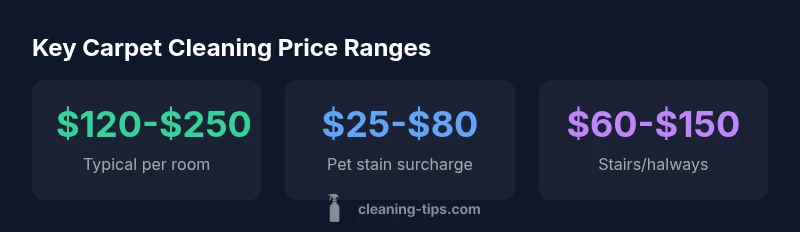
Clean carpet price varies by region and project scope. The typical per-room range is $120-$250, influenced by room size, carpet type, and add-ons like stain removal. According to Cleaning Tips, expect lower rates in rural areas and higher prices in cities. Always request a written, itemized quote and ask about stairs, pet stains, and deodorizing surcharges.
What drives clean carpet price in 2026
Pricing for carpet cleaning is not a one-size-fits-all number. The initial quote often hinges on room count and size, carpet fiber and construction, and the overall complexity of the job. Plush or natural fibers like wool can demand premium pricing due to specialized cleaning needs, while synthetic fibers may be a bit more forgiving. The condition of the carpet also matters: a heavily soiled area with embedded dirt, odors, or stains will typically require additional treatment products and longer service times, which raises the cost. Geographic location remains a major factor: urban markets usually see higher labor costs and demand-driven price variability. Finally, cleaners may bundle services (deodorizing, stain treatment, or furniture moving) that alter the final number. In short, the clean carpet price is a function of scope, material, access, and local market conditions.
In our analysis, region and scope dominate price variance, followed by carpet type and added services. Homeowners should expect that a basic cleaning in a standard room will be at the lower end of the spectrum, while large rooms, stairs, or specialty fibers push quotes upward. Clean carpet price is best estimated after a quick on-site or virtual assessment that accounts for these factors. Cleaning Tips emphasizes transparency, so a written, itemized quote helps homeowners compare apples to apples.
Pricing models used by professional cleaners
Most cleaners offer one of several pricing models: per-room, per-square-foot, flat-rate, or hourly. Per-room pricing is straightforward for standard layouts and is easy to compare, but it can obscure complexity in irregular spaces. Per-square-foot models are fairer for varied room sizes and awkward floor plans, yet they require precise measurements. Flat-rate pricing can appeal to homeowners seeking a known final cost, but it may not reflect deeper cleanings or extensive stain work. Hourly pricing is common for extensive odor remediation or moving furniture, but it can add unpredictability if work drags on. When you receive quotes, ask for the exact basis (per room, per sq ft, or hourly) and request a breakdown of all line items. Cleaning Tips recommends getting at least 3 bids to understand regional norms and ensure competitive pricing.
How room size and layout influence cost
Room size and layout significantly influence carpet cleaning price. Larger rooms typically cost more than small ones, but the per-square-foot rate may be lower in larger spaces because cleaners achieve economies of scale. Oddly shaped rooms or rooms with many corners can increase labor time, driving up the total. Hallways and stairs introduce additional charges because they require extra tools, more maneuvering, and sometimes specialized equipment. If a room has multiple carpet types or transitions (e.g., from a dense cut pile to a loop weave), technicians may need to adjust their approach, which can add to the price. For renters or homeowners on a budget, consolidating rooms into one service visit or aligning cleaning with building maintenance days can optimize the price.
Carpet material, padding, and installation considerations
Carpet type has a direct bearing on the cleaning cost. Synthetic fibers (nylon, olefin) clean comparatively easily and may carry lower costs than natural fibers (wool) that require gentler handling and specialized cleaners. The density and height of the pile affect agitation and rinse time; plush and high-pile carpets often demand longer treatment and more drying time. Padding materials beneath the carpet can influence cleaning results and may require extra attention if the pad has degraded. Additionally, installation details such as recent padding upgrades, tack strips, or seam work can affect access and labor. Cleaning Tips notes that these textile characteristics should be identified before quoting to avoid surprises, as fiber-specific products and methods can adjust pricing.
Add-ons and surcharges you’re likely to encounter
Expect add-ons beyond base cleaning in many quotes. Pet odor or stain treatment, deodorizing, enzyme cleaners for organic stains, and protective sealants can each add to the final bill. Upholstery cleaning or area rug treatment are sometimes offered as bundles, but may carry separate fees. If you regularly host or have kids and pets, considering ongoing maintenance contracts or seasonal cleanings can smooth costs. Ask whether add-ons are included in the base price or quoted separately, and request an itemized breakdown to understand where value is gained and where costs can be reduced.
Estimating costs: a practical worksheet
To estimate costs before booking, start with a room-by-room inventory. Measure each room’s square footage, note carpet type and age, and count stairs or hallways in need of service. List desired add-ons (stain treatment, deodorizing, or odor removal) and any furniture that must be moved. Multiply square footage by your chosen price per square foot, then add stairs and add-ons. Round up for contingency and seasonality. Use online calculators from reputable providers to sanity-check your estimates, and always ask for a written, itemized quote that mirrors your worksheet. Cleaning Tips suggests comparing a minimum of three bids to capture regional pricing norms and avoid overpaying.
How to compare quotes and avoid hidden fees
Comparison should go beyond the bottom line. Check whether quotes itemize: base cleaning, room count, square footage, stairs, add-ons, and required time. Look for disclosures about moving furniture, deodorizing, and stain removal. Ask about machine rental fees, travel charges, and minimum service fees that some providers impose. Watch for discount mentions that apply only to certain services or times. A good practice is to request quotes with a clear scope of work and a cancellation policy. Cleaning Tips notes that transparent, line-by-line estimates reduce the risk of hidden costs and misaligned expectations.
DIY vs professional cleaning: a cost-benefit view
DIY carpet cleaning can lower upfront costs, but results depend on equipment quality, cleaning solutions, and user technique. Professional cleaners typically deliver deeper extraction, odor control, and better stain removal, which can extend carpet life and reduce replacement costs over time. The decision hinges on your carpet’s age, traffic, and the presence of tough stains or odors. For homes with allergies or pets, the value of a deep, professional cleaning may outweigh the expense. Cleaning Tips recommends evaluating the long-term cost of DIY mistakes (re-soiling, residue) versus professional outcomes when budgeting for carpet care.
Regional differences and timing that affect price
Pricing varies by region due to labor costs, competition, and demand. Urban centers generally have higher rates, while rural areas may offer lower prices, albeit with longer travel times for service providers. Scheduling timing can also influence cost: off-peak seasons, weekday mornings, or multi-service visits might include promotional pricing or bundled discounts. If your calendar is flexible, aim to combine cleaning with related home services to unlock economies of scale. Cleaning Tips emphasizes timing and locality as essential determinants of final carpet price.
Maximizing value: coupons and scheduling tips
To maximize value, look for seasonal promotions, bundled services, and loyalty programs. Some cleaners offer discounts for first-time customers or for scheduling multiple rooms in a single visit. Ask about off-peak pricing and whether there are travel or equipment fees that can be waived by booking during a targeted window. Request a detailed, written estimate and compare with at least three competitors. Finally, consider maintaining a regular cleaning cadence to keep carpets in good condition and avoid expensive deep cleanings. Cleaning Tips highlights that consistent care reduces long-term costs while maintaining carpet aesthetics.
Pricing factors and typical cost drivers (Cleaning Tips Analysis, 2026)
| Pricing factor | Typical impact | Notes |
|---|---|---|
| Room size (sq ft) | Moderate to high depending on area | Smaller rooms cheaper per room; larger rooms scale |
| Carpet type/fiber | High | Natural fibers (wool) often cost more to clean than synthetics |
| Stairs and hallways | Moderate to high | Additional labor, access, and safety considerations |
| Stains/odors | Moderate to high | Pet odors and deep stains may require enzymes or deodorizing |
| Location/region | High in urban areas | Prices influenced by living costs and competition |
Questions & Answers
What is the typical price range for cleaning a standard room?
Prices commonly fall within a per-room range, but vary by room size, carpet type, and add-ons. Always ask for a written estimate before cleaning.
Most homeowners pay per room, but it's best to get a written quote that lists every service.
Do cleaners charge more for stairs or pet stains?
Yes, stairs and pet stains often incur extra charges due to accessibility and odor treatment. Check quotes before booking.
Yes—stairs and pet stains typically add to the price.
Should I choose per-room pricing or per-square-foot pricing?
Both exist. Per-room pricing is simple for standard layouts, while per-square-foot pricing can be fairer for irregular spaces. Compare quotes.
You can compare per-room and per-square-foot quotes to see what fits your space.
Are there hidden fees I should watch for?
Some cleaners add on for stain removal, deodorizing, or moving furniture. Get a breakdown and ask about minimum charges.
Ask for a line-by-line estimate to spot hidden fees.
Is DIY carpet cleaning cheaper than hiring a pro?
DIY can be cheaper upfront but may not remove deep stains or odors. Professional cleaning often restores carpet life and longevity.
DIY can save money, but professionals often deliver deeper cleaning and longer carpet life.
How often should carpets be cleaned?
Frequency depends on traffic, pets, and allergies. Common guidance is every 12-18 months, with more frequent cleanings for high-traffic homes.
Most homes clean carpets every year to year and a half, more if you have pets or kids.
“Pricing for carpet cleaning is highly variable, but a transparent, itemized quote helps homeowners avoid surprises.”
The Essentials
- Prices vary widely by room size and carpet type
- Add-ons for stairs, pet stains, and odors are common
- Ask for written quotes with itemized lines
- Compare quotes across cleaners to avoid hidden fees
- Consider scheduling during off-peak times for discounts