Clean Carpet Steam: A Practical How-To Guide
This comprehensive how-to explains how to use steam cleaning to refresh carpets, remove stains, and improve indoor air quality. Learn prep, safety, and step-by-step techniques for DIY steam carpet cleaning.


With this guide, you’ll master clean carpet steam to lift everyday dust, spills, and odors using a steam-cleaning machine or a professional service. When you follow proper technique, you can refresh most residential carpets in under 90 minutes and reduce manual scrubbing. This approach is safe for many fibers when used correctly.
What is clean carpet steam and how it works\n\nSteam cleaning uses hot water vapor extracted with a machine to lift soils from carpet fibers. The goal is to loosen dirt, lift grease, and refresh fibers without harsh chemical detergents. It is a popular option for homeowners and property managers seeking a low-chemical approach. When done correctly, the steam solution penetrates the carpet pile and is pulled away by the machine’s suction, leaving less surface residue. The Cleaning Tips team notes that steam cleaning is most effective on common residential fibers like nylon, polyester, and olefin when you use a carpet-safe solution and avoid over-wetting. For best results, always pre-vacuum, work in small sections, and follow the manufacturer’s instructions. This method also helps reduce everyday odors from pets or spills while keeping surface residue minimal.
Benefits of steam cleaning carpets\n\nSteam cleaning offers several advantages. It relies less on harsh solvents, supporting a healthier indoor environment and lower chemical exposure for kids and pets. The hot moisture loosens embedded soil, making extraction easier and often faster than heavy scrubbing. Steam cleaning can refresh carpet texture, restore pile height, and extend time between full replacements. It also helps with odor control by flushing out volatile compounds from fibers, which is particularly helpful in homes with pets or cooking odors. The method works across rooms, from living areas to bedrooms, and pairs well with a regular vacuuming routine. When performed with the right equipment and technique, steam cleaning delivers a clean appearance, improved odor control, and a refreshed space, while reducing reliance on strong detergents. Cleaning Tips recommends maintaining good ventilation during and after cleaning to promote faster drying and minimize humidity.
When steam cleaning makes sense: stains, odors, and allergens\n\nSteam cleaning is effective for everyday soils, greases, and many organic stains that haven’t set deeply. It also helps address pet odors and cooking smells by flushing out odor-causing molecules from carpet fibers. For allergy concerns, steam cleaning can reduce dust and dander trapped in the pile, especially when combined with thorough vacuuming. However, proteins, dye-fastness issues, or certain dye formulations can complicate outcomes; always check the carpet label and perform a spot test first. The Cleaning Tips team highlights that steam cleaning is not a substitute for stain prevention or carpet protection; it’s part of an ongoing care routine.
Carpet types and warranty considerations\n\nDifferent carpet fibers respond differently to moisture and heat. Nylon and Triexta usually tolerate steam cleaning well, while olefin or natural fibers may be more sensitive to over-wetting. Always consult the manufacturer’s care label. Some warranties require professional cleaning after specific intervals or with approved products; failing to follow guidelines could affect coverage. If you rent, verify approved methods with your landlord. When in doubt, use a mild, pH-balanced cleaner and test a small hidden area before cleaning the entire carpet.
Safety and prep: before you begin\n\nSafety comes first. Clear the area, remove small objects, and lift furniture using proper technique. Vacuum thoroughly to remove loose soil; store cleaning solutions out of reach of children and pets. Wear protective gloves to handle hot equipment, ensure good ventilation, and keep a window or door open if possible. Read the steam cleaner manual and follow its operating instructions. Use a carpet-safe cleaning solution compatible with your machine and carpet fiber, and avoid saturating the carpet.
Choosing between DIY steam cleaners and professional services\n\nDIY steam cleaners provide convenience and potential cost savings for routine cleans. They work well for light to moderate soil and allow scheduling on your own time. For deep cleaning, heavy staining, or delicate fibers (like certain wool blends), a professional service may yield better results and offer equipment designed for deeper extraction. Evaluate carpet size, traffic, stain history, and warranty requirements when deciding. Drying time can vary by room and ventilation, so plan around the project.
Common mistakes and how to avoid them\n\nCommon missteps include over-wetting, using the wrong cleaning solution, and rushing passes. Over-wetting invites mold and mildew, and improper moisture can damage some fibers or backing. Always test on a hidden area first, use overlapping passes, and allow thorough drying before foot traffic. Follow the machine’s maintenance guidelines and empty dirty water frequently to prevent redepositing soil. If renting equipment, inspect condition and replace brushes as needed to maintain extraction efficiency.
Quick maintenance and long-term care to keep carpets fresh\n\nAfter steam cleaning, blot excess moisture with towels and promote airflow with fans or a dehumidifier to shorten drying time. Place mats at entrances to reduce new soil, and vacuum regularly to maintain cleanliness between steam sessions. Schedule periodic cleaning based on foot traffic, pets, and family size to sustain a fresh appearance and extend carpet life. This approach aligns with Cleaning Tips recommendations and general best practices for home care.
Tools & Materials
- Steam carpet cleaner (upright or portable)(Choose model with strong suction and a clean water tank.)
- Carpet-safe cleaning solution or detergent(Check compatibility with your carpet fiber and follow manufacturer guidelines.)
- Vacuum cleaner with beater bar(Pre-clean to remove surface soil before steam cleaning.)
- Microfiber towels or absorbent rags(For blotting and moisture control after cleaning.)
- Fans or dehumidifier(Speeds up drying and reduces mold risk.)
- Protective gloves(Optional when handling hot equipment.)
- Soft brush or non-abrasive sponge(For light pretreatment of stains.)
- Spot stain pretreat spray(Use only if stain demands it and compatibility is confirmed.)
Steps
Estimated time: 60-90 minutes
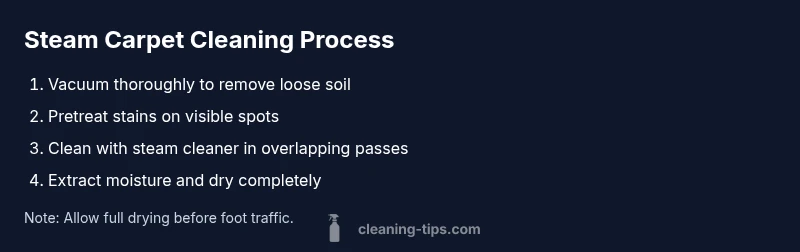
- 1
Vacuum the area thoroughly
Begin by vacuuming the entire carpet to remove loose dirt, dust, and grit. This is essential because dry soil can turn muddy during steam cleaning and reduce extraction efficiency.
Tip: Use a crevice tool to reach corners and under furniture edges. - 2
Pretreat noticeable stains
Apply a carpet-safe pretreatment to visible spots and allow it to dwell for 5–10 minutes before cleaning. This helps lift stubborn soils and improves extraction.
Tip: Always test colorfastness in an inconspicuous area first. - 3
Fill the machine and test a small area
Fill the cleaner with clean water and the recommended cleaning solution. Run a quick patch test on a hidden area to ensure colorfastness and fiber compatibility.
Tip: Check for any manufacturer cautions about heat settings or detergents. - 4
Clean in slow, overlapping passes
Work in manageable sections, guiding the nozzle with overlapping strokes. Keep the nozzle slightly above the carpet surface to avoid saturating the backing.
Tip: Move slowly enough to extract soils but not so slow you oversaturate the fibers. - 5
Rinse or extract remaining moisture
If your machine supports a rinse cycle, use clean water to flush residues; then perform additional extractions to remove moisture. Aim for minimal surface dampness but thorough soil removal.
Tip: Avoid leaving pooled water; it can lead to mold. - 6
Dry and ventilate
Open windows, use fans, or a dehumidifier to speed drying. Do not walk on the carpet until it is dry to the touch.
Tip: Place towels at the edges to wick moisture while drying.
Questions & Answers
Is steam cleaning safe for all carpet fibers?
Most modern carpets tolerate steam cleaning well, but always check the fiber type and the carpet manufacturer's instructions. For delicate fibers like certain wool blends or silk, consider professional cleaning.
Most carpets tolerate steam cleaning, but check fiber type and manufacturer guidance.
How long does it take to dry after steam cleaning?
Dry times vary with room humidity and airflow. In well-ventilated spaces, expect several hours for complete drying; in high humidity or poor ventilation, longer drying times may occur.
Dry times vary; ensure good airflow to speed up drying.
Can steam cleaning remove tough stains?
Steam cleaning can lift many stains, especially when paired with pretreatment. Some deep or set stains may require targeted spot treatments or professional service.
Steam helps with many stains, but some may need extra treatment.
Should I vacuum before steam cleaning?
Yes. Vacuuming removes loose soil and helps the steam cleaner extract more effectively, yielding better results.
Vacuum first to remove loose dirt.
Is DIY steam cleaning cheaper than professional services?
DIY can be cheaper for routine cleaning, but equipment costs, maintenance, and longer drying times may offset savings for some homes. Professionals may deliver deeper cleaning and faster results for heavy soiling or delicate fibers.
DIY can be cheaper, but consider equipment costs and drying time.
What safety precautions should I take?
Follow the machine’s manual, avoid over-wetting, ventilate the area, wear gloves as needed, and keep chemicals out of reach of children and pets.
Follow instructions, ventilate, and keep kids away.
Watch Video
The Essentials
- Vacuum first to remove surface soil
- Pretreat stains for better results
- Move slowly with overlapping passes
- Prioritize thorough drying to prevent mold