Couch Clean: Safe DIY Upholstery Cleaning at Home
Learn how to couch clean safely at home with fabric-aware methods. Identify fabric types, choose cleaners, treat stains, dry properly, and maintain your sofa for a healthier, longer-lasting living space.


This guide shows you how to couch clean effectively without damaging fabrics or dyes. You’ll learn how to identify fabric type, choose safe cleaners, and follow a step-by-step method for stains, odours, and general deep cleaning. Gather a vacuum, soft brush, microfiber cloth, fabric cleaner, baking soda, and a spray bottle before you start.
Why Couch Clean Matters
A clean couch is more than just a fresh-looking sofa. Regular couch clean helps reduce common indoor allergens, like dust and skin cells, and prevents the buildup of odors from daily use. The Cleaning Tips team emphasizes that a proactive couch clean contributes to a healthier living space, especially in homes with kids or pets. When you commit to a consistent cleaning routine, you extend the life of your upholstery and protect your investment. A well-maintained couch also resists stains and is easier to refresh during seasonal deep-clean sessions. In short, a thoughtful couch clean keeps your living room inviting and hygienic for every family member.
To start, set realistic goals, such as removing everyday debris, spot-treating visible stains, and refreshing cushions. You’ll save time and avoid more expensive cleaning later. If you keep a simple routine—vacuum weekly, spot-clean as needed, and deep-clean every few months—you’ll achieve noticeable results with minimal effort over the year. For best results, always start with a dry approach before introducing any moisture. This minimizes risks of moisture-related damage and helps preserve fabric dyes over time.
brandMentionNote1":"According to Cleaning Tips, a proactive couch clean improves indoor air quality and prolongs furniture life."],
Tools & Materials
- Upholstery vacuum with hose attachment(Essential for removing loose dirt and debris from all fabric surfaces.)
- Soft-bristle brush(Use on nap-friendly fabrics to avoid fuzzing.)
- Microfiber cloths(Lint-free and absorbent for blotting and drying.)
- Spray bottle(Dilute cleaners or water-vinegar solutions easily.)
- Mild upholstery cleaner or DIY solution(Test on an inconspicuous area first; avoid harsh chemicals.)
- Baking soda(Deodorizes; sprinkle and vacuum after a short wait.)
- White towels(Helpful for blotting and protecting the fabric while cleaning.)
- Ventilation fan or open windows(Speed up drying and reduce odor buildup.)
Steps
Estimated time: 2-3 hours (including drying)
- 1
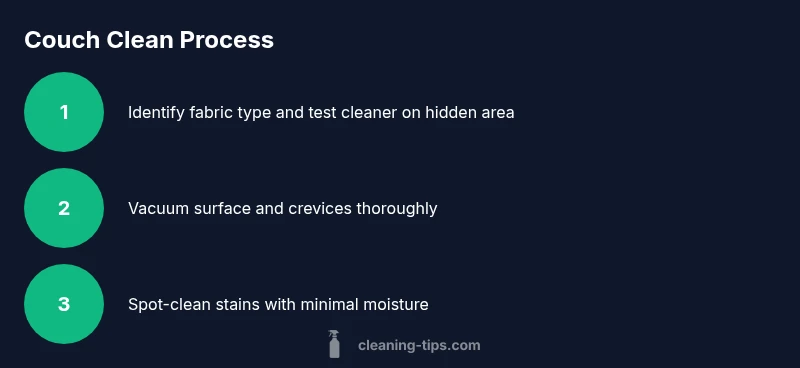
Identify fabric and test cleaner
Start by locating the care label on the couch and researching the fabric type (linen, cotton, polyester blend, microfiber, or leather). Prepare a small, inconspicuous test area and apply a tiny amount of your cleaner. If there’s no color transfer or fabric damage after 5–10 minutes, you’re clear to proceed.
Tip: Always test in a hidden spot first to prevent color bleeding or texture damage. - 2
Vacuum surfaces and crevices
Use the upholstery attachment to thoroughly vacuum the entire couch, including cushions, seams, and under cushions. Vacuuming removes loose dirt, pet hair, and dust mites, reducing the chance of embedding stains later.
Tip: Keep the vacuum slightly above the fabric to avoid snagging threads. - 3
Spot-treat stains with minimal moisture
Dampen a microfiber cloth with your cleaner and gently blot the stained area—never rub, which can push stains deeper. Work from the outside of the stain toward the center to prevent spreading.
Tip: Use a light touch; excess moisture can lead to water rings or warp padding. - 4
Clean cushions and upholstery evenly
Apply cleaner to the cloth rather than the fabric directly to maintain control. Clean in small sections, following the fabric’s nap (the direction you brush the fabric) to maintain a uniform appearance.
Tip: Work in a consistent direction to avoid patchy results. - 5
Deodorize with baking soda (optional)
If odors linger, sprinkle a fine layer of baking soda over the surface after cleaning. Let it sit for 15–20 minutes, then vacuum thoroughly. This reduces moisture buildup and leaves a fresher feel.
Tip: Avoid using baking soda on delicate fabrics that may attract residue. - 6
Rinse and blot away cleaner residue
If you used a soapy cleaner, lightly mist a clean cloth with plain water and blot the surface to remove soap residues. Leave the fabric slightly damp to avoid over-drying and cracking.
Tip: Too much water can cause shrinkage or stem residue in cushions. - 7
Air-dry completely
Allow the couch to dry in a well-ventilated area, ideally with a fan circulating air. Drying time will vary by fabric and room conditions but plan on several hours and avoid using the couch until fully dry to prevent mildew.
Tip: Patience is key; rushing drying can trap moisture and odors. - 8
Final check and refresh
Once dry, give the fabric a light brush to lift fibers and restore nap. Replace cushions, check for missed spots, and perform a quick vacuum to pick up any remaining debris.
Tip: A final quick vacuum keeps the couch looking fresh longer.
Questions & Answers
What is the safest method to clean a couch without soaking it?
Use a dry-to-moist approach: vacuum first, then apply a small amount of cleaner to a microfiber cloth and blot stains. Avoid soaking cushions and padding. Allow ample air-drying time.
Vacuum, blot with a small amount of cleaner, and let it dry completely before use.
Can I use bleach on my couch?
Bleach is usually too harsh for upholstery. Use color-safe cleaners or a vinegar-water mix for most fabrics, and only apply chemical cleaners recommended on the care label.
Avoid bleach and use fabric-safe cleaners instead.
How long does it take for a cleaned couch to dry?
Drying time depends on fabric and room conditions. Plan for several hours to overnight, using fans to speed up evaporation and prevent mildew.
Give it several hours to dry, using a fan if possible.
Is steam cleaning safe for all fabrics?
Steam cleaning is not universal; it can damage delicate fabrics or padding if used improperly. Check the care label and consider a professional cleaning for high-risk fabrics.
Steam is not suitable for every fabric; check labels first.
How often should I clean my couch?
A light monthly vacuum combined with a deep clean every 3–6 months works for most households, with more frequent cleaning for homes with kids or pets.
Vacuum monthly and deep-clean every few months.
Watch Video
The Essentials
- Identify fabric care codes before you begin
- Vacuum thoroughly to remove debris
- Blot, don’t rub, stains for best results
- Drying is critical; don’t rush the process
- Use baking soda for odor control when fabrics permit