Vinegar and Baking Soda to Clean Carpet: A Practical Guide
Discover how to clean carpet with vinegar and baking soda, with prep, step-by-step methods, stain guidance, and drying tips for fresh, safer results.


You can clean everyday carpet spills and odors with a simple duo: white vinegar and baking soda. This approach minimizes harsh chemicals while lifting stains when used in the right order. Follow the step-by-step method below for safe spot cleaning and lighter deep-clean results.
Why Vinegar and Baking Soda Are Popular Carpet Cleaners
White vinegar and baking soda are among the most common household cleaners for carpets because they are inexpensive, widely available, and generally gentle on many fiber types. According to Cleaning Tips, this duo can lift common spills, neutralize odors, and refresh fibers when used in the right order and with sensible limitations. They are not a cure-all; old, set-in stains or delicate fibers like wool require specialized products. This guide explains when to reach for vinegar and baking soda, how to use them safely, and how to manage expectations about stain removal and drying times. You’ll also learn about the chemistry behind the two agents and practical, step-by-step methods that fit into a busy homeowner or renter schedule. Throughout, we’ll reference best practices from reputable sources and emphasize patch testing, ventilation, and safe handling.
Safety and Prep: Testing and Materials
Before you reach for vinegar and baking soda, take a few safety and prep steps. Patch-test your carpet in an inconspicuous corner to confirm there’s no dye bleed or texture change, and allow the area to dry fully before treating a visible stain. Never mix vinegar with bleach or hydrogen peroxide, as dangerous gases can form. Gather your tools and materials in advance, so you won’t interrupt the cleaning mid-task. Vacuum the area to remove loose soil, then blot any excess liquid before applying cleaning solutions. This preparation reduces the chance of “wicking” stains back to the surface. According to Cleaning Tips, solid prep and proper ventilation are as important as the cleaning agents themselves for best results.
How the Combination Works on Carpets
Vinegar is a mild acid, and baking soda is a gentle alkali. When you apply them in sequence, the acid can help dissolve minerals and lift grime, while the baking soda helps lift and deodorize by reacting with acidic residues to form tiny bubbles that can dislodge particles. The result is fresher fibers and reduced odor if the carpet fibers aren’t deeply saturated. This approach is especially helpful for water-based spills, light stains, and everyday foot traffic soils. Remember that the chemical reaction is temporary and mostly surface-level; for set-in stains or deep pile soil, repeat treatments or use targeted products designed for the stain type, in combination with thorough drying.
Step-by-Step: Spot Cleaning with Vinegar and Baking Soda
Spot cleaning with vinegar and baking soda involves a few precise actions rather than a vague routine. Start with a small, visible stain to gauge response, then extend to adjacent areas if needed. Use a spray bottle for the vinegar solution, then sprinkle baking soda after blotting. The fizz can help lift residue, but avoid soaking the carpet fibers. After the fizzing subsides, blot with clean towels and allow the area to dry. Vacuum when completely dry to lift any remaining particles. This method works best for minor spills and odors, not for large-area deep-cleaning. Always ensure good ventilation and a dry environment to prevent mold growth.
Deep-Clean Method for Lightly Soiled Carpets
For lightly soiled carpets, you can scale up from spot cleaning to a light, whole-area approach. Mix a dilute vinegar solution (equal parts white vinegar and water) in a spray bottle and lightly mist the carpet surface. Wait 2–3 minutes for the solution to work on surface soils, then generously sprinkle baking soda over the damp area. The baking soda will fizz and lift grime as you gently blot with a clean towel. Allow the carpet to air-dry completely, then vacuum thoroughly to remove any powder residue. This method provides a refreshed feel and reduces musty odors without resorting to harsh chemicals.
Stain-Specific Guidance: Coffee, Wine, Mud, Pet Odors
Different stains respond differently to vinegar and baking soda. For coffee or tea stains, treat with a vinegar solution first to neutralize color components, blot, then apply baking soda to lift the stain and deodorize. Wine stains respond similarly, but act quickly; if the stain has set, a second pass with vinegar and baking soda may be needed. Mud requires a gentle, mechanical lift—start by blotting, then use a brush to lift dried soil after applying the vinegar solution and baking soda. Pet odors often benefit from multiple light treatments, followed by thorough drying and vacuuming to remove residual odor molecules. In all cases, test on a hidden patch first and ensure no dye bleed occurs.
Common Mistakes to Avoid and Alternatives
Avoid saturating the carpet with too much liquid, which can lead to longer drying times and mold growth. Never mix vinegar with bleach; the resulting gases are hazardous. Do not rely on these agents for delicate fabrics like wool or silk; for those fibers, use only products recommended for the material. If an odor persists after a vinegar and baking soda treatment, you may consider enzyme cleaners designed for pet stains or a mild carpet shampoo. For stubborn spots, you can use a dedicated stain remover following the manufacturer’s directions, then finish with a light baking-soda post-treatment to refresh the area.
Drying, Ventilation, and Odor Control
Air circulation is critical after any carpet cleaning, especially when using vinegar and baking soda. Open windows, turn on a fan, or use a dehumidifier to speed drying. Ensure the carpet is fully dry before replacing furniture to prevent watermarking. A quick check with a small, absorbent towel can help you judge moisture levels. If you notice lingering odors after the carpet has dried, a light re-treatment with a vinegar solution and baking soda followed by thorough drying can help, but avoid repeated daily applications. The right humidity level and airflow greatly influence the final result and reduce the risk of mold growth.
Maintenance and Cleaning Schedule
Integrate vinegar-and-baking-soda cleaning into a regular maintenance plan. For high-traffic areas, perform a light clean every 2–4 weeks to refresh fibers and manage odors. For bedrooms and low-traffic zones, monthly or quarterly maintenance may suffice. Always vacuum before applying any moisture-based cleaning method, and ensure you dry completely between sessions. Over-cleaning can wear down carpet fibers over time, so balance frequency with carpet type and manufacturer recommendations. Cleaning Tips recommends sticking to patch tests for any new cleaning routine and adjusting frequency based on household conditions like pets, kids, and climate.
Quick-Start Checklist for Using Vinegar and Baking Soda on Carpet
- Patch-test any cleaning solution on a hidden area first.
- Vacuum thoroughly to remove surface soil.
- Apply a dilution of white vinegar and water to the stain, blot, then sprinkle baking soda.
- Wait for fizzing to subside, blot again, and allow to dry completely.
- Vacuum the area once dry to remove powder residue and reveal refreshed fibers.
- Repeat as needed for light stains and odors; avoid saturating the carpet.
- Ensure good ventilation during and after cleaning to speed drying and reduce odor buildup. Finally, the Cleaning Tips team emphasizes consistent, patient application over rushed scrubbing to protect carpet fibers and prolong longevity.
Tools & Materials
- White vinegar (distilled)(Use 5-6% acidity; avoid scented vinegar)
- Baking soda(Powdered; ready to sprinkle after blotting)
- Clean spray bottle(For applying vinegar solution; label clearly)
- Bucket or bowl(For mixing if you need diluted solution)
- Clean white cloths or towels(For blotting; avoid dyed fabrics to prevent color transfer)
- Soft-bristled brush or old toothbrush(Gently lift stains without abrasion)
- Water(For diluting vinegar and rinsing/blotting)
- Fan or dehumidifier(Speeds up drying and prevents mold)
- Vacuum cleaner(Before and after treatment; removes dry residue)
Steps
Estimated time: 30-45 minutes (plus drying time)
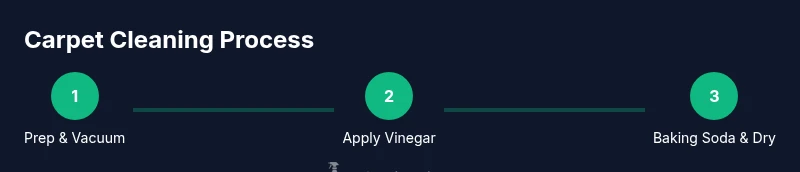
- 1
Prepare the area
Clear furniture, vacuum the area, and blot spills to remove excess liquid. This reduces soil and prevents spread during cleaning.
Tip: Vacuum first to lift dry soil; blot liquids gently to avoid pushing stains deeper. - 2
Apply vinegar solution
Mist a dilute white-vinegar solution onto the stain and surrounding area using a spray bottle. Keep the area damp but not soaking wet.
Tip: Aim for a light mist; avoid saturating the carpet to speed up drying. - 3
Let it sit
Allow the vinegar solution to work for 5–10 minutes to break down soils and odors.
Tip: Short dwell time minimizes fiber damage while maximizing stain release. - 4
Sprinkle baking soda
Sprinkle baking soda evenly over the damp area. The fizz helps lift remaining residues from the fibers.
Tip: Use a light, even layer to prevent powder buildup. - 5
Gently scrub
Lightly scrub with a soft brush to loosen embedded soils without damaging the pile.
Tip: Be gentle; aggressive scrubbing can fray fibers. - 6
Blot and dry
Blot with clean towels to remove moisture, then let the carpet air-dry completely. Vacuum once dry to remove residue.
Tip: Avoid walking on the area until fully dry to prevent new soil transfer.
Questions & Answers
Is it safe to use vinegar and baking soda on all carpet types?
Most common fibers tolerate this method, but it isn’t suitable for wool, silk, or delicate textures. Always patch-test first and follow manufacturer care guidelines for specialty carpets.
Generally safe for common synthetic carpets, but patch-test and avoid sensitive fibers.
Will vinegar and baking soda remove old, set-in stains?
This combo can help with fresh or mildly set stains and odors, but old, deeply set stains may require specialized products or professional cleaning.
It helps with fresh stains; for set-in stains, expect limited results and consider alternatives.
Does the vinegar smell linger after cleaning?
Vinegar odor typically dissipates as the carpet dries, especially with good ventilation. If you notice lingering scent, a light deodorizing rinse or fresh air can help.
The smell usually goes away as it dries, thanks to good airflow.
Can I use this method with a carpet cleaning machine?
Yes, you can use vinegar during routine cleaning and then perform a baking-soda post-treatment if the machine allows, but avoid chemical incompatibilities and always follow the machine’s guidelines.
You can, but follow your machine’s manual and keep liquids light.
What about wool or natural fiber carpets?
Wool and some natural fibers can be damaged by acidic solutions. Use only products approved for those fibers or consult the manufacturer before cleaning.
For wool carpets, check care labels and consider gentler cleaners.
How often should I clean with vinegar and baking soda?
Use this method for spot spills and routine refreshment in low-traffic areas; avoid overuse, which can wear fibers. For high-traffic zones, combine with regular vacuuming and occasional professional cleaning.
Use occasionally for refreshment, not as a sole long-term maintenance plan.
Watch Video
The Essentials
- Test patches before large-area use
- Apply vinegar first, then baking soda for best odor control
- Avoid over-wetting; ensure complete drying to prevent mold
- Use gentle blotting and brushing to protect fibers
- Vacuum after drying for a fresh, clean look