How to Clean Deodorant Stains from Shirts: A Practical Guide
Learn how to clean deodorant stains from shirts with practical pre-treatments, washing guidelines by fabric, and prevention tips. This guide from Cleaning Tips walks you through safe, fabric-friendly methods to restore clean, fresh shirts without damaging fibers.


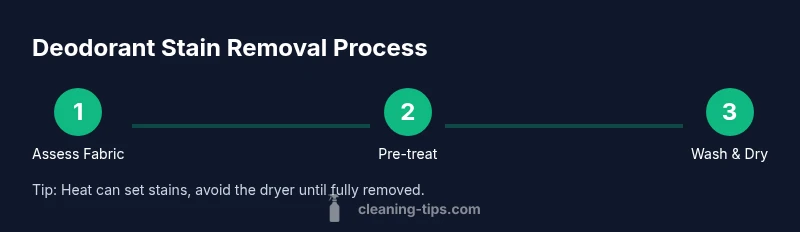
You can remove deodorant stains from shirts by using a targeted pre-treatment, then washing according to fabric care. Start with a stain remover or enzyme detergent, apply it to the stain and let it sit 5–10 minutes. Gently scrub with a soft brush, then launder in the recommended water temperature and check before drying.
What makes deodorant stains tricky on shirts
Deodorant stains on shirts are a common nuisance for both casual wearers and professionals. They form when aluminum-based antiperspirants interact with sweat minerals, leaving yellow or gray marks on cotton, blends, or synthetic fabrics. The right approach starts with quick action and a clear plan. According to Cleaning Tips, choosing a targeted pre-treatment and avoiding high heat can save time and protect fabric. Always check the garment’s care label before applying any chemical and tailor your method to the fabric type, since cotton, polyester, and delicate blends respond differently to cleaners. Quick action and the right product choice are often the deciding factors between a mark you can lift and one that stubbornly sticks around. Cleaning Tips’s guidance emphasizes starting with a safe test and using the gentlest method that actually works.
Tip: If the stain is on a delicate fabric, skip aggressive brushing and opt for blotting and gentle agitation instead.
Fabric types and stain behavior
Understanding fabric behavior helps you pick the safest method. Cotton is generally forgiving and responds well to pre-treatments and warm washes, but excessive scrubbing can wear fibers. Synthetic blends like polyester hold stains differently, often requiring gentler agitation and cooler water to prevent fiber damage. Delicates such as silk or rayon may need spot cleaning only or professional care. For the best outcome, run a quick spot test on an inconspicuous area to ensure colorfastness and avoid transferring dye. Across fabrics, the stain chemistry is different: aluminum salts in antiperspirants can bond with fibers in ways that make residues resistant to ordinary washing. By recognizing the fabric’s tolerance, you tailor your pre-treatment strength and washing temperature to minimize fiber stress and color loss.
Pre-treatment options
Pre-treatment options include enzyme-based stain removers, oxygen bleach (for whites and colorfast fabrics), white vinegar, and baking soda pastes. Enzyme cleaners break down proteins in sweat and deodorant residues, while white vinegar can neutralize mineral compounds. A baking soda paste helps lift stubborn marks when allowed to sit. Apply the chosen treatment, wait 5–10 minutes (or longer for set stains), then gently blot or brush to lift the residue. Rinse with cold water before washing to prevent setting the stain. For fabrics labeled colorfast, a small amount of hydrogen peroxide can be effective, but always test first and avoid it on wool or silk. Cleaning Tips recommends starting with the mildest option and increasing strength only if needed.
Washing method by fabric type
Washing method by fabric type: Cotton and blends respond well to a warm water wash with a regular detergent. Delicates require cold water and a gentle cycle; skip hot water and avoid chlorine bleach on non-colorfast fabrics. Always wash the stained shirt separately or with similar colors to avoid dye transfer. After washing, inspect the stain while the fabric is damp; heat from the dryer can set any remaining pigment, making the stain permanent. If the stain persists, repeat treatment rather than overwashing, which can lead to fiber stress and color fading.
Handling stubborn or set-in stains
If the stain remains after a standard wash, re-treat and rewash. A second application of stain remover or vinegar followed by a shorter soak can help. For white fabrics that tolerate it, a diluted bleach solution can be used according to the label, but never on colored fabrics. For particularly delicate shirts, consider professional cleaning or a fabric-safe spot cleaner designed for your garment type. Patience matters: set-in stains often respond to a couple of cycles rather than a single pass.
Prevention and maintenance
To minimize future deodorant stains, apply antiperspirant and let it dry fully before dressing. Consider switching to a clear or white formula to reduce pigment transfer. Regular pretreatment after workouts, and washing clothes promptly after wear, helps keep fabrics vibrant. Store shirts clean and catch stains early; a quick pre-rinse before washing can prevent buildup. Regularly check underarm areas during laundry to catch stains before they set, and keep a small pre-treatment kit handy for quick in-between-wears refreshing.
Tools & Materials
- Stain remover or enzyme laundry detergent(Choose an enzyme or oxygen-based formula; apply to stain for 5–10 minutes.)
- White vinegar(Use 5–10% vinegar solution to help break down residues.)
- Baking soda (optional)(Mix with water to form a paste for tough stains.)
- Old toothbrush or soft-bristled brush(Gentle, circular motions; avoid aggressive scrubbing.)
- White cloth or sponge(Blot and apply without transferring dye.)
- Cold water(Rinse before washing; hot water can set stains.)
- Regular laundry detergent(Use in the washing step as you normally would.)
Steps
Estimated time: 35-60 minutes
- 1
Check care label and prep supplies
Start by reading the garment care label to confirm water temperature limits and whether the fabric tolerates stain removers or bleach. Gather your stain remover, vinegar, baking soda (optional), a soft brush, and a clean cloth. This prep avoids surprises that could damage fibers.
Tip: Test any product on a hidden seam before applying to the stain. - 2
Test a hidden area and identify fabric type
Test any cleaner on an inconspicuous area to ensure colorfastness. Note the fabric type: cotton blends tolerate warmer washes, while synthetics may require cooler temps. Identifying fabric type informs how aggressively you treat the stain and what wash cycle to use.
Tip: If you’re unsure about the fabric, opt for cold water and a gentle cycle. - 3
Apply stain remover and let sit
Apply the stain remover directly to the deodorant stain and let it sit for 5–10 minutes. For set-in stains, you can extend the soak a bit longer but avoid letting cleaners sit too long on delicate fabrics. This step begins breaking down oils and residues.
Tip: Do not rub harshly; blot or light brush to push product into fibers. - 4
Treat with vinegar or baking soda if desired
If you prefer, apply a vinegar solution or a baking soda paste to the stain and allow it to work for 5–10 minutes. These options help neutralize minerals and lift residues, especially on white or colorfast fabrics. Rinse briefly before washing.
Tip: Always perform a spot test first, especially on colored fabrics. - 5
Wash according to care label
Wash the shirt in the recommended water temperature with your regular detergent. Cotton can often tolerate warm water, while synthetics may need cooler temps. Wash separately or with similar colors to avoid color transfer and re-staining.
Tip: Check the stain before drying; heat from the dryer can set any remaining pigment. - 6
Air-dry and recheck; repeat if needed
Air-dry after washing and inspect the stain while the fabric is damp. If any trace remains, repeat the pre-treatment and washing steps rather than blasting it with heat. Many deodorant stains respond to a second treatment.
Tip: Avoid the dryer until you’re sure the stain is fully gone.
Questions & Answers
What causes deodorant stains on shirts?
Deodorant stains form when aluminum-based antiperspirants mix with sweat minerals, leaving marks on fabrics. The exact appearance varies by fabric and formula.
Deodorant stains come from the combination of aluminum compounds and sweat minerals, which bind to fibers and leave marks that vary by fabric.
Can I remove deodorant stains from white shirts without bleaching?
Yes. Use enzyme-based stain remover or white vinegar followed by a warm wash. For whites, oxygen bleach is also effective when the fabric allows it.
You can remove these stains from white shirts with enzyme cleaners or vinegar, then wash. Oxygen bleach can help if the fabric tolerates it.
Is hot water better or worse for deodorant stains?
Hot water can set stains, especially with protein-based residues. Cold or warm water is usually safer, depending on the fabric label.
Hot water can set deodorant stains, so start with cold or warm water based on the fabric care label.
What should I do if the stain has set for days?
Re-treat with stain remover or vinegar and give the fabric a longer soak, then wash again. For stubborn stains, repeat the process rather than applying more heat.
If it’s been days, re-treat and soak again, then wash. Don’t rely on heat to fix it.
Can I use vinegar or lemon juice on deodorant stains?
Vinegar is a common pre-treatment; lemon juice is a milder alternative but can affect color in some fabrics. Test first and rinse well.
Vinegar works well as a pre-treatment. Lemon juice is optional but test first on colored fabrics.
Should I dry the shirt after treating the stain?
No. Drying with a heat source can set any remaining stain. Air-dry and re-check before using the dryer.
Avoid the dryer until you confirm the stain is fully gone; air-dry first.
Watch Video
The Essentials
- Act quickly to pre-treat deodorant stains.
- Choose fabric-appropriate methods and wash temps.
- Avoid heat until the stain is fully gone.
- Re-check after washing and air-dry to prevent set-in stains.