How to Clean Cloud Shoes: A Step-By-Step Guide
Learn how to clean cloud shoes safely and effectively with practical stain removal, fabric care, and drying tips to extend their life.


You can safely clean Cloud shoes at home by following a gentle, fabric-friendly routine: remove laces, rinse off loose dirt, spot clean the upper with a mild soap solution, clean the midsole, and air-dry away from direct heat. Always check the care label and test a hidden area first to avoid damage.
Why Cloud Shoes Benefit from Gentle Cleaning
According to Cleaning Tips, cloud shoes earn their reputation for comfort thanks to lightweight uppers and responsive midsoles. That combination also means the materials can show wear quickly if treated too roughly. Gentle cleaning preserves breathability, keeps colors vibrant, and protects the adhesive bonds that hold the sole to the upper. Regular, light maintenance reduces the need for intensive deep-clean sessions and helps prevent odor buildup. By treating your Cloud shoes with care, you extend their lifespan and keep them looking fresh for more wears. This approach aligns with general shoe-care best practices published by Cleaning Tips in 2026, which emphasize mild cleaners, minimal soaking, and air-drying over direct heat.
- Practical benefit: gentler cleaning minimizes material distortion and color fading.
- Common mistake: using harsh chemicals that can weaken fabrics and reduce elasticity.
- Quick win: perform a quick wipe-down after every few uses to prevent deep-set stains.
The takeaway is simple: small, regular cleanings outperform heavy, infrequent scrubs. Adopting a light-touch routine now saves more effort later and keeps your Cloud shoes comfortable and supportive.
Understanding Materials: Uppers, Liners, and Soles
Cloud shoes often feature a mix of mesh, knit panels, and synthetic overlays with foam or plastic midsoles. Each material responds differently to cleaning, so a one-size-fits-all approach can cause discoloration or damage. Mesh uppers are breathable and stain-prone, so you should avoid soaking and opt for spot cleaning with a mild solution. Knit panels look softer but can snag if you scrub too hard, so use a soft brush and gentle strokes. Synthetic overlays provide structure but may degrade when exposed to strong cleaners; rely on mild soap and a damp cloth. The outsole is typically more durable, but it can pick up dirt and grime that transfer to fabrics if not addressed. When you know the material makeup, you can adjust pressure, tools, and cleaners to preserve texture and color while removing dirt effectively. Overall, gentleness, patience, and testing in an inconspicuous area are your best strategies for long-lasting results.
- Pro tip: work in small sections to avoid spreading dirt onto clean areas.
- Note: keep cleaners away from any heat-activated logos or reflectors that may melt.
Prep Work: Laces, Debris, and Spot Testing
Before you start cleaning, set up a clean workspace. Remove laces and set them aside for separate washing, then shake or brush out loose dirt from the outsole and upper to prevent mud from spreading. Inspect a hidden area of each material (inside the tongue or beneath a small overlay) to check colorfastness, and rinse a tiny patch with your chosen solution. If the color transfers or the fabric shows signs of running, switch to a milder cleaner or perform a more conservative test. Laces can collect dirt and odors, so washing them separately in warm water with a mild detergent is a simple way to refresh the entire pair. Using a dedicated microfiber cloth for testing helps you gauge whether the solution is safe for the material. By completing prep steps, you minimize surprises during cleaning and protect the shoe’s appearance.
- Pro tip: line a tray with a towel to catch drips and keep your workspace tidy.
- Warning: never brush aggressively against seams or labels; damage can worsen over time.
Cleaning the Upper: Fabric, Mesh, and Synthetic Uppers
Cloud shoe uppers are most often mesh or knit, with occasional synthetic overlays. For fabric or mesh uppers, mix a small amount of mild detergent with cool water and apply with a soft sponge or microfiber cloth. Gently blot rather than scrub to avoid fuzzing or pilling. If a stain persists, add a touch more solution and let it sit briefly, then blot again. For synthetic overlays, use the same mild solution but avoid soaking; focus on a damp cloth and light wiping to preserve color and finish. If your Cloud shoes have more delicate fibers or darker colors, test the solution in a hidden area first. After cleaning, pat dry with a clean towel and let air-dry away from direct sun to prevent shrinkage or color changes.
- Pro tip: use a soft toothbrush to address stubborn dirt at the edges of mesh panels, working in small circles.
- Warning: do not submerge the shoes in water; excessive moisture can weaken adhesives.
Cleaning the Midsole and Outsole
The midsole and outsole collect most of the grime, especially around the edges where dust tends to accumulate. Use a damp microfiber cloth to wipe away surface dirt, then switch to a soft brush for crevices. For tougher marks, a mild soap solution applied with a brush is usually sufficient; avoid harsh solvents that can degrade foam. Rinse the cloth frequently to prevent rubbing dirty water back onto the shoe. Dry quickly with a clean towel and place the shoes on a rack to air-dry. Keeping the midsole free of residue maintains traction and prevents dirt from transferring to uppers during wear. Be mindful of the sole’s cushioning and any color accents—excess water can seep into gaps and cause staining if allowed to sit.
- Pro tip: when brushing, use short, light strokes to avoid shredding the upper materials.
- Warning: avoid aggressive scrubbing that could gouge foam or crease the midsole.
Drying, Deodorizing, and Maintenance
Drying is a critical step. After cleaning, stuff the toe area gently with paper towels to help maintain shape and absorb moisture, then set the shoes on a drying rack in a well-ventilated area away from direct sunlight or heat sources. Direct heat can warp midsoles and damage adhesives, so avoid hair dryers or heaters. If odor is an issue, you can lightly sprinkle baking soda inside the shoe and let it sit for a few hours before shaking it out. Routine maintenance, such as wiping after workouts and storing in a cool, dry place, reduces buildup and lengthens the time between deep cleans. Consider rotating pairs to extend their life and prevent over-cleaning any single pair. A simple, consistent routine yields the best results over time.
- Pro tip: keep a small cleaning kit in your home entryway for quick touch-ups after outdoor use.
- Warning: never leave damp shoes in a sealed bag or container; moisture promotes mold.
Troubleshooting Common Issues
If colors appear faded after cleaning, it may be due to an overly concentrated solution or excessive rubbing. Dilute cleaners more and test again on a hidden area. For persistent stains, repeating a gentle wipe-down with a fresh solution prevents setting the stain deeply. If the insides smell off after drying, consider an odor-control rinse (water with a splash of white vinegar) and a thorough air-dry. If the shoe halves remain stiff or sticky after cleaning, check the labels to ensure you did not apply a cleaner that interacts with the materials. Remember that some fabrics and coatings resist certain cleaners; when in doubt, revert to plain water and a microfiber cloth. With patience and careful technique, most issues can be resolved without professional help.
- Pro tip: document your method for future cleans to reproduce success.
- Warning: avoid using bleach or ammonia-based cleaners on colored uppers.
Care Routine for Longevity
The best way to keep Cloud shoes looking new is to establish a light, regular cleaning habit. After each wear, remove loose dirt with a quick brush or wipe, then re-lace and store in a cool, dry place. Establish a monthly deeper clean when you see noticeable grime build-up, focusing on uppers and soles with a gentle approach. Use a separate cleaning cloth for interior areas to prevent cross-contamination of odors. If you wear the shoes in muddy or wet conditions, repeat the cleaning routine sooner, but always with mild cleaners and cold water. This discipline minimizes material wear and keeps your Cloud shoes comfortable longer.
- Pro tip: a protective spray suited to the shoe’s materials can add a small layer of defense.
- Conclusion note: The Cleaning Tips team recommends following these steps for best results and to preserve the shoe’s materials and comfort.
Tools & Materials
- Soft-bristle brush(for loosening dirt without scratching uppers)
- Mild detergent or gentle soap(dilute in cool water)
- Microfiber cloth(for wiping and blotting)
- Old toothbrush(for tight crevices)
- Laces (for separate washing)(wash in warm soapy water)
- Water (cool)(for rinsing and dilution)
- Drying rack or clean towel(air-dry away from heat)
- Baking soda (optional)(to deodorize after cleaning)
Steps
Estimated time: 30-45 minutes
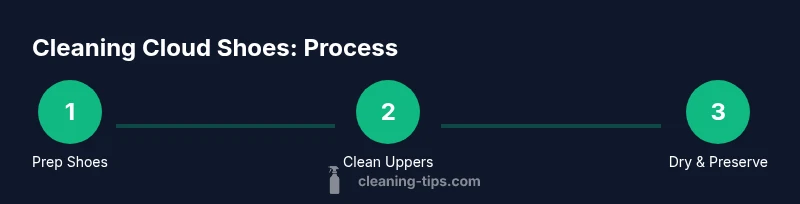
- 1
Prep the shoes
Remove laces and debris, set them aside for separate cleaning, and inspect the uppers for stains or color issues. This prevents soap from staining or spreading to clean areas.
Tip: Keep everything organized on a clean workspace to avoid misplacing components. - 2
Spot-test and prepare solution
Test a hidden area with a small amount of mild solution to ensure no color bleed. If safe, mix a small amount of detergent with cool water for spot cleaning.
Tip: A light solution is all you need for most Cloud shoes. - 3
Clean uppers gently
Dampen a microfiber cloth with the solution and blot or lightly rub the upper in small sections. Avoid soaking or aggressive scrubbing to protect fabric and adhesives.
Tip: Use short, gentle strokes and work in a grid pattern for even coverage. - 4
Address the midsole and outsole
Wipe the midsole with a damp cloth, then use a soft brush for crevices. Rinse the cloth and wipe away any soap residue to prevent residue from transferring to uppers.
Tip: Keep the brush dry between sections to avoid spreading moisture. - 5
Rinse and blot
Lightly wipe down finished surfaces with a clean damp cloth to remove soap film. Blot with a towel to remove standing moisture.
Tip: Resist the urge to fully rinse under running water—excess water can damage adhesives. - 6
Dry and reassemble
Air-dry on a rack away from sun or heat. Re-lace the shoes once completely dry and store in a cool, dry place.
Tip: Use a shoe tree or rolled paper to maintain shape during drying.
Questions & Answers
Can I submerge Cloud shoes in water?
Submerging cloud shoes is not recommended, as excessive moisture can weaken adhesives and affect fit. Use a damp cloth and spot cleaning instead.
Submerging is not recommended; use spot cleaning with a damp cloth.
What cleaners are safe for Cloud shoes?
Use a mild detergent or sneaker-cleaning soap diluted in cool water. Avoid harsh chemicals, bleach, or solvents that can damage fabrics and adhesives.
Use a mild detergent with cool water, avoid harsh chemicals.
Can I machine wash Cloud shoes?
Machine washing is generally not advised because it can loosen adhesives and distort shapes. If you must, place in a protective bag on a gentle cycle and air-dry completely.
Machine washing is usually not recommended; if you must, use a delicate cycle and air-dry.
How long does it take to dry?
Drying times vary with humidity and airflow but expect several hours to overnight for complete air-drying. Avoid direct heat sources during drying.
Drying can take several hours to overnight; keep away from heat.
Can I deodorize Cloud shoes safely?
Yes. Lightly deodorize with baking soda inside the shoe after cleaning and airing out, then shake out before wearing. This can reduce odors without chemicals.
Yes—baking soda can help deodorize after drying.
Should I remove insoles before cleaning?
If removable, take out insoles and clean them separately with mild solution. If not removable, clean around them carefully to avoid soaking the interior.
Remove insoles if possible and clean separately.
Watch Video
The Essentials
- Begin with dry debris removal before cleaning
- Use gentle cleaners and cold water for best results
- Air-dry completely away from heat sources
- Test a hidden area first to prevent color loss