Suede How to Clean: A Practical Guide
Learn proven methods to clean suede without damaging nap or color. This step-by-step guide covers water stains, oil stains, nap restoration, and protective care for jackets, shoes, and bags.


By following these steps, you will learn how to clean suede safely without ruining nap or color. This guide covers common suede items like jackets, shoes, and bags, and explains when to use water, erasers, or specialized cleaners. You'll learn stain-specific methods, pretreatment, drying, and storage tips to extend suede's life. The Cleaning Tips team provides practical, tested techniques you can apply at home.
Why suede care matters
Suede is a delicate material that adds a luxurious look to jackets, shoes, and bags, but it shows scuffs and water marks more readily than full-grain leather. Proper care preserves color, nap, and texture, helping items stay presentable longer. For homeowners and renters, learning suede care is a practical skill that saves money and extends wardrobe life. If you’re wondering suede how to clean, start with a soft brush, a clean cloth, and a plan that matches the stain type. The Cleaning Tips team emphasizes that gentle, heat-free methods are usually best, avoiding harsh soaps or soaking. In addition to cleaning, regular upkeep—brushing after each wear, storing away from direct sun, and applying a protective spray—can dramatically reduce staining and water marks. This article walks you through stain-specific strategies, nap restoration techniques, and post-cleaning care so you can confidently tackle suede on jackets, shoes, or bags.
Understanding suede and nap
Suede is made from the underside of animal hide, giving it a soft, velvety nap that shifts in different lighting. The nap direction influences how stains appear and how a brush lifts fibers. Nubuck is a related variant with a slightly different texture and resilience. When you ask suede how to clean, remember that the nap is sensitive to moisture and abrasion. Always brush in one direction to lift particles rather than grind dirt deeper, and work on a clean, padded surface to prevent fabric snagging. With patience and the right tools, you can restore the look of most suede items without professional help. Cleaning Tips notes that routine maintenance, including light brushing after wear and a protective spray, makes future cleaning easier and more effective.
Tools and cleaning products you can trust
A dedicated suede toolkit makes cleaning safer and more predictable. Start with a soft suede brush (crepe brush) to lift nap; a suede eraser for scuffs and dry stains; and a clean microfiber cloth for blotting and buffing. Optional items include a small amount of white vinegar for stubborn moisture marks and a light, neutral cleaner designed for suede. Avoid household solvents, aggressive cleaners, or soaking the fabric. After cleaning, apply a suede-protecting spray to help repel water and prevent future stains. This combination is typically sufficient for routine care and common accidents, keeping the material supple and evenly colored. The Cleaning Tips team recommends keeping your kit together so you can respond quickly to minor stains before they set.
Preparing the suede: test, dry, and plan
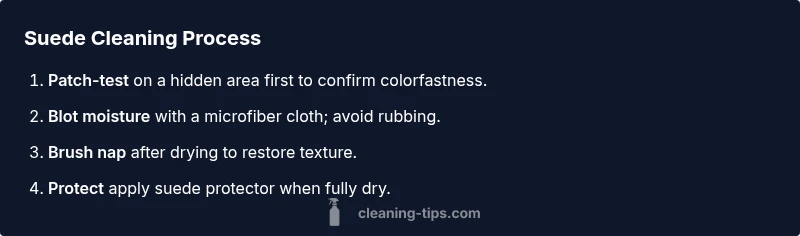
Preparation is the most important part of suede cleaning. Start by testing any cleaner on a hidden area to confirm colorfastness and nap response. If a patch shows no discoloration after 24 hours, you’re likely safe to proceed. Lay the item on a flat, padded surface and keep it away from heat sources during the process. For water-related stains, blot gently with a dry microfiber cloth to remove excess moisture, then set the item aside to air-dry in a well-ventilated area. Plan your approach based on stain type, fabric item (shoe, jacket, or bag), and the degree of soiling, so you don’t over-treat or over-wet the material.
Cleaning methods by stain type: Water-based stains
Water-based stains on suede require careful handling to avoid blooming or water marks. Start by blotting up as much moisture as possible with a clean microfiber cloth. Do not rub, which can spread the stain and distort the nap. Let the area air-dry completely, then brush the nap back into alignment with a suede brush using light, even strokes. If the stain remains, you can dampen a corner of the cloth slightly and re-blot in a gentle, circular motion, followed by thorough drying. Always keep the cloth nearly dry rather than soaking the suede. After drying, briskly brush across the nap to restore texture and even color.
Cleaning methods by stain type: Oil-based stains
Oil-based marks pose a bigger challenge because liquids can penetrate the nap quickly. Begin by gently blotting to absorb excess oil with a clean microfiber cloth. Do not press hard, which could push the oil deeper. Consider applying a small amount of cornstarch or talc to absorb residual oil, then brush away powders after 15-30 minutes. For persistent marks, use a suede eraser to lift the stain in short, light strokes, followed by brushing to restore nap. If oil stains persist, repeat the process or consult a professional cleaner for risk-free removal.
Suede on different items: shoes, jackets, bags
Different suede items respond to cleaning methods differently. Shoes may tolerate a slightly damp method with extra brushing to blend the nap, while jackets require more cautious treatment to avoid stiffness in seams. Bags often collect dirt on seams and corners; apply minimal moisture and focus on brushing to area by area. Always work in a clean, well-lit space and pause to inspect nap direction after each pass. If color fading becomes evident, stop and re-evaluate with a patch test. Cleaning Tips recommends tailoring your approach to the item’s structure and sensitivity to moisture.
Drying, nap restoration, and post-clean care
Drying is a critical phase. Avoid direct sunlight or high heat; instead, air-dry at room temperature in a ventilated area. Once dry, restore nap by brushing in one direction, then flip and brush the opposite direction to achieve uniform texture. If nap remains uneven, lightly mist the area with a tiny amount of water on a clean cloth and brush again to encourage even re-alignment, then let dry. Finally, apply a suede protector to help resist future stains and water exposure. The goal is to maintain a soft, even nap that reflects light consistently.
When to seek professional help
Some stains are stubborn or deeply set, such as ink, dye transfer, or heavy oil that has soaked into the fibers. If you are unsure about the stain or the item is valuable, frayed, or delicate, it’s wise to consult a professional cleaner who specializes in suede. A qualified cleaner can assess nap integrity and colorfastness and may use techniques not advisable for home use. The Cleaning Tips team suggests using professional services when the risk of permanent damage outweighs the cost of cleaning.
Preventative care and storage tips
Prevention is easier than remediation. Brush suede weekly to keep the nap aligned and remove surface dust. Apply a protective spray designed for suede after cleaning and to protect against water and future stains. Store suede items in a cool, dry place away from direct sun, and use breathable garment bags to prevent moisture buildup. For shoes, consider storing with silica gel packs to reduce humidity. These practices help suede maintain its texture and appearance over time, reducing the frequency of intensive cleaning.
Common mistakes to avoid and quick fixes
Avoid soaking suede or using aggressive household cleaners that can strip color or damage the nap. Do not rub stains aggressively; this can push grime deeper into fibers. Never blast heat at the suede to dry faster, as it can warp or stiffen the material. Instead, use gentle brushing and air-drying, followed by nap restoration with a suede brush. If a stain reappears after cleaning, repeat the appropriate method rather than trying a harsher technique. Quick fixes include blotting, light brushing, and applying a protective spray after the item is completely dry.
Tools & Materials
- Suede brush (crepe brush)(Lifts nap and blends fibers; use in one direction)
- Suede eraser(Removes dry scuffs and light stains)
- White microfiber cloth(Blotting and buffing without color transfer)
- Protective suede spray(Apply after cleaning to repel water and stains)
- Cornstarch or talc(Absorb oil; use sparingly and brush away after 15-30 minutes)
- Mild, suede-safe cleaner or white vinegar (optional)(Use only if recommended by patch test outcome)
- Soft sponge (optional)(Support moisture control on large surfaces)
Steps
Estimated time: 60-90 minutes active work, plus 2-24 hours drying time depending on stain and air conditions
- 1
Gather tools and prep
Collect all items from your suede cleaning kit and lay a protective cloth under the workspace. Inspect the item for stains and note any areas that look fragile. This setup reduces mess and prevents accidental damage.
Tip: Have a clean, dry towel ready to blot any moisture immediately. - 2
Patch-test cleaners
Test any product on a hidden area first to confirm colorfastness and nap response. If the patch shows no changes after 24 hours, you’re safe to continue. If there is discoloration, stop and choose a milder method.
Tip: Use a flashlight to inspect color changes that are hard to see under normal lighting. - 3
Blot moisture from water stains
For water stains, blot gently with a dry microfiber cloth to remove excess moisture. Do not rub or press hard. Allow the area to air-dry completely before brushing the nap back into place.
Tip: Brush lightly in the direction of the nap after drying to prevent a flat appearance. - 4
Restore nap after drying
Once dry, use a suede brush to lift and blend the nap. Move the brush in a single direction, then switch directions to even out texture. Repeat as needed until the nap looks uniform.
Tip: Keep the brush at a slight angle to avoid compressing the fibers. - 5
Treat oil-based stains
Absorb oil with cornstarch or talc if present; leave for 15-30 minutes, then brush off. If stain remains, use the suede eraser with light pressure in short strokes and re-brush.
Tip: Avoid applying additional liquid; dry absorption is safer for nap integrity. - 6
Protect and store
After cleaning and drying, apply a suede protector if you have one. Store items in a dry, cool place away from sun to maintain color and nap. Periodic brushing helps prevent future buildup.
Tip: Reapply protector after a cleaning cycle for ongoing protection.
Questions & Answers
Can I clean suede at home?
Yes, most suede stains can be treated at home using gentle methods, but some items may require professional care.
Yes, you can clean suede at home with care, but for tricky stains, consider a pro.
Should I use water on suede?
Minimal moisture can be used for some stains, but never saturate the material. Always blot and air-dry thoroughly.
Only a little moisture, never soaking, and always dry completely.
What products are safe for suede cleaning?
Use suede-specific cleaners or a white eraser for dry marks. Avoid household solvents and regular soaps.
Stick to products made for suede care; avoid regular cleaners.
Can I machine wash suede?
No. Machine washing can ruin suede texture and color; spot-cleaning is the safer route.
Don’t machine wash suede; stick to gentle spot-cleaning.
How do I restore nap after cleaning?
Brush the nap while damp or after it dries, then re-brush in multiple directions to regain even texture.
Brush gently to lift the nap back into place.
When should I seek professional help?
If stains are ink-based, the item is delicate, or color is fading, a professional suede cleaner is advisable.
Consider a pro for stubborn stains or valuable items.
Watch Video
The Essentials
- Test colorfastness before cleaning any suede item.
- Blot, don’t rub, water-based stains to preserve nap.
- Use suede-specific tools and avoid harsh household solvents.
- Dry thoroughly and brush to restore the nap after cleaning.
- Protect suede with a dedicated spray to reduce future stains.