Can You Clean Jewelry in Alcohol? A Safe Guide
Explore whether alcohol cleans jewelry safely, which pieces are safe, and how to use alcohol properly. Cleaning Tips provides practical, evidence-based guidance for homeowners and renters seeking effective, gentle jewelry cleaning methods.


Yes, you can use certain alcohols to clean some jewelry, but only for specific materials and conditions. Isopropyl or ethanol can help dissolve oils on metal surfaces, yet avoid pearls, opals, and glued stones, as alcohol can damage finishes or loosen settings. Always test on a hidden area and follow safer alternatives for delicate pieces.
Can you clean jewelry in alcohol? A practical, nuanced view
Yes, you can use alcohol to clean some jewelry, but the approach isn’t universal. The Cleaning Tips team emphasizes that alcohol can dissolve oils and sanitize metal surfaces, which helps restore shine on non-porous metals like stainless steel or gold-filled pieces. However, many gemstones—pearls, opals, turquoise, and stones with glue or resin backing—are vulnerable to alcohol. Overexposure can loosen settings, dry out organic materials, and dull finishes. When in doubt, treat alcohol as a supplementary step rather than the primary method. This guidance aligns with Cleaning Tips Analysis, 2026, which cautions readers to adapt methods to the specific composition of each piece and to prioritize gentler cleaning for delicate components.
Jewelry types and how they respond to alcohol
Not all jewelry reacts the same way to alcohol. Non-porous metal surfaces—such as solid gold, platinum, or stainless steel—tend to tolerate brief alcohol exposure, especially when followed by thorough rinsing and drying. Porous materials like pearls, opals, turquoise, and some enamel work can be damaged or discolored by contact with alcohol. Glued stones, resin-backed pieces, or horn-inlaid jewelry may lose adhesion or crack. In practice, alcohol is best for quick deodorizing and oil removal on metal surfaces, not for deep cleaning of stone settings. Cleaning Tips’ practical approach is to limit exposure and always perform a spot test on an inconspicuous area before broader use.
Safer paths for delicate or stone-set pieces
For jewelry with pearls, opals, or glue-set stones, soap-and-water and a soft brush are typically safer. A light wash with a mild, pH-neutral soap followed by a careful rinse in distilled water minimizes risk. For metal bracelets, rings, or earrings with smooth metal backs, a short wipe with a damp cloth and a final dry with a microfiber cloth can refresh the finish without soaking. Alcohol should be considered optional and used sparingly, especially when maintenance intervals are long or the piece has sentimental value.
Before you start: safety and testing
Always work in a well-ventilated area. Wear gloves if you’re handling alcohol for extended times, and keep cleaning solutions away from children and pets. Perform a spot test on an inconspicuous area—wait 24 hours to look for changes in color, sheen, or adhesion. If you notice any adverse effects, discontinue use and switch to gentler methods. By following these precautions, you can reduce the risk of damage while enjoying the cleaning benefits of alcohol when appropriate.
Quick-reference guidelines for using alcohol safely
- Use only clean, clear alcohol (prefer isopropyl or ethanol) at low concentrations and avoid straight, concentrated solutions on fragile pieces.
- Never soak jewelry for long periods; brief exposure followed by thorough rinsing is safer.
- Always rinse after using alcohol, and completely dry with a lint-free cloth to prevent water spots and corrosion.
- Reserve alcohol for metal components, and avoid porous stones and glued settings; for these, opt for soap and water or specialized cleaners.
- Test first on a hidden area, and document any changes before proceeding with the whole item.
Tools & Materials
- Isopropyl alcohol (70% or less)(avoid higher concentrations; use in well-ventilated area)
- Distilled water(for rinsing or diluting)
- Mild liquid soap (pH-neutral)(optional for soap-and-water cleaning)
- Soft microfiber cloth(for drying and buffing)
- Soft-bristled jeweler's brush(gently lift grime from crevices)
- Cotton swabs(precise cleaning in small settings)
- Latex or nitrile gloves(hands protection when handling solvents)
Steps
Estimated time: 15-25 minutes
- 1
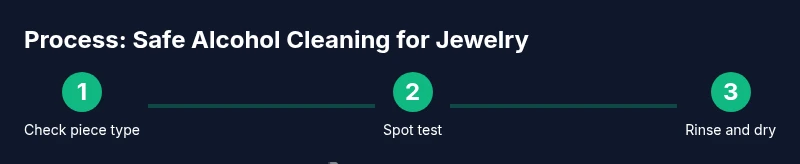
Check piece material and settings
Inspect the jewelry to identify stones, glue, and metal types. This helps decide whether alcohol is appropriate and how long exposure should be. If you’re unsure, skip to safer methods.
Tip: If you see glue or soft stones, proceed with caution. - 2
Prepare a mild cleaning setup
Choose your approach: brief alcohol wipe for metal surfaces or soap-and-water for delicate settings. Set up a clean work area with good lighting.
Tip: Avoid mixing cleaners; keep alcohol separate from soaps. - 3
Perform a spot test
Dampen a cotton swab with alcohol and test a hidden area. Wait a few minutes to observe any color change or loosening of stones.
Tip: If any adverse effect appears, stop immediately. - 4
Apply alcohol to metal areas only
Gently wipe metal parts with a lint-free cloth dampened with alcohol. Do not soak the piece; keep exposure brief.
Tip: Use a light touch to avoid rubbing off plating or delicate finishes. - 5
Rinse and dry thoroughly
Rinse the piece with distilled water if you used soap, then dry immediately with a microfiber cloth to prevent water spots and corrosion.
Tip: Ensure no moisture remains in settings. - 6
Assess and follow up with safer steps if needed
Check the outcome. If grime remains, switch to a gentle soap-and-water method or consult a professional.
Tip: Alcohol is not a substitute for professional care on settings. - 7
Store properly to extend cleanliness
Store jewelry in a dry, closed case to minimize tarnish and grime between cleanings.
Tip: Keep alcohol away from kids and pets during storage.
Questions & Answers
Is it safe to use alcohol on gold jewelry?
Solid gold and gold-filled pieces tolerate brief alcohol exposure better than plated metals, but prolonged contact can wear plating. Always test first and rinse thoroughly.
Gold pieces may tolerate brief alcohol exposure if you test first and thoroughly rinse afterward.
Can alcohol remove tarnish from silver?
Alcohol is not an effective tarnish remover for silver; use silver polish or a mild soap solution with a soft brush for oxidation and tarnish control.
Alcohol isn’t the best tarnish remover for silver; use proper silver cleaner or gentle soap solution.
Will alcohol damage gemstones?
Yes for many gemstones like opal or pearl, and for glued stones. Clean these with safer methods or avoid alcohol entirely to preserve luster and setting integrity.
Many gemstones are at risk with alcohol; safer methods are recommended.
Should I soak jewelry in alcohol?
Soaking is generally discouraged, especially for stones or glued pieces. Brief wiping is safer and reduces exposure risk.
Avoid soaking; wipe briefly instead to reduce damage risk.
What are safer alternatives to alcohol?
For most pieces, mild soap and warm water, along with gentle brushing, offer safer cleaning. For metal pieces, a dedicated jewelry cleaner designed for the stone type can be appropriate.
Mild soap and water are usually safer; for metals, choose jewelry-friendly cleaners.
What about coatings or plating?
Alcohol can wear delicate coatings; if your piece is plated, consider avoiding alcohol and instead use non-solvent methods or seek professional care.
Plated pieces can be damaged by alcohol; proceed with caution.
Watch Video
The Essentials
- Assess piece materials before cleaning
- Avoid alcohol on porous or glued stones
- Rinse and dry thoroughly after cleaning
- Use alcohol sparingly and selectively
- Spot test on an inconspicuous area