Can You Clean with Distilled White Vinegar? A Practical How-To
Learn how to safely clean with distilled white vinegar. This practical guide covers dilution, safe surfaces, routine use, and tips to avoid common mistakes for a healthier, low-chemical home.


Yes. Distilled white vinegar is a versatile cleaner that can tackle grime, mineral buildup, and odors on many surfaces when diluted properly. It’s inexpensive, non-toxic, and biodegradable, making it a practical staple for home cleaning. Do not use it on natural stone (like granite or marble) and never mix vinegar with bleach or hydrogen peroxide.
What is distilled white vinegar and why it cleans
Distilled white vinegar is a product of fermentation and distillation, yielding a clear liquid with a mild acidity. Most household vinegars are around 5% acetic acid, enough to break down mineral deposits and cut through oily films without harsh solvents. Its acidity is gentle enough to use on many surfaces, making it a popular DIY cleaner in kitchens, bathrooms, and laundry rooms. The Cleaning Tips team notes that it's especially effective on hard water stains, glass, stainless steel, and certain plastics because it lightly chelates minerals and breaks down grime. When used correctly, vinegar is a safe option for households with children and pets. Always label spray bottles clearly and store vinegar in a cool, dark place away from direct heat. Cleaning Tips mentions that while vinegar is versatile, it isn't a universal solution and works best when paired with appropriate tools and routines. By understanding the why and how, you can tailor vinegar use to your home’s unique surfaces.
Where vinegar shines: common cleaning tasks
Vinegar is surprisingly versatile for everyday cleaning. For glass and mirrors, a 1:1 vinegar-to-water solution in a spray bottle creates a streak-free shine when wiped with a microfiber cloth. On kitchen counters (non-porous surfaces) it helps lift grease and soap scum; on stainless steel it can remove water spots and fingerprints. In bathrooms, the combination dissolves mineral buildup on showerheads, faucets, and glass panels, helping to restore sparkle. In the laundry, a splash of vinegar in the rinse cycle can reduce odors and soften fabrics. For appliances like coffee makers and kettles, periodic descaling with vinegar can reduce mineral deposits and improve performance after thorough rinsing. Vinegar can also deodorize by neutralizing alkaline odors and leaving spaces smelling fresh if you ventilate well. Note that vinegar should not be used on marble, limestone, or unfinished wood floors or countertops, as the acid can etch or damage these surfaces. If you encounter stubborn grime, repeat the process or switch to a dedicated cleaner for that material.
Surface safety: safe uses and surfaces to avoid
Acidic cleaners like vinegar can degrade some materials if left too long or used too aggressively. Patch testing on a small, hidden area before broader use helps prevent surprises. The most common surfaces to avoid are natural stone (like marble, limestone, and travertine) and unfinished wood, which can absorb acidity and show yellowing or etching. Do not use vinegar on unsealed metal surfaces that are prone to corrosion, and avoid prolonged contact with delicate finishes. In general, spray vinegar rather than pouring it, apply for a short contact time (1-3 minutes), then wipe and rinse. For fabrics or textiles, test on an inconspicuous area first, and never soak for extended periods. If in doubt, consult the surface manufacturer’s guidelines or pursue a non-acid cleaner for sensitive materials.
Dilution guidelines and safe practices
Consistent dilution is key to safe vinegar cleaning. A common starting point is 1 part vinegar to 1 part water for glass, chrome, and ceramic surfaces. For larger areas or less reactive surfaces, a 1:4 ratio (one part vinegar to four parts water) reduces the cleaning strength while still removing residues. When cleaning appliances that scale easily, a stronger solution (up to 1:2 vinegar to water) can be used briefly, but always finish with multiple plain-water rinses. Ensure good ventilation by opening a window or using a fan, and wear gloves if you have sensitive skin. Never mix vinegar with bleach or hydrogen peroxide in the same container; the reaction can release hazardous gases. Store the solution in a labeled spray bottle away from heat and sunlight. If a surface tolerates higher acidity, test a slightly stronger ratio on a small patch first and adjust as needed, then rinse and dry thoroughly.
How to avoid common pitfalls and myths
Vinegar is not a one-size-fits-all disinfectant; it does not guarantee pathogen kill for all surfaces or situations. For high-risk cleaning tasks (like bathrooms in shared spaces or kitchens where food is prepared), rely on EPA-registered disinfectants when disinfection is required. Vinegar is excellent for mineral buildup, odors, and everyday grime, but not a substitute for professional cleaning products in healthcare settings. Some people believe mixing vinegar with baking soda creates a powerful cleaner; in reality the mixture mainly yields a fizzy reaction and water, offering limited surface contact time. If you want more cleaning power, use vinegar for the initial wipe, then switch to a dedicated cleaner for tough stains or heavily soiled areas. Finally, avoid saturating porous materials and always rinse well after use to prevent residue from becoming sticky or cloudy.
Getting the best results: routine cleaning with vinegar
Create a simple weekly routine that uses a diluted vinegar solution for light cleaning across the home, and reserve stronger, non-acid cleaners for specific tasks. A practical approach is a 15–20 minute weekly wipe-down of surfaces with a 1:1 solution, followed by a thorough rinse with clean water and drying with microfiber towels. For showers with mineral buildup, spray vinegar on the affected area and let it sit for 5–10 minutes before scrubbing with a non-scratch sponge. Use a kettle or coffee maker descaling routine periodically, running the vinegar solution through the appliance and then flushing with multiple rounds of plain water. Keep separate spray bottles for kitchen and bathroom to prevent cross-contamination, and always ventilate. Finally, consider using baking soda as a separate scrub paste for grout or ceramic tiles to complement the vinegar cleaning plan.
Authoritative sources and further reading
Official guidance helps place vinegar in context with cleaning and disinfection. The EPA and CDC provide information about when disinfectants are required and how to select products for different environments, while NIH consumer health resources offer practical cleaning tips and safety reminders. These sources clarify that vinegar is useful for mineral removal and odor control, but it is not a universal disinfectant. For high-risk areas or pathogens, always rely on EPA-approved products. Patch-test new surfaces, follow manufacturer recommendations for finishes, and keep vinegar away from stone and unfinished wood to avoid damage. For more details, visit the linked authorities to review current guidelines and safety practices.
Tools & Materials
- Distilled white vinegar (5% acidity)(Standard household size; label as 5% acidity on the bottle)
- Spray bottle(Opaque spray bottle preferred to avoid UV exposure of contents)
- Water(For diluting vinegar in spray solutions)
- Microfiber cloths(Lint-free for streak-free windows and surfaces)
- Non-scratch sponge or scrub pad(For tougher grime without scratching surfaces)
- Gloves(Optional, for sensitive skin or longer cleaning sessions)
- Baking soda(Optional for a separate scrub paste or grout cleaning)
Steps
Estimated time: 45-60 minutes
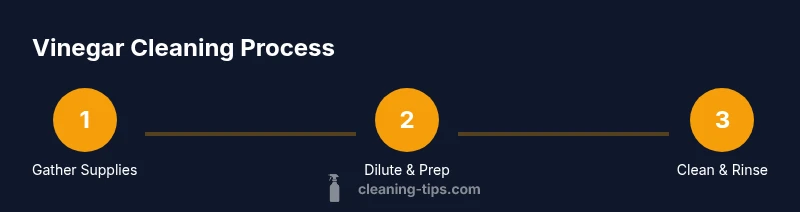
- 1
Gather supplies
Collect vinegar, water, a spray bottle, microfiber cloths, a non-scratch sponge, and gloves if desired. This ensures you have everything you need before starting, reducing interruptions.
Tip: Label the spray bottle clearly to avoid accidental misuse. - 2
Dilute and prep your spray
Fill the spray bottle with a 1:1 mixture of vinegar and water for general surfaces like glass and chrome. Adjust to 1:4 for larger areas or more absorbent surfaces. Mix gently and cap securely.
Tip: Use warm water to help the mixture evaporate more evenly. - 3
Patch-test a hidden area
Spray a small amount on an inconspicuous spot to check for adverse reactions, color change, or finish damage. Wait 1-2 minutes and observe.
Tip: If there is no change, you can proceed with broader cleaning. - 4
Clean glass and mirrors
Spray the 1:1 solution onto the surface and wipe with a microfiber cloth using straight, overlapping strokes. Buff to remove any streaks.
Tip: Wipe while the surface is still damp to prevent drying marks. - 5
Tackle countertops and fixtures
Spray onto non-porous countertops and metal fixtures; wipe with a clean microfiber cloth and rinse with plain water if residue remains.
Tip: Avoid prolonged contact on porous or unfinished stone. - 6
Descale kettles and coffee makers
Fill the appliance with a vinegar-water solution (1:2), run a cycle, then flush with several cycles of plain water until any vinegar taste or odor is gone.
Tip: Do not operate electrical appliances with vinegar still inside; ensure they are unplugged and cooled. - 7
Deodorize drains and disposals
Pour a small amount of vinegar solution down the drain, followed by hot water after 1–2 minutes. Repeat if necessary and rinse.
Tip: Ventilate to disperse the strong aroma. - 8
Rinse and dry surfaces
Wipe all cleaned surfaces with plain water if you notice any residue, then dry with a microfiber cloth to prevent water spots.
Tip: Drying prevents mineral residue from redepositing.
Questions & Answers
Can vinegar disinfect surfaces?
Vinegar can reduce some germs and remove mineral buildup, but it is not a registered disinfectant like EPA-approved products. For disinfection tasks, use products that carry an EPA-approved disinfectant label.
Vinegar helps with grime and odors, but it isn’t a guaranteed disinfectant.
Is vinegar safe on stone countertops?
No. Distilled white vinegar should not be used on natural stone such as marble, granite, or limestone, as the acid can etch the surface. Use a stone-safe cleaner instead.
Avoid vinegar on stone surfaces to prevent etching.
Can I mix vinegar with baking soda?
Mixing vinegar and baking soda creates a fizzy reaction that primarily produces water and carbon dioxide. It does not improve cleaning on most surfaces and can reduce contact time with the surface.
Vinegar and baking soda fizz, but it may not clean better.
Can vinegar be used in laundry?
Yes, a small amount can deodorize and soften laundry. Do not mix vinegar with bleach, and avoid prolonged exposure on fabrics with delicate finishes.
Vinegar can freshen laundry, but keep it separate from bleach.
Is vinegar effective for descaling appliances?
Vinegar can help descalibrate mineral buildup in kettles and coffee makers when used in controlled amounts, followed by thorough rinsing to remove taste. Always consult the appliance manual first.
Vinegar can help descale appliances if used carefully.
How should I store and use vinegar safely?
Store in a labeled bottle away from heat and sunlight. Keep it out of reach of children; always ventilate during use and rinse surfaces after cleaning.
Store in a cool, labeled bottle and ventilate when cleaning.
Watch Video
The Essentials
- Dilute vinegar properly for safe cleaning
- Avoid stone and unfinished wood surfaces
- Do not mix vinegar with bleach or hydrogen peroxide
- Vinegar is great for mineral buildup and odors, not a universal disinfectant
- Patch-test on hidden areas before wide use